
Top 10 Grilled Seafood Recipes for Every Occasion

Top 10 Grilled Seafood Recipes for Every Occasion
Grilling is the fastest way to get maximum flavor from seafood. High direct heat creates Maillard browning on the surface — the same caramelization that makes a good steak — while the interior cooks gently in the residual heat. The critical variables that separate great grilled seafood from mediocre: grill temperature (higher than most people think), surface dryness (moisture = steam = no sear), and not overcooking (seafood has a much narrower window than meat). These ten recipes include the technique notes that actually matter.
Shop: Tuna • Whitefish • Sablefish • Lobster Tails • Global Seafoods.
1. Grilled Shrimp Skewers
The fastest-cooking protein on this list — 2 to 3 minutes total on a hot grill. The main risk is overcooking; at high heat the window between perfectly pink and rubbery is about 60 seconds.
Serves: 3–4 | Marinate: 20 min | Grill: 4–6 min
Ingredients:
- 1 lb large shrimp (21–25 count), peeled and deveined, patted very dry
- 3 tbsp olive oil
- 2 garlic cloves, minced
- Juice of 1 lemon
- 1 tsp smoked paprika
- Salt and black pepper
Method: Marinate shrimp in olive oil, garlic, lemon, paprika, salt, and pepper for 20 minutes maximum — acid in the marinade begins to denature the protein after 30 minutes. Thread onto metal skewers or pre-soaked wooden skewers. Preheat grill to high (450–500°F). Oil grates. Grill 2–3 minutes per side until pink and just charred at the edges. C-shape = done; O-shape = overcooked. Serve immediately.
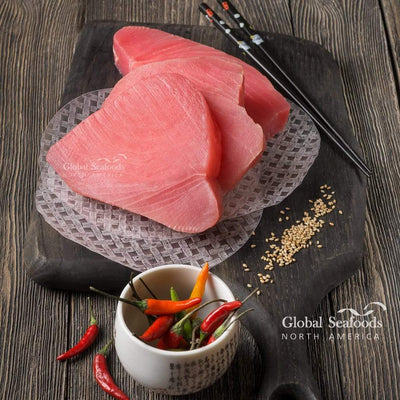
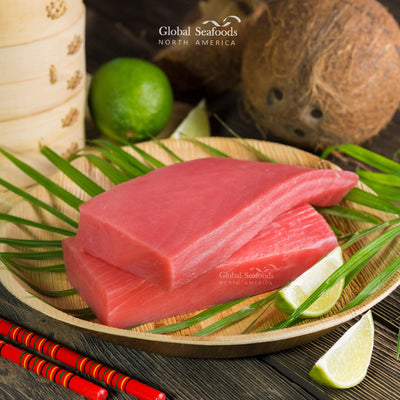
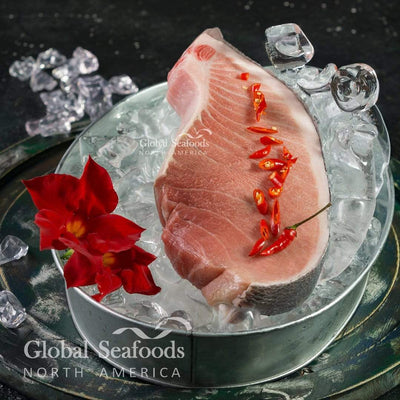
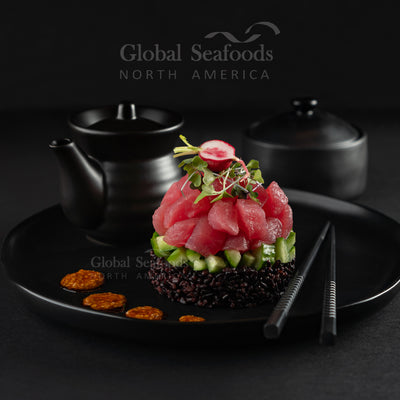
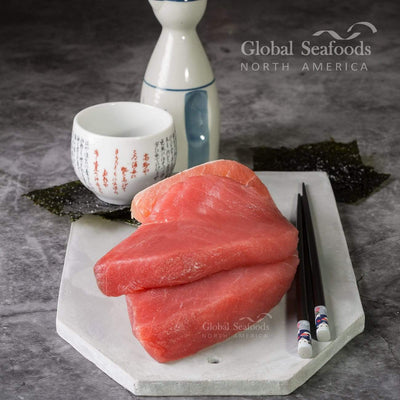
2. Grilled Tuna Steaks
Tuna steak is best seared rare to medium-rare at its core — the same principle as a beef steak. A 1-inch tuna steak on a screaming-hot grill takes about 2 minutes per side for rare (cool red center), 2.5 minutes per side for medium-rare (warm pink center). Beyond that, the flesh becomes dry and loses its silky texture.
Serves: 2 | Marinate: 30 min | Grill: 4–5 min
Ingredients:
- 2 tuna steaks (6–8 oz each, at least 1-inch thick — thinner cuts overcook instantly)
- ¼ cup soy sauce
- 2 tbsp honey
- 2 garlic cloves, minced
- 1 tbsp sesame oil
- 1 tsp fresh ginger, grated
Method: Marinate tuna 30 minutes maximum. Pat very dry before grilling (marinade on the surface will steam, not sear). Preheat grill to very high (500°F+). Oil grates generously. Grill 2 minutes per side for rare, 2.5 minutes for medium-rare. Do not move the steak during the first 2 minutes — let it release naturally. Rest 2 minutes before slicing. Serve with pickled ginger or a sesame-soy drizzle.
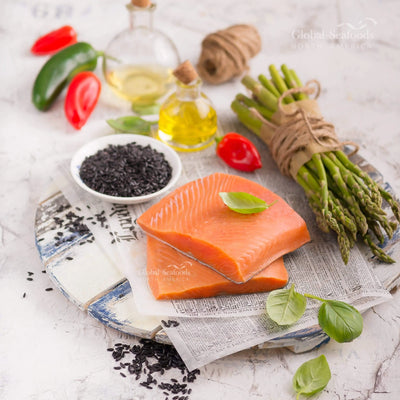
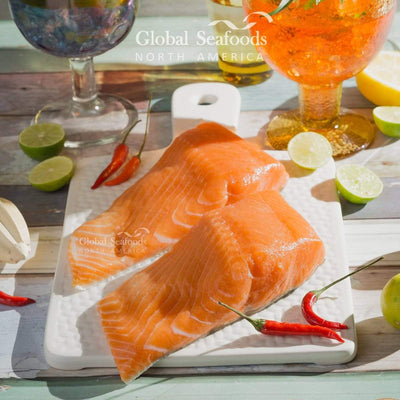
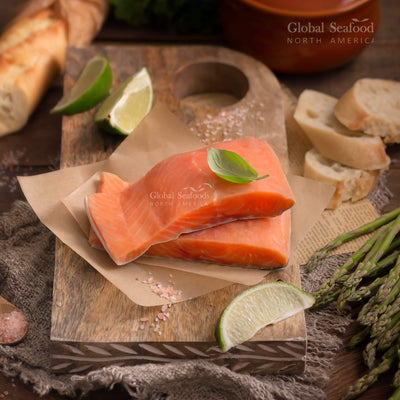
3. Grilled Salmon with Mango Salsa
Salmon on the grill: the technique that actually works is cooking almost entirely on the skin side. The skin protects the flesh from direct heat and acts as a natural non-stick barrier. Flip only for the last 60–90 seconds to finish the top.
Serves: 2 | Prep: 10 min | Grill: 8–10 min
Ingredients:
- 2 salmon fillets (6 oz each, skin-on, pin bones removed), patted dry
- 2 tbsp olive oil
- Salt, black pepper, and a pinch of smoked paprika
- Mango salsa: 1 cup diced ripe mango + ¼ cup diced red onion + 1 jalapeño, seeded and minced + juice of 1 lime + 2 tbsp fresh cilantro
Method: Make salsa first; let it rest at room temperature while you grill (flavors meld). Preheat grill to medium-high (400–425°F). Oil grates. Brush salmon with olive oil; season. Place skin-side down over direct heat. Cook 7–8 minutes on the skin side — the salmon will be nearly cooked through; you can see the color change climbing up the side of the fillet. Flip for the final 60–90 seconds to sear the top. Target internal: 125–130°F for medium (translucent pink center); 140°F for fully cooked. Plate skin-side down; top with mango salsa.
4. Grilled Lobster Tails
The method that works: flesh-side down first to develop the sear and char, then flip shell-side down to finish gently. Cooking entirely shell-side down (as many recipes suggest) produces uneven results — the shell insulates and the flesh steams rather than grills.
Serves: 2 | Prep: 10 min | Grill: 7–8 min
Ingredients:
- 4 lobster tails (6–8 oz each), thawed if frozen
- 4 tbsp garlic butter (2 tbsp unsalted butter + 2 cloves garlic, minced + 1 tbsp fresh parsley)
- Lemon wedges
Method: Using kitchen shears, cut the top shell lengthwise. Butterfly the tail: press the shell open and gently loosen the meat while keeping it attached at the base. Brush exposed meat with garlic butter. Preheat grill to medium-high (400–450°F). Oil grates. Grill flesh-side down over direct heat 4–5 minutes until lightly charred and meat turns opaque. Flip shell-side down; brush with more garlic butter; grill 2–3 more minutes until meat reaches 140–145°F internal. Serve immediately with lemon wedges and additional garlic butter.
Shop: Cold-Water Lobster Tails.
5. Grilled Octopus
The simmer-then-grill two-step is mandatory — octopus grilled without prior tenderizing is nearly inedible. Freezing the octopus before cooking (or buying it frozen) actually helps: the ice crystals break down muscle fibers and accelerate tenderizing.
Serves: 3–4 | Simmer: 45–60 min | Grill: 5 min
Ingredients:
- 1–2 lb octopus, cleaned (fresh or thawed)
- Simmering liquid: water to cover + 1 bay leaf + 1 tbsp red wine vinegar + 1 tsp peppercorns
- Marinade: 3 tbsp extra-virgin olive oil + 1 tbsp fresh lemon juice + 1 tsp dried oregano + 1 tsp smoked paprika + salt and pepper
- Fresh parsley and lemon wedges
Method: Simmer octopus gently (not boiling) in seasoned water: 1 lb = 45–50 min, 2 lb = 55–65 min. Test with a paring knife — it should slide into the thickest tentacle with zero resistance. Cool in the liquid. Cut into individual tentacles; toss in marinade; rest 20–30 min. Grill over high direct heat (500°F) 2–3 min per side until charred and slightly crisp at the edges. Serve with parsley and lemon.
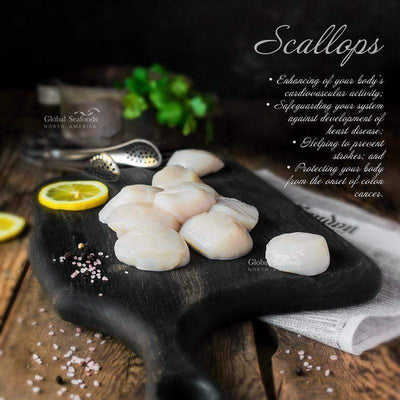
6. Grilled Sea Scallops
The single most important technique for grilled scallops: they must be completely dry before hitting the grate. Any surface moisture converts to steam at the grill surface and prevents the sear. Remove the side muscle (the small tough tag on the side), dry with paper towels, and hold uncovered in the refrigerator for 30 minutes if time allows — the surface will dry further. Also: use large sea scallops (U-10 or U-12), never bay scallops, which are too small for a grill grate.
Serves: 2–3 | Prep: 5 min + 30 min dry | Grill: 4–5 min
Ingredients:
- 1 lb large sea scallops (U-10 or U-12), side muscle removed, very thoroughly patted dry
- 2 tbsp olive oil or clarified butter
- 1 tsp garlic powder
- Salt and white pepper
- Lemon wedges for serving
Method: Pat scallops completely dry; season with garlic powder, salt, and pepper. Brush or toss with oil. Preheat grill to very high (500°F+). Oil grates generously. Place scallops on grate; do not move. Grill 2–2.5 minutes — scallops will release naturally when a crust forms; if they stick, they need more time. Flip; grill 1.5–2 minutes on the second side. Internal target: 120–130°F (translucent center; scallops become rubbery when overcooked). Serve immediately with lemon.
7. Grilled Swordfish
Swordfish is the most steak-like fish on this list: dense, meaty, and forgiving on the grill. It doesn’t flake apart like delicate white fish. Best at medium — cook it to 130–135°F internal (slightly translucent at center); fully cooked to 145°F produces a noticeably drier result.
Serves: 2 | Marinate: 30 min | Grill: 8–10 min
Ingredients:
- 2 swordfish steaks (6–8 oz each, 1-inch thick), patted dry
- 3 tbsp olive oil
- Juice of 1 lemon
- 1 tsp dried thyme or fresh oregano
- 2 cloves garlic, minced
- Salt and black pepper
Method: Marinate 30 minutes. Pat dry before grilling. Preheat grill to high (450–500°F). Oil grates. Grill 4–5 minutes per side for 1-inch steaks until grill marks are deep and the fish releases naturally. Target 130–135°F internal for medium (ideal texture); 140–145°F for fully cooked. Rest 2 minutes before serving.
8. Grilled Clams
One of the simplest grilling preparations: the clams open themselves when ready. Important technique note: you cannot brush closed clams with butter. Place them directly on the hot grate; once they pop open, spoon garlic butter into each shell and let it bubble for 30 seconds before serving.
Serves: 2–4 | Prep: 5 min | Grill: 5–8 min
Ingredients:
- 2 dozen littleneck or cherrystone clams, scrubbed clean
- 3 tbsp unsalted butter, melted
- 2 garlic cloves, minced
- 1 tbsp fresh parsley, chopped
- Lemon wedges
- Crusty bread for serving
Method: Mix melted butter with garlic and parsley; set aside. Preheat grill to high. Place clams directly on the grate over direct heat. Grill 5–8 minutes until shells pop open. As each clam opens, spoon ½ tsp garlic butter into the shell; let it bubble 30 seconds. Remove immediately; do not continue cooking once open (overcooking makes clams rubbery). Discard any clams that have not opened after 8 minutes (they may be dead or sealed tightly; do not force open). Serve with lemon and crusty bread to soak up the buttery juices.
9. Grilled Mahi Mahi
Mahi mahi has a firm, meaty texture that holds up well on the grill. The soy-honey glaze caramelizes quickly at high heat — watch carefully in the last 60 seconds as the sugar content means it can go from caramelized to burnt fast.
Serves: 2 | Marinate: 20 min | Grill: 8 min
Ingredients:
- 2 mahi mahi fillets (6 oz each, 1-inch thick), patted dry
- 3 tbsp soy sauce
- 1 tbsp honey
- 1 tbsp fresh lime juice
- 1 tsp sesame oil
- 2 garlic cloves, minced
- Lime wedges and sliced green onions for serving
Method: Whisk marinade; reserve 2 tbsp for basting. Marinate mahi mahi 20–30 minutes. Pat dry. Preheat grill to medium-high (400–425°F). Oil grates. Grill 4 minutes per side, basting with reserved marinade in the final 60 seconds. The fish is done when it flakes easily with a fork and reaches 137–145°F internal. Do not flip more than once. Serve with lime wedges and green onions.
10. Grilled Oysters
Grilled oysters are the most forgiving recipe in this collection: the shell does all the work. The same technique note as clams applies: place them on the grate closed, grill until they pop, then spoon in the topping.
Serves: 2–4 | Prep: 5 min | Grill: 5–6 min
Ingredients:
- 1 dozen oysters, scrubbed clean
- 3 tbsp unsalted butter, softened
- 1 tsp hot sauce (Crystal or Tabasco)
- 1 clove garlic, minced
- 1 tbsp fresh parsley, chopped
- Lemon wedges
Method: Mix butter, hot sauce, garlic, and parsley into a compound butter; set aside. Preheat grill to high. Place oysters flat-side up on the grate over direct heat. Grill 5–6 minutes until shells begin to pop. As each oyster opens slightly, use tongs and an oyster knife to remove the top shell. Spoon a small amount of compound butter onto the oyster; return to grill for 30–60 seconds until butter melts and edges of oyster just begin to curl. Serve immediately on a bed of rock salt with lemon wedges.
Videos: Global Seafoods YouTube Channel.
Frequently Asked Questions
What’s the best way to prevent seafood from sticking to the grill?
Three steps, all required: (1) Preheat the grill fully to high temperature before adding seafood — a hot grate sears the surface quickly, creating a natural release. (2) Oil the grates immediately before placing seafood, using a folded paper towel dipped in neutral oil held with long tongs — not cooking spray, which burns at high heat. (3) Pat seafood very dry before it touches the grate — moisture creates steam between the fish and the metal, causing sticking. And critically: don’t force the flip. If seafood sticks when you try to flip, it needs 30–60 more seconds — once a crust forms it releases naturally.
What’s the ideal grill temperature for each type of seafood?
Temperature by protein: shrimp and scallops — very high (500°F+) for maximum sear in minimum time. Tuna steaks — very high (500°F+) for surface char with rare/medium-rare interior. Salmon — medium-high (400–425°F); high heat on skin, gentler cook on flesh. Lobster tails — medium-high (400–450°F). Swordfish — high (450–500°F). Mahi mahi — medium-high (400–425°F). Clams and oysters — high; they self-regulate via shell. The old advice of “medium heat for seafood” produces steamed, not grilled, results for most species.
Can I grill frozen seafood?
Not directly. Frozen seafood must be fully thawed and thoroughly dried before grilling. Grilling from frozen causes the surface to overcook before the interior thaws, producing an uneven result. Thaw overnight in the refrigerator, or in cold water sealed for 30–60 minutes. After thawing, pat very dry with paper towels and allow to sit uncovered on a rack in the refrigerator for 20–30 minutes if time allows — the surface will dry further, improving sear quality.
How do I know when grilled seafood is done without a thermometer?
By protein: shrimp — C-shape and pink throughout; O-shape = overcooked. Scallops — opaque on the outside, still slightly translucent at the very center (firm to the touch but with a slight give). Tuna steaks — seared outside, press test shows firmness increasing from center outward; the center should feel like the flesh between thumb and forefinger when hand is relaxed (rare). Salmon — color change visible climbing up the side of the fillet; flakes cleanly with a fork at the thickest part. Swordfish and mahi mahi — flesh turns from translucent to white/opaque through; flakes with a fork. Clams and oysters — shells pop open; edges of meat begin to curl slightly.
What’s the best wood or charcoal for grilling seafood?
For charcoal: natural lump charcoal burns hotter and cleaner than briquettes; better for seafood’s delicate flavors. Avoid heavy hardwoods (mesquite, hickory) as standalone fuel with seafood — their bold smoke can overwhelm delicate proteins. Milder woods work well: alder (classic for salmon in the Pacific Northwest), apple, cherry, or pecan add subtle sweetness without dominating. For gas grills, wood chip smoker boxes or foil packets with soaked chips can add wood smoke character. For most grilled seafood, a clean char from high direct heat produces the best result without any added smoke at all.
How long can marinated seafood sit before grilling?
Shorter than most people think. Acid-containing marinades (citrus juice, vinegar, wine) begin to denature surface proteins within 15–30 minutes — extended marinating produces a mushy, “cooked” texture on the surface before it hits the grill. Rules of thumb: shrimp and scallops — 15–20 min maximum. Fish fillets — 20–30 min maximum. Swordfish and tuna steaks — 30 min maximum. Octopus (after simmering) — up to 60 min (the pre-cooked protein is more stable). Oil-only or oil-and-herb marinades without acid can marinate longer — up to 2–3 hours for fish steaks — without texture damage.

Related Products


Also in Recipes

Marinated Crab Recipe – Easy, Flavorful, and Perfect for Seafood Lovers

How to Cook Live Manila Clams at Home: Fresh, Sweet & Delivered Overnight
Discover how to store, clean, and cook Live Manila Clams at home using simple chef techniques. Learn why these Pacific clams are perfect for pasta vongole, steaming, chowders, and more — plus how to order them fresh in a convenient 10 lb bag shipped overnight.

Cooked Crab for Brunch: The Ultimate Guide to Morning Seafood
Discover the joy of crab for brunch! Learn how to prepare snow crab, king crab, and Dungeness crab in the morning, their health benefits, and easy recipes to make your brunch memorable.
Shop Now
Main
