
Salmon Roe & Ikura – Buy Red Caviar Online
Shop red caviar and ikura online, including wild salmon roe from Chum, King, Coho, Pink, and seasonal Sockeye salmon. Each species offers a different egg size, shell strength, color, sweetness, and intensity, so the best choice depends on how you plan to serve it and the texture you prefer.







Collections You May Like


Buying Guide & Product Details
Global Seafoods North America offers ready-to-eat cured salmon caviar as well as fresh unprocessed salmon roe for experienced customers making ikura at home. Product origin, harvest year, ingredients, package size, and availability can vary by lot; consult the individual product page for the specifications of the item currently offered.
Read our complete Salmon Roe (Ikura) Guide for an expert explanation of species, taste, processing, salt and soy curing, storage, serving, and how to evaluate quality.
Choose Red Caviar by Salmon Species
| Salmon roe | Typical character | A good choice for |
|---|---|---|
| Chum (Keta) | Large translucent orange eggs, a defined pop, and a generally clean, balanced flavor | Blinis, sushi, celebrations, gifts, and first-time buyers |
| King (Chinook) | Large eggs with a rich finish; some lots are naturally softer and more delicate | Tasting, toast, blinis, and customers who prefer richness over a very firm shell |
| Coho (Silver) | Medium red-orange eggs with a more pronounced salmon character | Sushi, potatoes, eggs, rice dishes, and assertive appetizers |
| Pink | Small-to-medium eggs with an approachable flavor and generally softer presentation | Canapés, breakfast dishes, salads, and larger gatherings |
| Sockeye | Smaller, deeper red eggs with a concentrated and distinctive flavor | Sushi, small tasting portions, and customers who enjoy stronger roe |
| Unprocessed roe | Raw salmon eggs, often still in the skein, requiring proper cleaning and curing | Experienced home caviar makers following an appropriate food-safety process |
Egg size alone does not determine quality. A well-handled smaller roe can provide a cleaner flavor and better texture than a poorly processed large-grain lot. Consider membrane strength, broken eggs, excess liquid, aroma, salt balance, temperature history, and the specifications of the individual production lot.
Choose Ikura by Preparation
Species is only part of the decision. The cure and preparation can change the flavor just as much as the salmon itself.
- Traditional salt-cured roe: the best starting point when you want to compare the natural flavor, egg size, and texture of Chum, King, Coho, Pink, or Sockeye salmon.
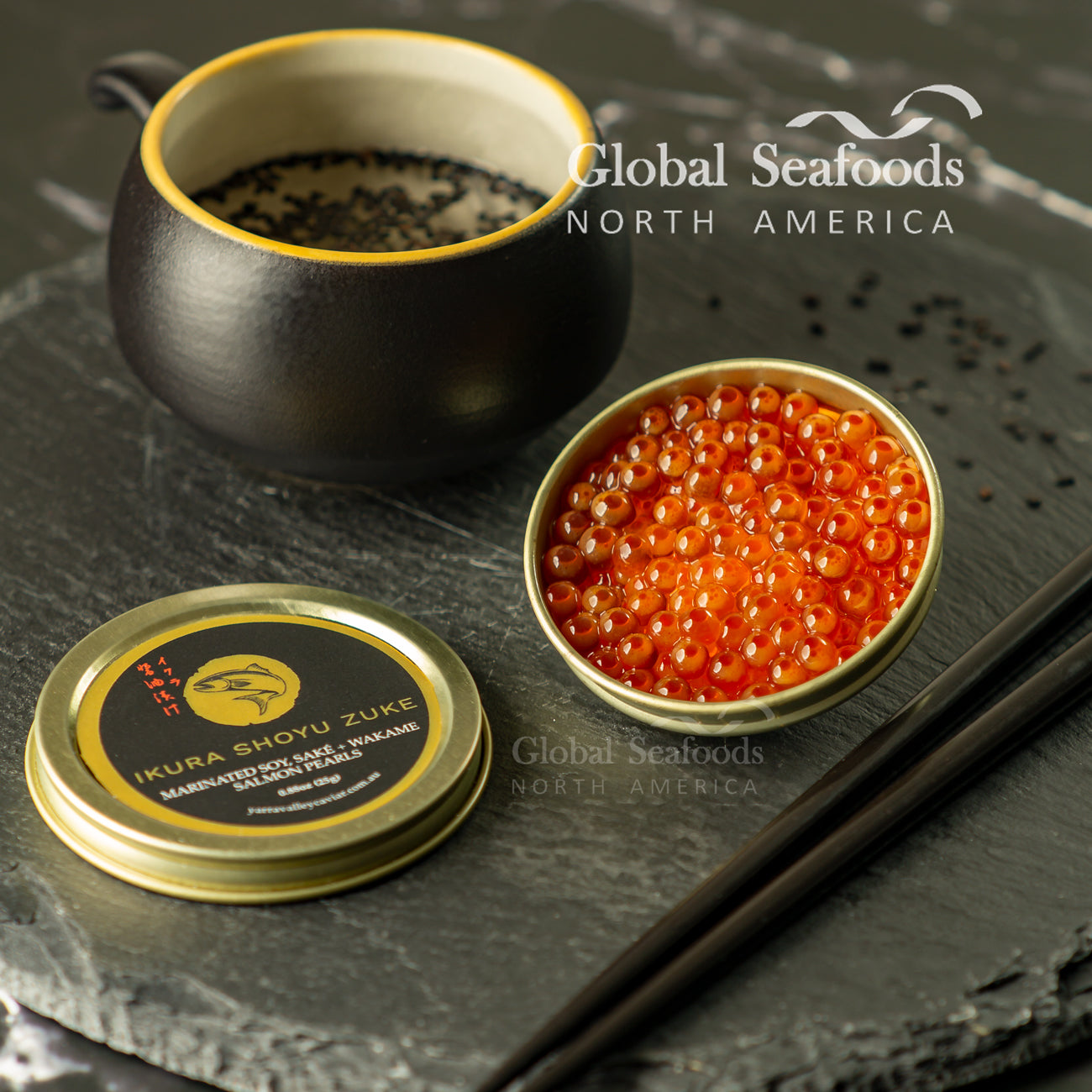
- Soy-marinated ikura: a Japanese-style option with a more seasoned profile. See Ikura Shoyu Zuke.
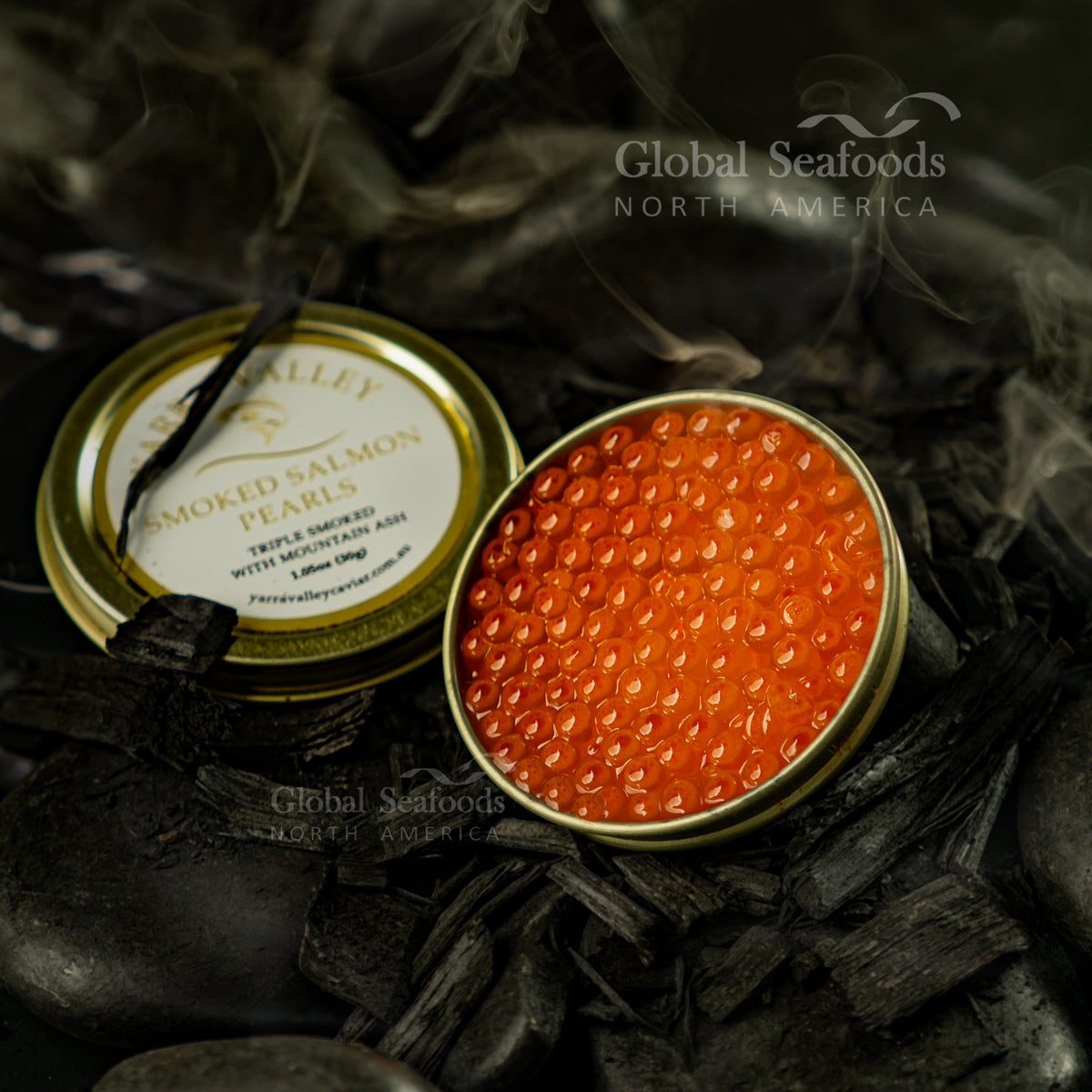
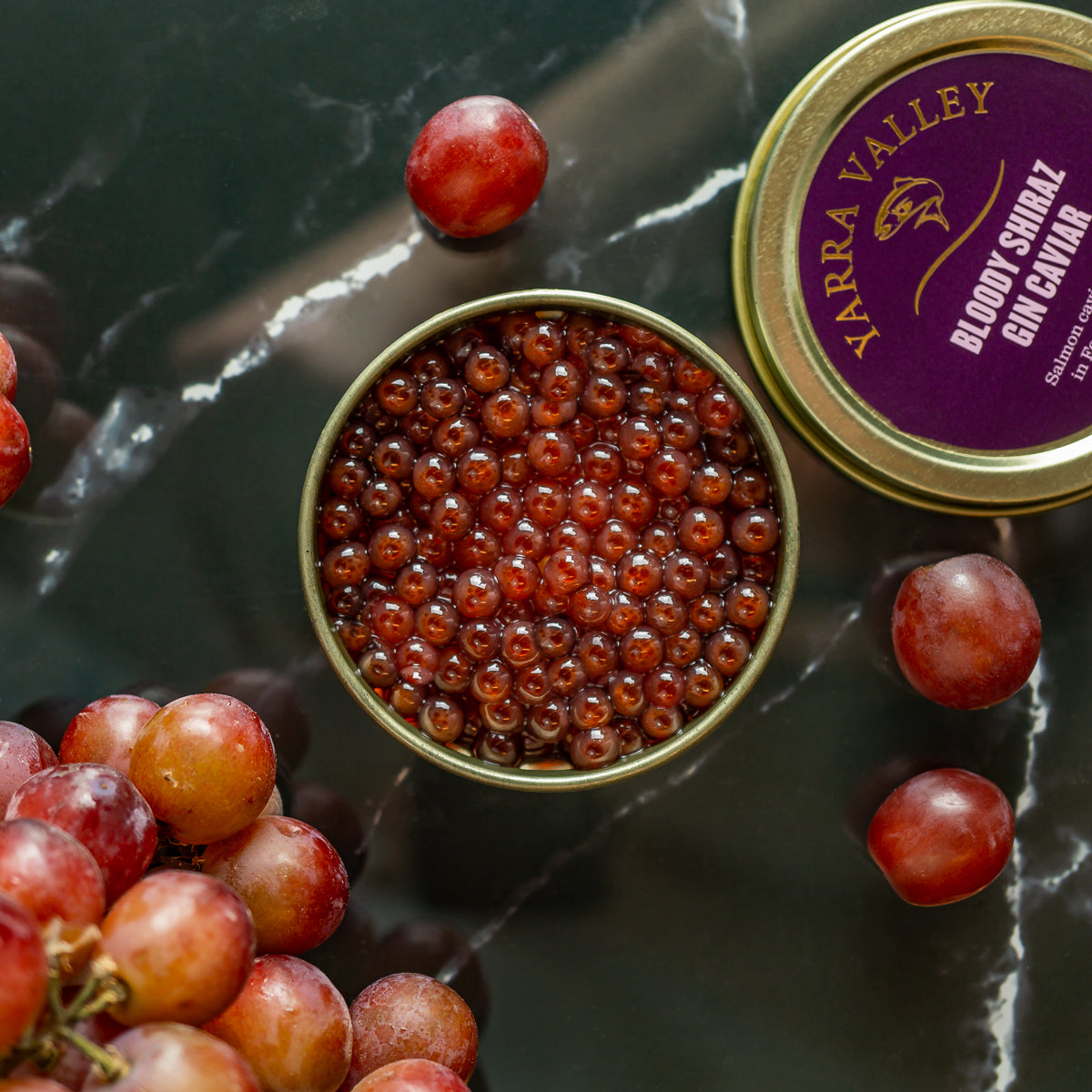
- Smoked or infused salmon roe: specialty preparations designed for customers who want a more pronounced flavor rather than a classic species comparison.
- Unprocessed salmon eggs: raw material for experienced customers who intend to clean and cure roe themselves; this is not the same as ready-to-eat ikura.
What Are Red Caviar and Ikura?
Red caviar is the common retail name for prepared roe from salmon and, in some assortments, other salmonids such as trout. Salmon roe is the broad English term for salmon eggs. Ikura is the Japanese name for prepared salmon roe and may describe either a salt-cured product or roe seasoned in a soy-based marinade.
The words overlap, but the preparation matters. Ready-to-eat salmon caviar has been separated from the skein, cleaned, cured, drained, graded, and packed. Unprocessed eggs are raw material and should not be treated as the same product. Always read the product title, ingredient statement, storage directions, and preparation status before ordering.
Soft-Shell and Firm-Shell Salmon Roe
Customers often use “soft shell” and “hard shell” to describe how the egg membrane feels. Neither term is automatically a quality grade.
- Softer roe releases flavor gently and can feel especially delicate, but it requires careful handling and may release more liquid after thawing.
- Firmer roe produces a stronger pop and usually tolerates handling better, although an excessively tough membrane may be less pleasant to eat.
Species, fish maturity, fishing area, harvest timing, curing method, freezing, thawing, and temperature control all influence texture. King salmon roe, for example, may be naturally softer than a firm Chum lot without being damaged or inferior.
Why Origin and Processing Matter
Salmon roe from Alaska, Washington State, and British Columbia does not have one standardized flavor or texture. Separate runs, harvest timing, fish maturity, travel time to the processor, brine specifications, and individual plant practices can change the finished result.
Based on Oleg Nikitenko’s production and buying experience, Alaska King salmon roe is often sweeter and softer, Washington-origin King roe commonly has a firmer grain and less sweetness, and Canadian Pacific roe frequently falls between those profiles. These are practical tendencies—not guarantees for every container. The current product listing is the controlling source for the origin and specifications of the lot being sold.
The curing process is also more technical than simply adding salt. Cleaning quality, brine temperature, salt concentration, roe-to-brine ratio, cure time, drainage, grading, packing, and cold-chain control work together. For a deeper explanation, see the section on processing in our expert salmon roe guide.
How to Buy Ikura Online
- Confirm the species. “Salmon caviar” alone does not tell you whether the roe is Chum, King, Coho, Pink, or Sockeye.
- Compare net weight. A larger-looking container does not necessarily contain more roe.
- Check the format. Determine whether the product is ready to eat, frozen, previously frozen, fresh, or unprocessed.
- Read the ingredients. Salt-cured and soy-seasoned ikura provide different flavor profiles and may have different allergen considerations.
- Review texture descriptions. Choose a softer egg or a pronounced pop according to your preference rather than assuming one texture is universally superior.
- Check availability and delivery timing. Wild fisheries and seasonal production can affect which species, sizes, and harvest years are available.
- Select a practical package size. Buy an amount you can serve promptly after opening according to the label directions.
Serving and Storing Salmon Caviar
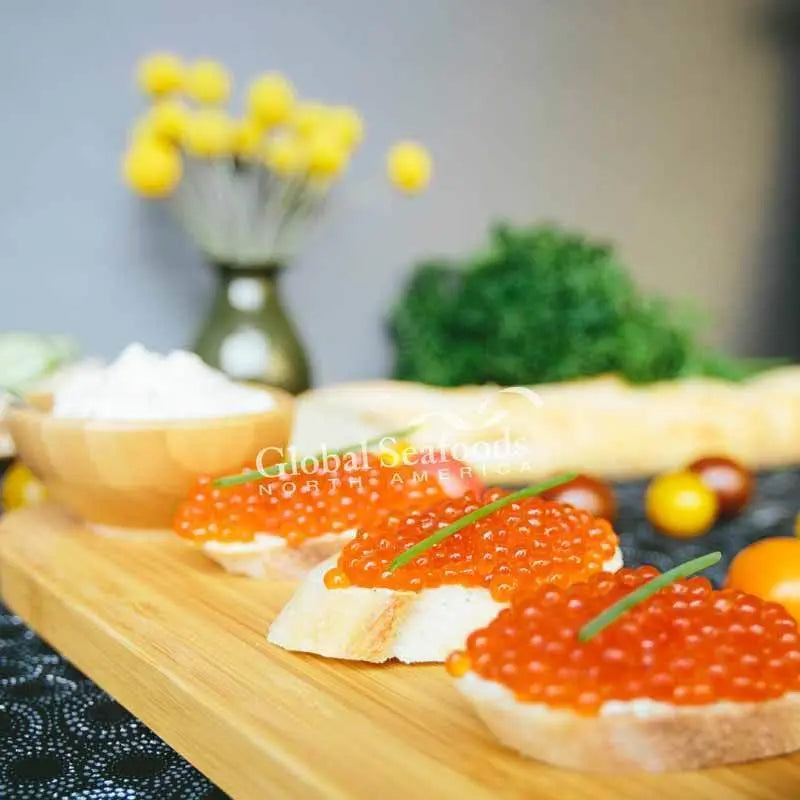
Serve red caviar chilled with warm blini, buttered toast, crème fraîche, potatoes, eggs, cucumber, or restrained garnishes. For Japanese-style service, use ikura on sushi rice, gunkan, hand rolls, chirashi, or an ikura bowl. Add the roe after cooking; direct high heat toughens the membrane and removes its fresh pop.
Keep the container sealed and refrigerated or frozen according to its label. Thaw frozen roe slowly under refrigeration, use clean utensils, and return unused product to refrigeration promptly. Do not rely on a universal storage period: formulation, packaging, salt level, and whether the product was previously frozen all affect shelf life.
Nutrition in a Small Serving
Salmon roe provides protein, marine omega-3 fatty acids, vitamin B12, vitamin D, selenium, choline, and naturally occurring carotenoids. It also contains sodium because curing is part of production. Exact nutrition varies by species, recipe, moisture, and serving size, so use the product’s nutrition label for purchase-specific values. Salmon roe is food, not a treatment for medical conditions.
Seafood Experience Behind This Collection
Global Seafoods founder Oleg Nikitenko has worked in the seafood industry since 1993. His experience includes managing fishing vessels, owning a seafood processing plant on Kodiak Island, Alaska, for approximately 20 years, and operating a processing facility in Washington State.
At the Kodiak plant, his team handled salmon roe in skeins for Japanese and former Soviet markets and produced finished salted caviar. Japanese technologists helped train plant personnel in roe processing, including salt curing and soy-seasoned preparations. Oleg no longer owns that plant; today, his experience informs the selection, evaluation, explanation, and online sale of seafood through Global Seafoods North America.
Red Caviar Questions
Which salmon roe has the largest eggs?
Chum and King salmon are generally known for large eggs, but actual size varies with species, maturity, fishing area, and production lot. Large grain is only one part of quality.
What is the best ikura for a first-time buyer?
Chum salmon caviar is a useful starting point because of its large grain and balanced character. Customers who prefer richer, softer eggs may enjoy King salmon caviar, while those wanting a more pronounced salmon finish can consider Coho roe.
Is every red caviar product from Alaska?
No. Origin can vary by species, season, supplier, and production lot. Review the individual product page for the origin of the item currently available rather than assuming all red caviar comes from the same region.
Can salmon roe be frozen?
Many commercial products are successfully frozen, but not every formulation should be handled identically. Follow the producer’s instructions, thaw under refrigeration, and avoid refreezing unless the product instructions specifically permit it.
Ready to compare your options? Browse the available products above, or read the complete Salmon Roe and Ikura Guide before choosing.
Collection information reviewed September 2026. Product specifications, origin, harvest year, inventory, and shipping options can change by season and lot.
Shop Now
Main
