
Lingcod Lovers Rejoice: The Best Lingcod Fillets Now Available

Lingcod Lovers Rejoice: Three Complete Recipes for the Pacific Coast’s Best Whitefish
Lingcod is one of the Pacific coast’s most versatile and rewarding fish to cook — firm enough for grilling and pan-searing, mild and sweet enough to pair with a wide range of flavors, and sustainable enough to eat without reservation. This article features three complete recipes with full quantities: a herb panko-crusted baked lingcod (the featured recipe), a grilled lingcod with garlic and herbs, and a pan-seared lingcod with lemon butter sauce. All three are weeknight-friendly and under 30 minutes.
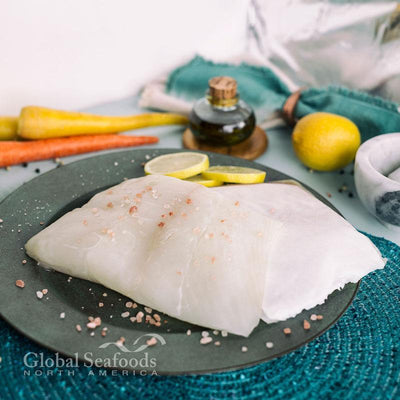
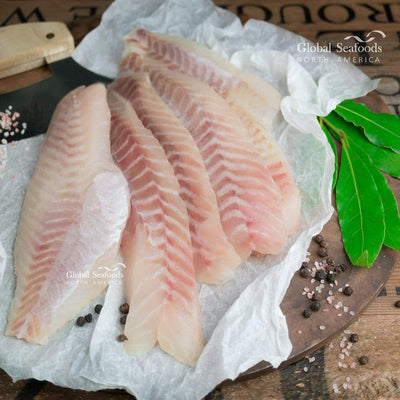
🔗 Lingcod Fillets at Global Seafoods | Whitefish Collection
Quick Nutritional Note
Per 3-oz (85g) cooked serving: ~80–90 kcal, ~17–19g complete protein, ~1–2g fat. Lingcod is a lean whitefish — its primary nutritional strengths are lean protein, vitamin B12 (~40–60% of the daily value), and selenium (~65–80% of the daily value). Omega-3 content is moderate (~100–200mg EPA+DHA per 3-oz serving); for full omega-3 coverage, pair lingcod meals with fatty fish 1–2 times per week. The American Heart Association recommends eating seafood at least twice a week for cardiovascular health.
Three Complete Lingcod Recipes
Recipe 1: Herb Panko-Crusted Baked Lingcod (Featured Recipe)
Serves: 4 | Time: 25 minutes | Best for: a lighter, herb-forward crust without cheese; the panko stays crispy and golden without overpowering the fish’s mild flavor
Ingredients
- 4 lingcod fillets (6–8 oz each), skin removed
- 2 tbsp olive oil
- 1 tbsp Dijon mustard
- Salt and white pepper
Herb Panko Crust:
- ¾ cup (75g) panko breadcrumbs
- 2 tbsp fresh flat-leaf parsley, finely chopped
- 1 tbsp fresh thyme leaves (or ½ tsp dried)
- 1 tsp lemon zest
- 1 clove garlic, finely minced
- 2 tbsp olive oil
- ½ tsp salt, ¼ tsp black pepper
Instructions
- Preheat oven to 400°F; line a baking sheet with parchment paper
- Mix panko, parsley, thyme, lemon zest, garlic, olive oil, salt, and pepper in a bowl until the panko is evenly coated with oil; the oil-coated panko browns more evenly than dry panko
- Pat fillets completely dry; brush the top of each fillet with a thin layer of Dijon mustard (the mustard acts as a binder for the crust and adds a subtle tang that complements the herbs); season with salt and white pepper
- Bake the fillets for 10 minutes until almost cooked through but still slightly translucent in the center
- Remove from oven; press the herb panko mixture firmly onto the top of each fillet in an even layer; return to oven for 4–5 minutes until the crust is golden and the fish is cooked through (145°F)
- If the crust is not golden after 5 minutes, switch to broil for 1–2 minutes — watch carefully; panko burns quickly under the broiler
- Rest 2 minutes without covering; serve with lemon wedges
Critical technique: add the panko crust only in the last 4–5 minutes of baking — if added at the start, the crust burns before the fish is cooked through. The Dijon mustard binder is the key to a crust that stays on the fish rather than falling off when served.
Variation: add 2 tbsp finely grated Parmesan to the panko mixture for a richer, more savory crust; reduce the olive oil to 1 tbsp to compensate for the fat in the Parmesan.
Recipe 2: Grilled Lingcod with Garlic and Fresh Herbs
Serves: 4 | Time: 20 minutes
Ingredients
- 4 lingcod fillets (6–8 oz each), skin removed
- 3 tbsp olive oil
- 3 cloves garlic, minced
- 3 tbsp fresh flat-leaf parsley, finely chopped
- 1 tbsp fresh thyme leaves
- 2 tbsp fresh lemon juice
- 1 tsp lemon zest
- 1 tsp salt, ½ tsp black pepper
Instructions
- Whisk together olive oil, garlic, parsley, thyme, lemon juice, lemon zest, salt, and pepper; brush over both sides of the fillets; marinate 15–20 minutes (do not exceed 30 minutes — the lemon juice begins to denature the proteins)
- Preheat grill to medium-high (400–450°F); oil the grill grates well
- Grill 4–5 minutes per side until opaque throughout and flakes easily (145°F); do not move the fish for the first 4 minutes
- Serve with additional lemon wedges
Recipe 3: Pan-Seared Lingcod with Lemon Butter Sauce
Serves: 4 | Time: 15 minutes | Best for: the fastest preparation; the lemon butter sauce takes 2 minutes and elevates the dish significantly
Ingredients
- 4 lingcod fillets (6–8 oz each), skin removed
- 1 tbsp olive oil
- 3 tbsp unsalted butter, divided
- Salt and black pepper
Lemon Butter Sauce:
- 2 tbsp unsalted butter (in addition to above)
- 2 cloves garlic, minced
- 3 tbsp fresh lemon juice
- 1 tsp lemon zest
- 1 tbsp fresh parsley, finely chopped
- Salt and white pepper
Instructions
- Pat fillets completely dry; season with salt and pepper
- Heat olive oil and 1 tbsp butter in a heavy skillet over medium-high heat until the butter foams and subsides; sear fillets 3–4 minutes per side until golden brown (145°F); do not move for the first 3 minutes; remove to a warm plate
- Reduce heat to medium; add remaining 2 tbsp butter to the same skillet; add garlic; cook 30 seconds until fragrant; add lemon juice and lemon zest; swirl to combine; cook 1 minute until slightly reduced; remove from heat; stir in parsley; season with salt and white pepper
- Spoon the lemon butter sauce over the fillets; serve immediately
Note: make the sauce in the same pan used to sear the fish — the browned bits (fond) left in the pan add depth and flavor to the sauce; do not wipe the pan between searing and making the sauce.
Storage and Thawing
- Frozen (vacuum-sealed): store at 0°F or below; keeps for 3–6 months; check label for STP (sodium tripolyphosphate) — avoid; STP-treated fish releases excess water during cooking and prevents browning
- Thawing (best): overnight in the refrigerator
- Thawing (quick): sealed fillets in cold water; change every 30 minutes; 30–45 minutes for a 6–8 oz fillet; cook immediately after thawing
- Fresh: refrigerate; use within 1–2 days; store on ice in the coldest part of the refrigerator
🔗 Lingcod Fillets | Pacific Cod Fillets | Alaskan Pollock Fillets | Whitefish Collection
🎥 Watch lingcod recipes on the Global Seafoods YouTube Channel
More Lingcod Guides in This Series
- Lingcod Overview: Cooking, Buying, and Savoring
- Complete Lingcod Cooking Guide — crispy sandwich, lemon butter sauce, fish tacos
- The Lingcod Revolution — herb butter baked, grilled with mango salsa
- Fresh Lingcod: Three Recipes — lemon dill grilled, garlic butter baked, tomato basil pan-seared
- Buy Lingcod: Expert Buying Tips — Parmesan crust recipe, STP explained, arroser technique
- Savor the Ocean with Lingcod — Mediterranean baked, omega-3 comparison
- Why Lingcod Should Be Your Top Seafood Choice — diet compatibility, 7 pro cooking tips
- Ultimate Lingcod Recipe — sear-then-bake with paprika and lemon
- Lingcod Buying and Sourcing Guide
- Lingcod Seasonal Guide
- Lingcod Sustainability Guide
FAQs: Herb Panko-Crusted Lingcod
Why use Dijon mustard as a binder for the panko crust, and can I substitute something else?
Dijon mustard serves two functions: (1) Binder: the mustard’s emulsified texture creates a sticky surface that the panko adheres to; without a binder, the panko crust slides off the fish when served; (2) Flavor: Dijon adds a subtle tang and mild heat that complements the herbs and lemon without overpowering the fish’s mild flavor. Substitutes: (1) Mayonnaise: the most common substitute; creates an even stickier surface than mustard; adds richness; use the same amount (1 tbsp per fillet); (2) Egg wash (1 egg beaten with 1 tbsp water): the classic breading binder; brush over the fillet before pressing on the panko; produces a slightly thicker, more uniform crust; (3) Olive oil alone: works but produces a less adherent crust; the panko is more likely to fall off; (4) Greek yogurt: similar to mayonnaise; adds a slight tang; works well with herb crusts; (5) Which is best: Dijon mustard for a lighter, more elegant result; mayonnaise for a richer, more adherent crust; egg wash for the most uniform, restaurant-style result.
What is the difference between panko and regular breadcrumbs, and why does it matter for fish?
Panko and regular breadcrumbs differ in texture, moisture absorption, and browning behavior: (1) Panko (Japanese-style): made from crustless white bread processed into large, irregular flakes; very light and airy; absorbs less moisture than regular breadcrumbs; browns more evenly and stays crispier longer; the standard choice for fish crusts in professional kitchens; (2) Regular breadcrumbs (fine): made from dried, ground bread; denser and finer; absorbs more moisture; can become soggy if the fish releases moisture during cooking; produces a denser, less crispy crust; (3) Why panko is better for fish: fish releases moisture during cooking; panko’s open, airy structure allows this moisture to escape as steam rather than being absorbed; the result is a crust that stays crispy rather than becoming soggy; (4) Oil-coating the panko: tossing the panko with olive oil before applying it to the fish ensures even browning; dry panko browns unevenly — some flakes brown while others remain pale; (5) Gluten-free option: gluten-free panko is widely available and performs similarly to regular panko for fish crusts; almond flour is another gluten-free option but produces a denser, less crispy result.
How do I make the lemon butter sauce without it breaking (separating into butter and liquid)?
A broken lemon butter sauce looks greasy and unappetizing. Prevention: (1) Temperature control: the most common cause of breaking is too much heat; the sauce should be made over medium heat, not high heat; remove from heat as soon as the butter is melted and the sauce is combined; (2) Add lemon juice off high heat: add the lemon juice after reducing the heat to medium; high heat causes the butter to separate when acid is added; (3) Swirl, don’t stir vigorously: swirl the pan gently to combine the butter and lemon juice; vigorous stirring can break the emulsion; (4) Cold butter trick: if the sauce begins to look greasy, remove from heat immediately and add a small piece of cold butter (about 1 tsp); swirl until incorporated; the cold butter re-emulsifies the sauce; (5) Serve immediately: lemon butter sauce is an emulsion that is stable only when warm; it will separate if left to sit; make it immediately before serving and spoon it over the fish right away; (6) If it breaks: remove from heat; add 1 tsp cold water or cold butter; whisk vigorously; the sauce will usually come back together.


Related Products


Also in News

Snail Caviar: How White Escargot Caviar Is Farmed, Harvested and Made

The Dark Years of Pacific Salmon: A 20-Year Outlook for Alaska, Russia, and the Red Caviar Market

King Crab Legs Delivery: Is It Worth It? Exploring the Benefits and Best Options
Shop Now
Main
