
Sustainable Seafood Spotlight: The Conservation of Ossetra Sturgeon

Sustainable Seafood Spotlight: The Conservation of Ossetra Sturgeon
The Ossetra Sturgeon (Acipenser gueldenstaedtii) is one of the most commercially important and most threatened fish species in the world. Native to the Caspian Sea and its tributary rivers, it produces Ossetra caviar — one of the most prized and expensive foods on earth. Decades of overfishing, illegal poaching, and habitat destruction have pushed wild Ossetra populations to critically endangered status. This guide covers the threats facing the species, conservation efforts underway, and how consumers can make responsible choices.
🔗 Osetra Caviar | 🔗 Siberian Sturgeon Caviar | 🔗 Sturgeon Fillet
The Threats Facing Ossetra Sturgeon
1. Overfishing and Caviar Demand
For centuries, intense demand for Ossetra caviar drove rampant overfishing in the Caspian Sea. Ossetra sturgeon mature slowly — females don't produce roe until 10–15 years of age — and have a lengthy reproductive cycle, making the species extremely vulnerable to depletion. Combined with illegal poaching (which has historically exceeded legal catch by a significant margin), overfishing pushed wild Caspian sturgeon populations to a fraction of their historical levels. The IUCN lists Acipenser gueldenstaedtii as Critically Endangered.
2. Habitat Loss and Water Pollution
The Caspian Sea and its tributary rivers have been severely affected by dam construction (which blocks spawning migrations), industrial development, and pollution from oil extraction and agricultural runoff. The Volga River — the primary spawning river for Caspian sturgeon — has been fragmented by a series of large dams that prevent sturgeon from reaching their historical spawning grounds.
3. Climate Change
Rising water temperatures and altered river flow patterns affect sturgeon migration and spawning behavior. Warmer water reduces dissolved oxygen levels and can affect egg development and juvenile survival rates.
Conservation Efforts
1. International Trade Regulations (CITES)
All sturgeon species are listed under CITES (Convention on International Trade in Endangered Species), which regulates international trade in sturgeon products including caviar. Wild Caspian caviar trade is strictly controlled, and all legally traded caviar must be accompanied by CITES documentation. The US has banned the import of wild beluga caviar since 2005; other wild Caspian caviars face similar restrictions in many markets.
2. Sustainable Aquaculture
The most effective long-term solution for both conservation and supply is farmed sturgeon caviar. Sturgeon farms raise fish in controlled environments — eliminating the need to harvest wild fish — and can produce high-quality caviar without contributing to wild population decline. Farmed Ossetra caviar (Acipenser gueldenstaedtii) and Siberian sturgeon caviar (Acipenser baerii) are now widely available and represent the responsible consumer choice. Look for ASC (Aquaculture Stewardship Council) certification as a quality and sustainability indicator.
3. Habitat Restoration and Stocking Programs
Conservation groups and government agencies in Russia, Kazakhstan, Azerbaijan, Iran, and Turkmenistan — the five Caspian littoral states — operate hatchery programs that release juvenile sturgeon into the Caspian and its rivers to supplement wild populations. Habitat restoration efforts focus on reducing pollution, improving water quality, and where possible, restoring river connectivity disrupted by dams.
How Consumers Can Help
- Buy farmed caviar: Choose farmed Ossetra or Siberian sturgeon caviar over wild-caught; farmed caviar is the sustainable choice and is widely available at comparable quality
- Look for certifications: ASC certification verifies responsible aquaculture practices; avoid caviar with no provenance information
- Ask questions: Reputable retailers should be able to tell you the species, farm origin, and harvest method of their caviar
- Support conservation organizations: Groups like the World Sturgeon Conservation Society (WSCS) and WWF work to protect sturgeon species and their habitats
Shop Sustainable Caviar
- 🔗 Osetra Caviar — Farmed Acipenser gueldenstaedtii
- 🔗 Siberian Sturgeon Caviar — Farmed Acipenser baerii
- 🔗 White Sturgeon Caviar — Farmed California Acipenser transmontanus
- 🔗 Sturgeon Fillet
- 🔗 Smoked Sturgeon
- 🔗 Full Caviar Collection
🎥 Watch caviar serving tutorials on the Global Seafoods YouTube Channel
FAQs: Ossetra Sturgeon Conservation
What makes Ossetra caviar different from other types of caviar?
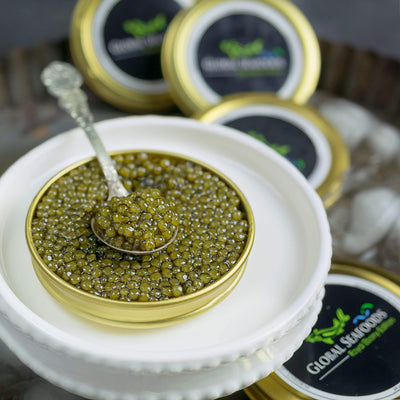
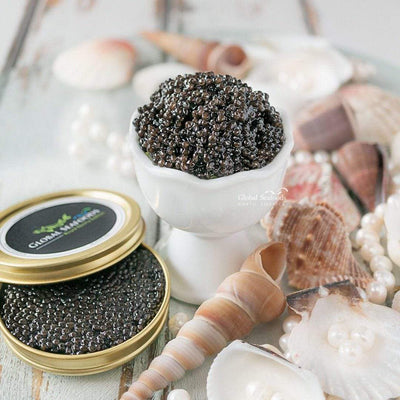
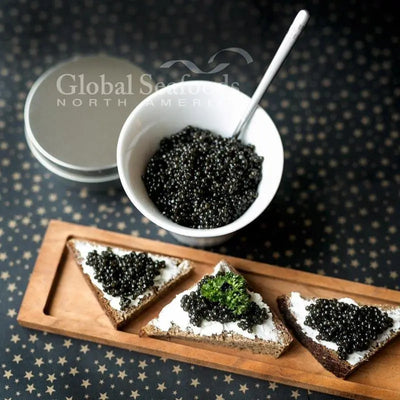
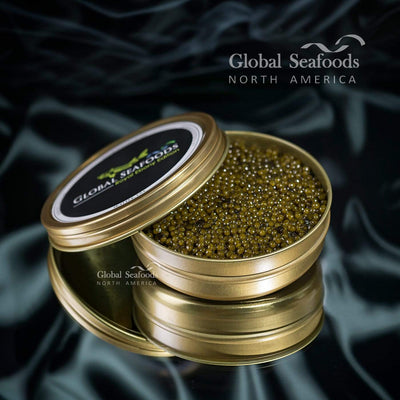
Ossetra caviar (Acipenser gueldenstaedtii) is known for its medium-sized, firm eggs and distinctive nutty, buttery flavor with a complex finish. It is generally considered second only to Beluga in prestige, though many caviar connoisseurs prefer Ossetra's more complex flavor profile over Beluga's milder, creamier taste. The color ranges from golden-brown to dark gray depending on the individual fish. Ossetra is one of the most versatile caviars — excellent on its own, on blinis, or as a garnish for fine seafood dishes.
What is the difference between Ossetra caviar and Siberian sturgeon caviar?
These are two different species. Ossetra caviar comes from Acipenser gueldenstaedtii (Russian sturgeon), native to the Caspian Sea basin. Siberian sturgeon caviar comes from Acipenser baerii, native to Siberian river systems. Siberian sturgeon is the most widely farmed sturgeon species globally due to its faster growth rate and adaptability to aquaculture conditions. Siberian caviar has a slightly milder, cleaner flavor than Ossetra; Ossetra has a more complex, nutty character. Both are excellent farmed alternatives to wild Caspian caviar.
Why is wild Ossetra sturgeon endangered?
Wild Ossetra sturgeon (Acipenser gueldenstaedtii) is listed as Critically Endangered by the IUCN due to a combination of: (1) decades of intense overfishing and illegal poaching driven by caviar demand; (2) habitat destruction from dam construction on the Volga and other spawning rivers, which blocks migration; (3) pollution from oil extraction, industrial development, and agricultural runoff in the Caspian Sea basin; and (4) the species' slow maturation (females don't produce roe until 10–15 years of age), making populations extremely slow to recover from depletion.
Is farmed sturgeon caviar as good as wild caviar?
Yes — top-quality farmed Ossetra and Siberian sturgeon caviar is indistinguishable from wild caviar in blind tastings, and in some cases preferred. The flavor of caviar is influenced by the fish's diet, water quality, and processing method — all of which can be carefully controlled in aquaculture. Farmed caviar also has the advantage of consistent quality and year-round availability, unlike wild caviar which was subject to seasonal and quota constraints. The stigma against farmed caviar has largely disappeared among serious caviar consumers.


Related Products


Also in News

Snail Caviar: How White Escargot Caviar Is Farmed, Harvested and Made

The Dark Years of Pacific Salmon: A 20-Year Outlook for Alaska, Russia, and the Red Caviar Market

King Crab Legs Delivery: Is It Worth It? Exploring the Benefits and Best Options
Shop Now
Main
