
Ikura (Salmon Roe): Flavor, Nutrition, Types by Species, and How to Use It

Ikura (Salmon Roe): Flavor, Nutrition, Types by Species, and How to Use It
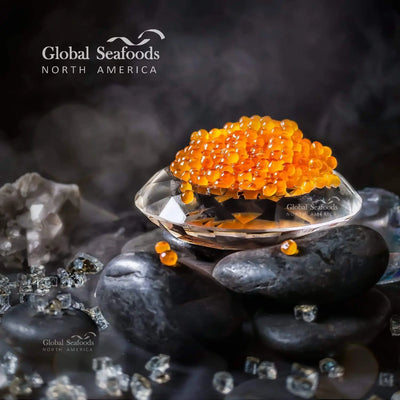
Ikura (イクラ) is the Japanese word for salmon roe — the large, vibrant orange pearls that are one of the most recognizable and beloved ingredients in Japanese cuisine. With a rich, briny, oceanic flavor and a satisfying pop that releases a burst of savory juice, ikura is prized both as a sushi topping and as a standalone delicacy. It is also one of the most nutritionally dense foods available, packed with omega-3 fatty acids, vitamin B12, vitamin D, and complete protein.
🔗 Chum Salmon Caviar | 🔗 Coho Salmon Caviar | 🔗 Red Caviar Collection
What Is Ikura?
Ikura is the Japanese term for salmon roe — specifically the salt-cured or soy-marinated eggs of Pacific salmon species. The word "ikura" is borrowed from the Russian икра (ikra), meaning "fish roe" or "caviar," reflecting the historical trade between Japan and Russia in the North Pacific. In Japan, ikura refers specifically to salmon roe; in Russia, икра is a general term for any fish roe.
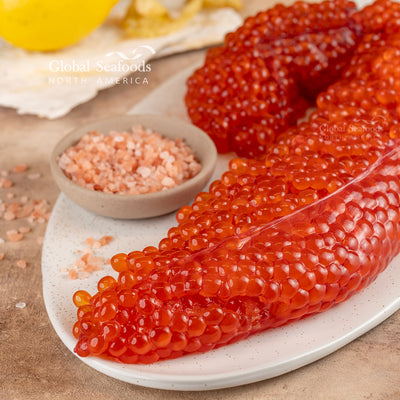
Ikura is distinct from other fish roe in several ways: the pearls are large (4–6mm in diameter, depending on the species), vibrant orange to red in color, and have a thin membrane that bursts easily in the mouth, releasing a rich, savory, oceanic juice. The flavor is briny and umami-rich, with a sweetness that varies by species and preparation method.
Ikura vs. Tobiko vs. Masago
These three roe types are often confused in sushi contexts:
- Ikura (salmon roe): Large pearls (4–6mm); vibrant orange; rich, briny, oceanic flavor; bursts with a satisfying pop
- Tobiko (flying fish roe): Small pearls (0.5–1mm); naturally orange, often dyed; crunchy texture; mild, slightly sweet flavor
- Masago (capelin roe): Very small pearls (0.5mm); pale orange; milder flavor than tobiko; often used as a more affordable tobiko substitute
Types of Ikura by Salmon Species
Not all ikura is the same — the flavor, pearl size, and color vary significantly by salmon species:
| Species | Pearl Size | Color | Flavor | Notes |
|---|---|---|---|---|
| Chum salmon (O. keta) | Large (5–6mm) | Bright orange-red | Rich, briny, full-flavored; classic ikura | The most prized ikura; largest pearls; most commonly used in Japanese cuisine |
| Coho salmon (O. kisutch) | Medium-large (4–5mm) | Deep orange-red | Rich, slightly sweeter than chum; complex | Excellent quality; slightly smaller than chum; highly regarded |
| Sockeye salmon (O. nerka) | Medium (3–4mm) | Deep red-orange | Intense, robust, more assertive brininess | Smaller pearls; more intense flavor; excellent for those who prefer a stronger taste |
| Pink salmon (O. gorbuscha) | Small-medium (3–4mm) | Pale to medium orange | Milder, lighter flavor | Most affordable; milder flavor; good entry point |
| King/Chinook (O. tshawytscha) | Large (5–6mm) | Deep orange | Rich, buttery, complex | Rare; highly prized; the most expensive salmon roe |
Best choice for classic ikura: Chum salmon roe — the largest pearls, the most vibrant color, and the flavor profile that defines the ikura experience in Japanese cuisine.
Preparation: Soy-Marinated vs. Salt-Cured
Ikura is prepared in two primary ways:
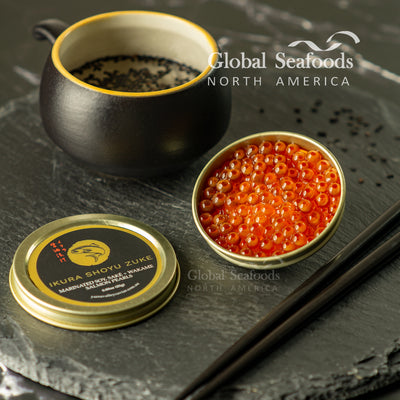
- Soy-marinated ikura (shoyu-zuke 醒油漬け): The roe is marinated in a mixture of soy sauce, mirin, and sake. This is the most common preparation in Japanese cuisine — the marinade adds a subtle sweetness and depth of umami that complements the natural brininess of the roe. The color deepens slightly from the soy sauce.
- Salt-cured ikura (shio-zuke 塩漬け): The roe is cured with salt only, preserving the pure, clean flavor of the salmon roe without additional flavoring. This preparation is preferred by purists who want to taste the roe itself without the influence of soy sauce.
Nutrition
Per 1-oz (28g) serving of ikura (salmon roe):
- Calories: ~40
- Protein: ~4g
- Fat: ~2g
- Omega-3 (EPA+DHA): ~1,000–1,200mg — exceptional for a 1-oz serving
- Vitamin B12: ~100–150% of daily value
- Vitamin D: ~25–35% of daily value
- Selenium: ~30–40% of daily value
- Phosphorus: ~10–15% of daily value
- Sodium: ~400–600mg (varies by preparation; soy-marinated ikura is higher in sodium than salt-cured)
Ikura is one of the most omega-3-dense foods available — a single 1-oz serving provides approximately 1,000–1,200mg of EPA+DHA, comparable to a full 3-oz serving of fatty fish like salmon. The high omega-3 content supports heart health, brain function, and anti-inflammatory effects. The sodium content is significant — those on sodium-restricted diets should consume ikura in moderation.
How to Use Ikura
Ikura Sushi and Gunkan-Maki
The most traditional preparation: ikura placed on top of a small mound of sushi rice, often wrapped in a strip of nori in the gunkan-maki (軍艦巻き, "battleship roll") style. The nori wraps around the rice to create a boat shape that holds the loose roe. The briny ikura pairs perfectly with the subtle sweetness of sushi rice; the nori adds a salty, oceanic background note.
Ikura Donburi (Salmon Roe Rice Bowl)
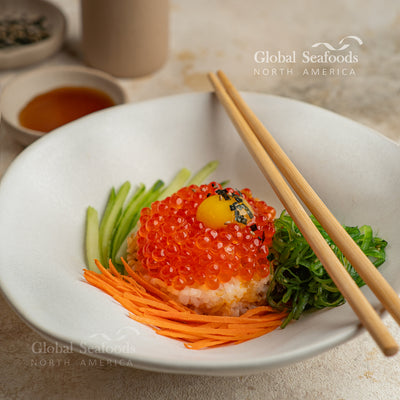
A bowl of steamed Japanese short-grain rice topped generously with ikura, often alongside other seafood (tuna, salmon, uni). The warm rice gently warms the roe, releasing its flavors. A drizzle of soy sauce and a garnish of shiso leaves or nori strips complete the dish. Ikura donburi is one of the most satisfying and visually stunning rice bowl preparations in Japanese cuisine.
Canapés and Appetizers
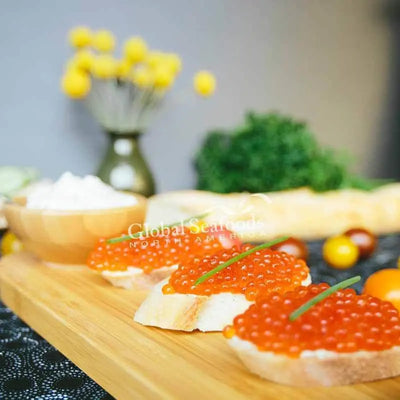
Ikura is an excellent garnish for elegant appetizers: on blinis with crème fraîche; on deviled eggs; on cucumber rounds with cream cheese; or on toast points with smoked salmon and dill. The vibrant orange color and distinctive flavor make it an impressive finishing touch for any appetizer.
Pasta
A Japanese-Italian preparation: toss cooked pasta with butter, a splash of cream, and a generous spoonful of ikura added off the heat (do not cook the roe — heat destroys the texture and flavor). Finish with lemon zest and chives. The ikura melts slightly into the sauce, adding a rich, oceanic depth.
Shop Salmon Roe
- 🔗 Chum Salmon Caviar — Classic ikura; largest pearls
- 🔗 Coho Salmon Caviar
- 🔗 Pink Salmon Caviar
- 🔗 Trout Red Caviar
- 🔗 Full Red Caviar Collection
🎥 Watch ikura and salmon roe tutorials on the Global Seafoods YouTube Channel
FAQs: Ikura Salmon Roe
What does ikura taste like?
Ikura has a rich, briny, oceanic flavor with a strong umami character and a subtle sweetness. The thin membrane of each pearl bursts easily in the mouth, releasing a savory, slightly oily juice. The flavor is more assertive and complex than tobiko or masago. Soy-marinated ikura has an additional layer of sweetness and depth from the mirin and sake in the marinade; salt-cured ikura has a purer, cleaner flavor that showcases the roe itself.
What is the difference between ikura and other salmon roe?
"Ikura" specifically refers to the Japanese preparation of salmon roe — salt-cured or soy-marinated Pacific salmon eggs. The flavor and pearl size vary by species: chum salmon roe has the largest pearls (5–6mm) and is the classic ikura used in Japanese cuisine; coho and sockeye roe are slightly smaller with a more intense flavor; pink salmon roe is the mildest and most affordable. Russian-style salmon roe (also called икра/ikra) is similar but typically salt-cured only, without the soy marinade.
Is ikura healthy?
Yes — ikura is one of the most nutritionally dense foods available. A single 1-oz serving provides approximately 1,000–1,200mg of omega-3 fatty acids (EPA+DHA) — comparable to a full 3-oz serving of fatty fish. It is also rich in vitamin B12 (~100–150% DV), vitamin D (~25–35% DV), and selenium. The main consideration is sodium — soy-marinated ikura is relatively high in sodium (400–600mg per oz); those on sodium-restricted diets should consume in moderation.
Can I cook with ikura?
Ikura should not be cooked — heat destroys the delicate membrane, causing the pearls to burst and lose their texture, and degrades the omega-3 fatty acids and flavor compounds. Always add ikura at the end of preparation, off the heat, or use it as a cold garnish. The one exception is ikura donburi, where the warm (not hot) rice gently warms the roe without cooking it — this is intentional and produces a pleasant effect where the roe softens slightly and releases its flavor into the rice.
Related Products

Also in News

The Dark Years of Pacific Salmon: A 20-Year Outlook for Alaska, Russia, and the Red Caviar Market

King Crab Legs Delivery: Is It Worth It? Exploring the Benefits and Best Options

Understanding Beluga Caviar Price: What Makes It So Expensive?
Shop Now
Main
