
Caviar rojo vs. huevas de salmón: sabor, textura y valor nutricional

Red Caviar vs. Salmon Roe: What's the Difference?
If you've shopped for fish roe online, you've likely encountered both "red caviar" and "salmon roe" — sometimes on the same product page. Are they the same thing? Different? The answer is nuanced, and understanding the distinction will help you choose the right product for your table.
The short answer: Salmon roe is red caviar — "red caviar" is simply the common marketing term for salmon eggs (ikura). However, "red caviar" can also refer to roe from other red-egg fish like trout, which creates meaningful differences in size, flavor, and texture. This guide breaks down everything you need to know.
Terminology: Red Caviar vs. Salmon Roe vs. Ikura
- Salmon Roe: The eggs of any salmon species — sockeye, coho, chum, king (Chinook), or pink salmon. Also called ikura in Japanese cuisine.
- Red Caviar: A broad marketing term for any large, red-orange fish roe — most commonly salmon roe, but can also include trout roe. In Russia and Eastern Europe, "red caviar" (krasnaya ikra) specifically refers to salmon roe.
- Ikura: The Japanese term for salmon roe, specifically referring to the large, individual eggs marinated in soy sauce and mirin. Ikura is the most common form of salmon roe in Japanese cuisine.
- True Caviar: Technically, "caviar" refers only to the roe of sturgeon species (beluga, osetra, sevruga). Salmon roe and trout roe are not true caviar by this strict definition — though "red caviar" is widely accepted as a common name.
Taste and Texture Comparison by Species
Sockeye Salmon Roe (Red Caviar)
- Flavor: Bold, rich, and distinctly oceanic — the most intensely flavored of the salmon roes. Pronounced brininess with a clean finish.
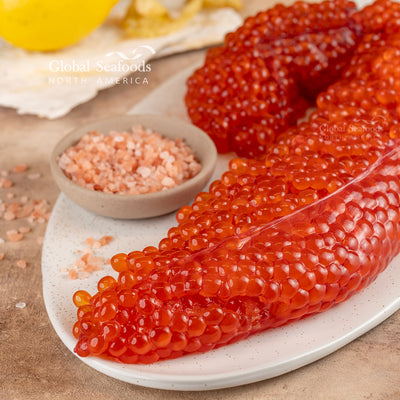
- Texture: Firm eggs with a satisfying pop; medium-large size (~4–5mm diameter). Deep orange-red color.
- Best for: Canapés, blini, sushi, and preparations where bold flavor is desired.
Coho Salmon Roe
- Flavor: Milder and slightly sweeter than sockeye — more approachable for those new to salmon roe. Clean, fresh oceanic flavor.
- Texture: Medium-firm eggs with a good pop; similar size to sockeye. Bright orange color.
- Best for: Pasta, rice bowls, salads, and preparations where a subtler roe flavor is preferred.
Chum Salmon Roe (Soft Shell)
- Flavor: Mild and delicate — the most subtle of the salmon roes. Slightly sweet with minimal brininess.
- Texture: The largest salmon roe eggs (~6–7mm diameter) with a notably soft, thin shell that bursts gently rather than popping. Pale orange color.
- Best for: Raw preparations, ikura donburi, and dishes where a delicate, non-overpowering roe is desired.
King (Chinook) Salmon Roe
- Flavor: Rich and buttery — reflecting the king salmon's naturally high fat content. Complex, layered flavor with a luxurious finish.
- Texture: Large, firm eggs with a satisfying pop. Deep red-orange color.
- Best for: Premium presentations, fine dining, and occasions where the most luxurious salmon roe experience is desired.
Trout Roe (Red Caviar)
- Flavor: Delicate and mild — less oceanic than salmon roe, with a subtle sweetness and clean finish. Often described as the most approachable fish roe for beginners.
- Texture: The smallest of the "red caviar" family (~2–3mm diameter) — firm, with a clean pop. Bright orange-red color.
- Best for: Garnishes, canapés, deviled eggs, and preparations where a delicate, visually striking roe is needed.
Nutritional Comparison
Per 1 oz (28g) serving — all varieties are nutritionally similar with minor differences:
- Calories: ~40–50 kcal (all varieties)
- Protein: ~6g complete protein (all varieties)
- Omega-3 Fatty Acids (DHA+EPA): ~1,000–1,500mg — king salmon roe is highest due to the species' naturally high fat content
- Vitamin B12: ~300%+ DV (all varieties) — one of the richest natural B12 sources available
- Vitamin D: ~35–40% DV (all varieties)
- Selenium: ~30–40% DV (all varieties)
- Sodium: ~200–350mg per oz — varies by curing method; soy-marinated ikura tends to be higher in sodium than lightly salted roe
Key nutritional difference: King salmon roe has the highest omega-3 content due to the species' naturally elevated fat levels. Trout roe is slightly lower in omega-3s than salmon roe. All varieties are excellent sources of B12, Vitamin D, and complete protein.
Culinary Uses
Red Caviar (Salmon Roe) Uses
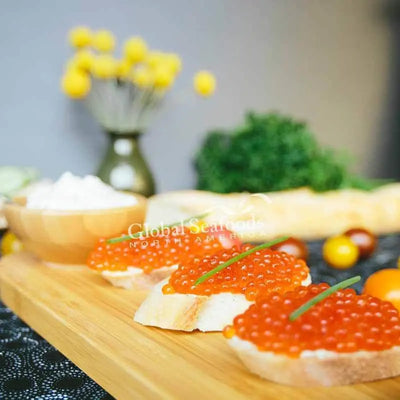
- Canapés and blini: The classic Russian preparation — cream cheese or crème fraîche on blini, topped with salmon roe and fresh dill
- Ikura sushi: Nigiri or gunkan maki (battleship roll) with salmon roe — a staple of Japanese sushi restaurants
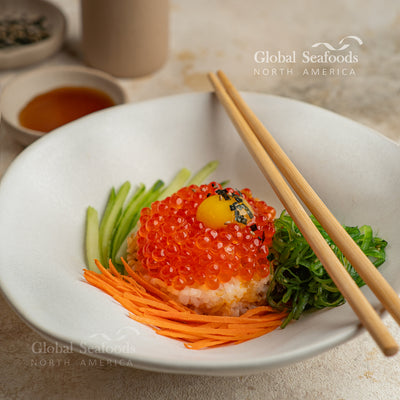
- Ikura donburi: Salmon roe over seasoned sushi rice — one of the most popular Japanese rice bowl dishes
- Pasta: Stirred into butter-lemon pasta off the heat for a luxurious, briny finish
- Deviled eggs: A stunning garnish that adds flavor, color, and nutrition
- Salad topping: Spooned over avocado, cucumber, and mixed greens with lemon vinaigrette
Can Red Caviar and Salmon Roe Be Used Interchangeably?
In most recipes, yes — with the caveat that trout roe (smaller, more delicate) works better as a garnish than as a primary ingredient, while the larger salmon roes (sockeye, chum, king) work better as featured ingredients. Within the salmon roe family, the varieties are largely interchangeable — choose based on your flavor preference (bold = sockeye/king; mild = coho/chum) and budget.
Price Comparison
- Trout Roe: Most affordable — typically $8–15 per oz
- Chum Salmon Roe: Budget-friendly — typically $10–18 per oz
- Coho Salmon Roe: Mid-range — typically $12–20 per oz
- Sockeye Salmon Roe: Mid-premium — typically $15–25 per oz
- King Salmon Roe:1 Most premium — typically $20–35+ per oz
Shop Premium Salmon Roe & Red Caviar Online
- 🔗 Sockeye Salmon Roe (Red Caviar) — bold, classic flavor
- 🔗 Coho Salmon Caviar — milder, slightly sweeter
- 🔗 Chum Salmon Caviar (Soft Shell) — largest eggs, most delicate
- 🔗 Trout Red Caviar — smallest, most delicate, perfect for garnishes
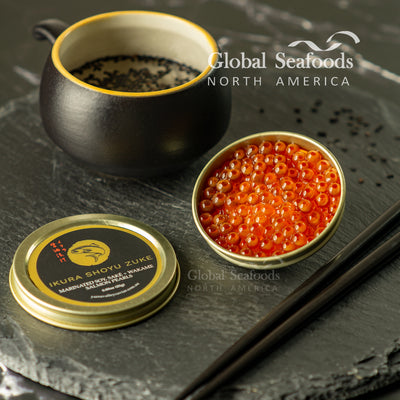
- 🔗 Ikura Shoyu Zuke — soy-marinated salmon roe, Japanese style
- 🔗 Full Red Caviar Collection — explore all varieties
🎥 Watch Salmon Roe Recipes & Tasting Videos on YouTube
Conclusion
Red caviar and salmon roe are largely the same thing — with meaningful differences between species (sockeye vs. coho vs. chum vs. king) and between salmon roe and trout roe. Whether you prefer the bold intensity of sockeye ikura, the delicate sweetness of chum soft-shell roe, or the approachable elegance of trout caviar, all varieties offer exceptional nutrition and culinary versatility. 🔗 Explore the full red caviar collection at Global Seafoods and find your perfect variety.
FAQs: Red Caviar vs. Salmon Roe
Q1: Are red caviar and salmon roe the same thing?
Largely yes — "red caviar" is the common marketing term for salmon roe (salmon eggs). In Russian and Eastern European tradition, krasnaya ikra (red caviar) specifically refers to salmon roe. However, "red caviar" can also refer to trout roe, which is smaller and more delicate than salmon roe. The key distinction is between species: sockeye, coho, chum, and king salmon all produce roe that is sold as "red caviar" or "salmon roe," while trout roe is a related but distinct product. True caviar (by strict definition) refers only to sturgeon roe — salmon and trout roe are technically "red caviar" by common usage, not true caviar.
Q2: Which salmon roe variety has the best flavor?
"Best" depends on your preference: Sockeye salmon roe is the most popular for its bold, rich, intensely oceanic flavor — the classic "red caviar" experience. King salmon roe is the most luxurious — rich and buttery, reflecting the species' high fat content. Coho salmon roe is the best choice for those who prefer a milder, more approachable flavor. Chum salmon roe (soft shell) is the most delicate — large eggs with a gentle pop and subtle sweetness. Trout roe is the mildest and most beginner-friendly. For first-timers: start with coho or chum. For bold flavor lovers: sockeye or king.
Q3: Is it safe to consume raw fish eggs?
Yes — when sourced from reputable suppliers and properly handled. Raw fish roe can potentially harbor Listeria or Salmonella, so it's important to: purchase from certified, reputable suppliers; ensure proper refrigeration (below 40°F); consume within the use-by date; and choose pasteurized products if you are pregnant, elderly, immunocompromised, or otherwise at elevated risk. Global Seafoods' salmon roe is sourced from certified fisheries, properly handled, and shipped in insulated packaging. For most healthy adults, high-quality salmon roe from a trusted source is safe to consume raw.
Q4: What is the difference between ikura and salmon roe?
Ikura (イクラ) is the Japanese word for salmon roe — specifically referring to the large, individual salmon eggs that are a staple of Japanese cuisine. In Japan, ikura is typically marinated in soy sauce and mirin (ikura shoyu zuke), giving it a savory, umami-rich flavor. "Salmon roe" is the broader English term that encompasses all preparations — lightly salted, soy-marinated, or fresh. The eggs themselves are identical; the difference is in the preparation and seasoning. Ikura shoyu zuke from Global Seafoods is the authentic Japanese-style preparation.
Q5: How should I serve red caviar or salmon roe?
The classic serving methods: Blini with crème fraîche: The traditional Russian preparation — warm buckwheat blini, a dollop of crème fraîche or cream cheese, and a generous spoonful of salmon roe, garnished with fresh dill. Ikura donburi: Salmon roe over warm seasoned sushi rice with nori strips and sesame seeds — the quintessential Japanese preparation. Canapés: Toasted baguette or crackers with cream cheese and salmon roe. Pasta: Stirred into butter-lemon linguine off the heat. Deviled eggs: A stunning garnish. Serve salmon roe cold or at room temperature — never heat directly, as high heat destroys the texture and flavor.
Q6: How long does salmon roe last and how should I store it?
Proper storage: Refrigerated (unopened): Follow the use-by date on the package — typically 2–4 weeks from production for fresh-packed roe. Refrigerated (opened): Consume within 3–5 days; keep tightly covered at 32–38°F. Frozen: Salmon roe freezes well for up to 3 months; thaw in the refrigerator overnight — never at room temperature or in warm water. Never refreeze previously thawed salmon roe. Signs of spoilage: off or ammonia-like odor, slimy texture, or discoloration. When in doubt, discard.
Related Products


Ver artículo completo

Snail Caviar: How White Escargot Caviar Is Farmed, Harvested and Made

The Dark Years of Pacific Salmon: A 20-Year Outlook for Alaska, Russia, and the Red Caviar Market

Patas de cangrejo real a domicilio: ¿merece la pena? Conozca los beneficios y las mejores opciones
Compra ahora
Principal
