
How to Properly Store Caviar: Expert Tips for Maximum Freshness
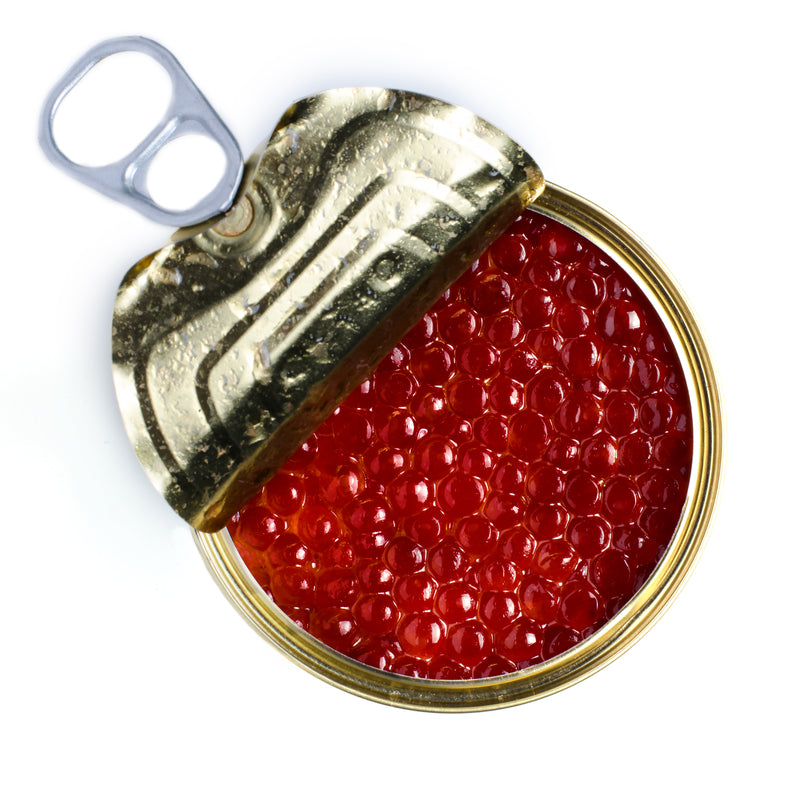
How to Properly Store Caviar
Caviar is a luxurious delicacy that deserves careful handling to preserve its exceptional flavor, texture, and nutritional value. Improper storage can spoil this gourmet treat, leaving you disappointed. By following expert guidance, you can ensure your caviar stays as fresh and flavorful as the day it was packed.
This detailed guide covers essential tips, storage techniques, and the science behind keeping caviar fresh, helping you savor every luxurious bite.
Why Proper Storage is Crucial for Caviar
Caviar is highly perishable due to its delicate structure and high moisture content. Proper storage is essential to:
- Preserve Texture: Maintain the characteristic “pop” of the roe.
- Retain Flavor: Prevent spoilage or off-flavors caused by exposure to air or heat.
- Ensure Safety: Reduce the risk of bacterial growth that can make caviar unsafe to eat.
Ideal Conditions for Storing Caviar
1. Refrigeration Temperature
The optimal temperature for storing caviar is 28°F to 32°F (-2°C to 0°C).
- Best Practice: Place the container in the coldest part of your refrigerator, typically near the back.
- Tip: Use a refrigerator thermometer to ensure consistent temperatures.
2. Airtight Containers
Caviar should always be stored in its original, vacuum-sealed container or transferred to a non-metallic, airtight container.
- Why It Matters: Exposure to air dries out the roe and alters its flavor.
3. Avoid Light and Odors
- Light Exposure: Can degrade the delicate oils in caviar, leading to a loss of flavor.
- Odor Absorption: Caviar easily absorbs strong odors. Store it away from aromatic foods like onions or garlic.
Can You Freeze Caviar?
Freezing caviar is generally not recommended, but it can be done under certain circumstances.
Freezing Guidelines
- Types of Caviar: Freeze only pasteurized caviar, as fresh caviar may lose its texture.
- Packaging: Use vacuum-sealed bags to minimize air exposure.
- Thawing: Defrost slowly in the refrigerator for 24 hours before serving.
Potential Issues
Freezing can alter the texture of the eggs, making them softer and less “poppy.” It’s best to freeze caviar only if you have no other option for long-term storage.
Storage Lifespan of Caviar
The shelf life of caviar depends on whether it is opened or unopened, fresh or pasteurized:
| Type of Caviar | Unopened Shelf Life | Opened Shelf Life |
|---|---|---|
| Fresh Caviar | 4–6 weeks in the refrigerator | 1–3 days in an airtight container |
| Pasteurized Caviar | 6 months to 1 year (refrigerated) | 2–3 days |
| Frozen Caviar | Up to 12 months (properly stored) | Not recommended after freezing |
Always check the expiration date provided by the producer and consume before this date for optimal quality.
Common Storage Mistakes to Avoid
- Leaving Caviar at Room Temperature
- Caviar left out for more than an hour can spoil due to bacterial growth.
- Using Metal Containers or Spoons
- Metal reacts with caviar, imparting an unpleasant metallic taste. Always use non-metallic utensils and containers.
- Frequent Opening of the Container
- Every time the container is opened, air exposure increases, reducing freshness.
- Mixing Fresh and Leftover Caviar
- Never mix new caviar with previously opened caviar, as this can contaminate the entire batch.
How to Serve Caviar After Storage
1. Chill Before Serving
- Serve caviar directly from the refrigerator, placed on a bed of crushed ice to maintain its cool temperature.
2. Use the Right Tools
- Non-Metallic Spoons: Use mother-of-pearl, horn, or plastic spoons to preserve the caviar’s natural flavor.
3. Pairing Ideas
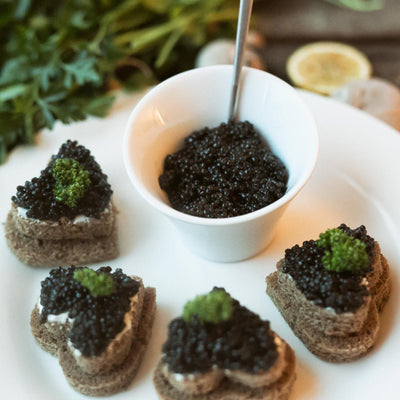
- Classic Pairings: Serve on blinis with crème fraîche or buttered toast points.
- Creative Pairings: Use as a garnish for oysters, deviled eggs, or pasta.
For serving inspiration, check out our YouTube channel featuring expert tips and recipes.
FAQs About Caviar Storage
1. How long can unopened caviar last in the refrigerator?
Unopened fresh caviar can last 4–6 weeks if stored at 28°F to 32°F. Pasteurized caviar can last up to a year.
2. Can I store caviar in the freezer?
Freezing is possible but not ideal. Fresh caviar may lose its texture, so only freeze pasteurized caviar in vacuum-sealed containers.
3. How do I know if caviar has gone bad?
Spoiled caviar will have an off smell, mushy texture, or sour taste. If in doubt, discard it.
4. What happens if I eat spoiled caviar?
Consuming spoiled caviar can cause foodborne illnesses. Always prioritize safety and check for signs of spoilage.
Recommended Caviar Options for Every Occasion
Looking for premium caviar to enjoy? Explore our wide selection:
Browse our Red Caviar Collection for the finest salmon roe options.
Conclusion
Proper caviar storage is key to preserving its luxurious flavor, delicate texture, and premium quality. By maintaining the ideal temperature, using airtight containers, and following expert tips, you can enjoy this exquisite delicacy at its best.
Elevate your culinary experiences with our curated selection of high-quality caviar, including Pink Salmon Caviar and Bloody Shiraz Infused Caviar.





Also in News

Halibut Nutrition Facts: Everything You Need to Know

Crab vs. Lobster: Which is Healthier?

The Health Benefits of Ikura: What You Need to Know
Shop Now
Main
