
Salmon vs. Tuna: Which is Healthier?

Salmon vs. Tuna: Which Is Healthier?
Salmon and tuna are two of the most popular fish in the world — both nutritious, both delicious, and both staples of healthy diets globally. But when it comes to nutrition, they’re quite different. Here’s a complete side-by-side comparison to help you choose the right fish for your health goals.
Nutritional Comparison (Per 3 oz / 85g Cooked Serving)
| Nutrient | Sockeye Salmon | Yellowfin Tuna (Ahi) |
|---|---|---|
| Calories | 133 | 109 |
| Protein | 22g | 24g |
| Total Fat | 5.4g | 0.6g |
| Omega-3 Fatty Acids | ~1,800mg | ~230mg |
| Vitamin B12 | 80% DV | 80% DV |
| Vitamin D | 70% DV | 20% DV |
| Selenium | 40% DV | 60% DV |
| Niacin (B3) | 40% DV | 50% DV |
| Potassium | 12% DV | 8% DV |
| Mercury Level | Low (FDA: Best Choice) | Moderate (FDA: Good Choice) |
Key Differences Explained
Omega-3 Fatty Acids — Salmon Wins by a Wide Margin
This is the biggest nutritional difference between the two. Salmon contains dramatically more omega-3 fatty acids than tuna — approximately 1,800mg per serving for sockeye vs. 230mg for yellowfin tuna. Omega-3s (EPA and DHA) are essential for heart health, brain function, reducing inflammation, and supporting mental wellbeing. If omega-3 intake is your primary goal, salmon is the clear winner.
Protein — Tuna Edges Ahead
Tuna is slightly higher in protein — 24g per serving vs. 22g for salmon — with virtually no fat. This makes Ahi tuna the top choice for lean, high-protein diets focused on muscle building or weight loss.
Calories & Fat
Tuna is lower in calories (109 vs. 133) and significantly lower in fat (0.6g vs. 5.4g). However, salmon’s fat is almost entirely healthy unsaturated fat — the same type that makes olive oil heart-healthy. The extra calories in salmon come with significant nutritional benefits, not empty energy.
Vitamin D — Salmon Wins
Salmon is one of the best natural sources of Vitamin D available — providing 70% of the daily value per serving vs. 20% for tuna. Vitamin D deficiency is widespread, making salmon a particularly valuable dietary choice for bone health and immune function.
Selenium — Tuna Wins
Tuna leads on selenium (60% DV vs. 40% DV for salmon) — a powerful antioxidant that supports thyroid function and immune defense.
Mercury — Salmon Is Safer
Mercury is where salmon has a clear advantage:
- Salmon: FDA classifies as “Best Choice” — safe to eat 2–3 times per week for most adults, including pregnant women
- Yellowfin Tuna (Ahi): FDA classifies as “Good Choice” — safe for most adults at 1 serving per week; pregnant women and young children should limit intake
- Albacore Tuna: Also “Good Choice” — similar guidance to yellowfin
- Bigeye Tuna: FDA classifies as “Avoid” for pregnant women and young children due to higher mercury
Which Is Better for Specific Goals?
- For omega-3s & heart health: Salmon — by a wide margin
- For lean protein & weight loss: Tuna — more protein, fewer calories, virtually no fat
- For vitamin D: Salmon — one of the best natural sources available
- For mercury safety: Salmon — lower mercury, can be eaten more frequently
- For muscle building: Either — both are complete protein sources; tuna has a slight edge on protein density
- For pregnant women: Salmon — lower mercury and higher omega-3s support fetal brain development
Shop Wild-Caught Salmon & Ahi Tuna
Global Seafoods offers premium wild-caught salmon and sushi-grade Ahi tuna, shipped frozen with dry ice:
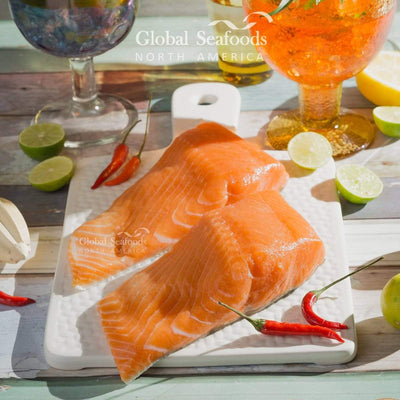
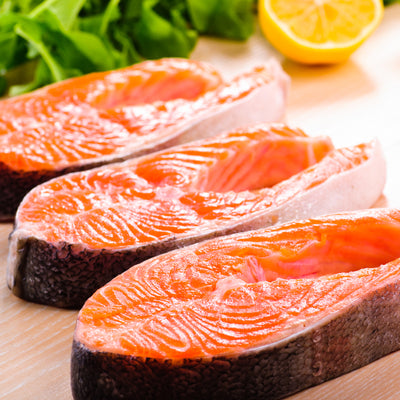
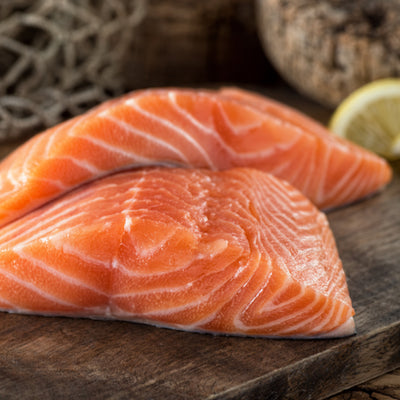
- Sockeye Salmon Fillets – Wild-Caught
- Copper River King Salmon – Premium Wild-Caught
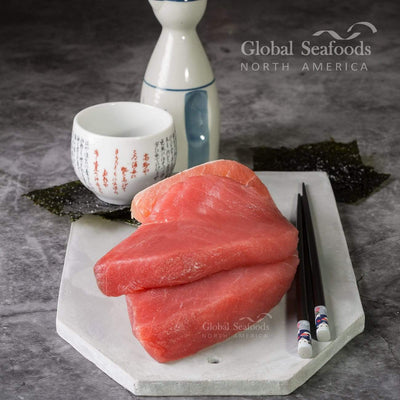
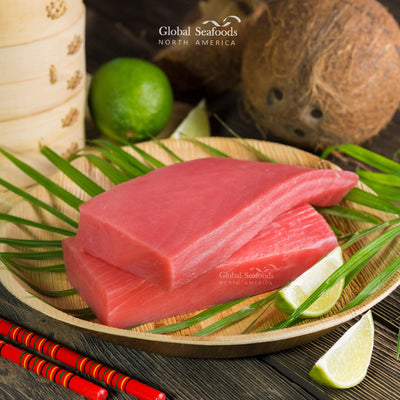
- Yellowfin Tuna (Ahi) Steaks – Sashimi-Grade, Wild-Caught
FAQ
Q: Which has more omega-3s — salmon or tuna?
A: Salmon has dramatically more omega-3s — approximately 1,800mg per serving for sockeye vs. 230mg for yellowfin tuna. If omega-3 intake is your goal, salmon is the clear choice.
Q: Is salmon or tuna better for weight loss?
A: Tuna is lower in calories (109 vs. 133 per 3 oz) and higher in protein (24g vs. 22g), making it slightly better for strict calorie-controlled diets. Both are excellent high-protein, low-carb options.
Q: Which fish is lower in mercury?
A: Salmon is significantly lower in mercury — FDA classifies it as “Best Choice” (safe 2–3x/week), while yellowfin tuna is “Good Choice” (1x/week for most adults).
Q: Is salmon or tuna better for pregnant women?
A: Salmon is the better choice during pregnancy — lower mercury and higher omega-3s (DHA) that support fetal brain and eye development. The FDA recommends 2–3 servings of low-mercury seafood like salmon per week during pregnancy.
Q: Which is better for muscle building?
A: Both are excellent. Tuna has a slight edge with 24g protein vs. 22g for salmon per 3 oz serving, and is lower in calories — making it the top choice for lean bulking or cutting phases.
Conclusion
Both salmon and tuna are outstanding choices for a healthy diet — the best one depends on your specific goals. Salmon wins on omega-3s, vitamin D, and mercury safety; tuna wins on lean protein and calorie efficiency. Ideally, include both in your diet regularly. Shop our wild-caught salmon collection and sushi-grade Ahi tuna — both delivered frozen to your door at peak freshness.


Also in News

Halibut Nutrition Facts: Everything You Need to Know

Crab vs. Lobster: Which is Healthier?

The Health Benefits of Ikura: What You Need to Know
Shop Now
Main
