
Cocktail Caviar Pairings: Best Drinks to Complement Exquisite Caviar

Cocktail Caviar Pairings: Elevate Your Drinking Experience with Luxurious Caviar
Caviar is the epitome of luxury dining, but pairing it with the perfect cocktail takes indulgence to an entirely new level. The right combination of caviar and cocktails creates a genuinely memorable sensory experience — the brininess and richness of the roe interacting with the acidity, effervescence, or botanical complexity of the drink in ways that enhance both. Whether you're celebrating a special occasion or simply elevating a dinner party, this guide will help you discover the best cocktail and caviar pairings, with expert tips on serving, presentation, and garnishing.
For the finest caviar selections, explore Global Seafoods' Red Caviar Collection.
The Principles of Cocktail and Caviar Pairing
Pairing caviar with cocktails follows similar principles to pairing caviar with wine, with a few additional considerations:
- Avoid overpowering the caviar: Caviar has a delicate, nuanced flavor profile — briny, slightly sweet, with a distinctive "pop" and finish. Strong, heavily flavored cocktails (overly sweet, very bitter, or intensely spiced) can overwhelm these subtleties.
- Prioritize clean, cold spirits: Vodka and gin — served ice-cold — are the classic caviar companions because their clean flavor profiles don't compete with the roe. Champagne and sparkling wines are equally classic for the same reason.
- Match intensity: More intensely flavored caviars (Chum salmon roe, Coho salmon roe) can handle more complex cocktails. Delicate caviars (sturgeon, trout roe) pair best with simpler, cleaner drinks.
- Temperature matters: Both the caviar and the cocktail should be served cold. Caviar served at room temperature loses its texture and flavor; cocktails served warm don't provide the palate-cleansing contrast that makes the pairing work.
5 Best Cocktail and Caviar Pairings
1. Classic Martini & Sturgeon Caviar
The classic martini — vodka or gin, dry vermouth, served ice-cold in a chilled glass — is arguably the most iconic caviar cocktail pairing. The clean, crisp character of the martini provides the perfect neutral backdrop for the buttery, nutty complexity of sturgeon caviar, allowing every nuance of the roe to shine without competition.
Why it works: A vodka martini's near-neutral flavor profile is the purest expression of the "don't compete with the caviar" principle. A gin martini adds botanical complexity (juniper, citrus, herbs) that can complement the briny, oceanic character of the caviar beautifully — particularly with a London Dry gin. The dry vermouth adds a subtle herbal note that echoes the caviar's complexity.
Serving tip: Serve ice-cold in a pre-chilled glass. Garnish with a small spoonful of caviar on a blini with crème fraîche, served alongside on a chilled plate. Use a mother-of-pearl spoon — never metal, which imparts a metallic taste to the roe.
Best caviar pairing: Chum Salmon Caviar for a bold, rich pairing; or California White Sturgeon Caviar for the most classic expression.
2. Champagne & Salmon Roe
Champagne and caviar is perhaps the most celebrated pairing in luxury dining — a combination that has graced the tables of royalty, diplomats, and gourmands for over a century. The effervescence of Champagne cuts through the richness of salmon roe, the acidity balances the brininess, and the fine bubbles create a textural contrast with the pearls of roe that is genuinely extraordinary.
Why it works: Brut or Extra Brut Champagne is ideal — the low dosage (residual sugar) keeps the wine dry and focused, allowing the caviar's natural sweetness to come forward. The yeasty, toasty complexity of aged Champagne (brioche, cream, citrus) creates a multi-layered pairing with salmon roe's clean ocean flavor. Prosecco is a more affordable alternative that still delivers the essential effervescence and acidity.
Serving tip: Serve in a chilled flute. Present caviar on a blini with crème fraîche alongside the glass. For a more dramatic presentation, serve a small spoonful of roe on the back of your hand (the traditional "hand bump" tasting method) before sipping the Champagne.
Best caviar pairing: Pink Salmon Caviar for an elegant, visually stunning presentation; or Coho Salmon Caviar for a richer, more complex pairing.
3. Moscow Mule & Flying Fish Roe (Tobiko)
The Moscow Mule — vodka, ginger beer, and fresh lime juice served in a copper mug over crushed ice — is a more adventurous caviar pairing that works beautifully with the crunchy, briny texture of flying fish roe (tobiko). The spicy kick of ginger beer creates an exciting contrast with the roe's subtle saltiness, while the lime juice adds brightness that complements the oceanic flavor.
Why it works: Flying fish roe has a firmer, crunchier texture than salmon roe and a milder, more neutral flavor — making it versatile enough to handle the bolder flavors of a Moscow Mule. The ginger's heat and the lime's acidity both enhance the roe's brininess without overwhelming it. The vodka base keeps the spirit component clean and non-competitive.
Serving tip: Serve in a traditional copper mug with crushed ice. Garnish with a spoonful of flying fish roe on a thin slice of cucumber or a small blini, placed on the rim of the mug. The cucumber's cool, clean flavor bridges the gap between the cocktail and the roe.
Best caviar pairing: Trout Red Caviar for a vibrant pop of color and a slightly milder flavor than salmon roe.
4. Negroni & Coho Salmon Caviar
The Negroni — equal parts gin, Campari, and sweet vermouth, stirred and served over ice with an orange peel — is a bold, bitter, complex cocktail that requires an equally assertive caviar pairing. Coho salmon caviar, with its larger pearls, vibrant color, and clean, briny flavor, is robust enough to hold its own against the Negroni's intensity.
Why it works: The Negroni's bitterness (from Campari) and herbal complexity (from the gin and vermouth) create a striking contrast with the clean, oceanic brininess of Coho salmon roe. The orange peel garnish echoes the citrus notes that complement salmon caviar beautifully. This is a pairing for adventurous palates — the contrast is bold and deliberate, not subtle.
Serving tip: Serve the Negroni in a rocks glass over a large ice cube. Present the Coho caviar separately on a chilled plate with crème fraîche and thin toast points. Alternate between sips of the cocktail and small bites of caviar rather than combining them in the same bite.
Best caviar pairing: Coho Salmon Caviar — its assertive flavor and large pearls stand up to the Negroni's complexity.
5. Sparkling Sake & Ikura (King Salmon Roe)
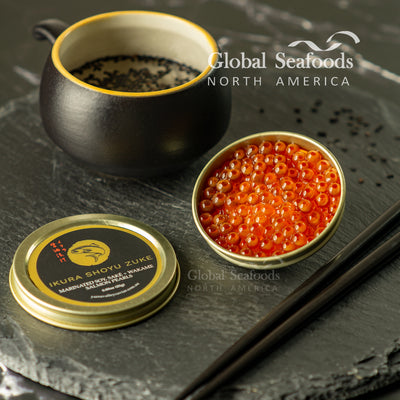
Sparkling sake — a lightly effervescent, delicately sweet Japanese rice wine — is an elegant and unexpected pairing for Ikura (large-pearl King Salmon roe). The pairing draws on the Japanese culinary tradition of serving salmon roe with sake, elevated here with the effervescence and refined sweetness of a sparkling style.
Why it works: Sparkling sake's gentle bubbles and subtle sweetness complement the rich, buttery flavor of King Salmon roe without overpowering it. The rice wine's umami depth creates a harmonious bridge with the roe's oceanic character. The low alcohol content (typically 5–8% ABV) keeps the pairing light and refreshing, allowing the caviar to remain the star.
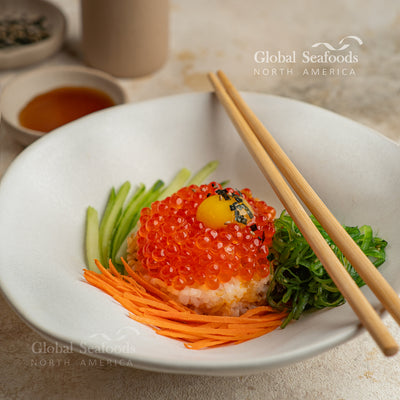
Serving tip: Serve sparkling sake chilled in a champagne flute or a traditional ochoko (sake cup). Present Ikura in a small ceramic bowl or on a mother-of-pearl spoon. Accompany with a small piece of nori (dried seaweed) or a thin cucumber round for a Japanese-inspired presentation.
Best caviar pairing: King Salmon Caviar — the largest, richest salmon roe, ideal for this elegant pairing.
How to Serve Caviar with Cocktails
Use the Right Utensils
Never use metal spoons with caviar — metal reacts with the delicate oils in the roe and imparts a metallic, off-putting taste that ruins the pairing. Always use mother-of-pearl, bone, horn, or wooden spoons. Mother-of-pearl is the traditional and preferred choice for premium caviar service.
Temperature and Presentation
- Serve caviar on a chilled plate or nestled in a bowl of crushed ice to maintain the ideal temperature (28–32°F).
- Keep caviar refrigerated until the moment of service — even a few minutes at room temperature can affect texture and flavor.
- Open the tin just before serving — exposure to air begins to degrade the roe's flavor and texture.
Garnishes and Accompaniments
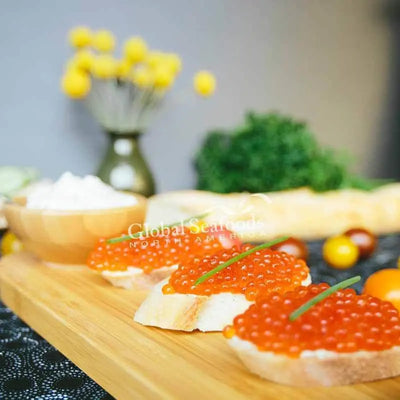
- Blinis: The classic accompaniment — small, slightly yeasted buckwheat pancakes that provide a neutral, slightly nutty base for the caviar.
- Crème fraîche: The cool, tangy creaminess balances the saltiness of the roe and adds richness.
- Fresh dill or chives: Delicate herbs that complement the briny flavor without overpowering it.
- Lemon zest or orange peel: A small amount of citrus zest adds brightness and acidity that enhances both the caviar and the cocktail.
- Cucumber rounds or toast points: Clean, neutral bases that let the caviar flavor shine.
Shop Premium Caviar Online
- 🔗 Red Caviar Collection — all salmon roe varieties
- 🔗 Coho Salmon Caviar — large pearls, clean ocean flavor
- 🔗 Pink Salmon Caviar — elegant, vibrant, mild
- 🔗 Chum Salmon Caviar — large pearls, bold flavor
- 🔗 Trout Red Caviar — smaller pearls, mild and versatile
🎥 Watch caviar serving and pairing videos on the Global Seafoods YouTube Channel
Conclusion
Cocktail and caviar pairings offer an unforgettable blend of texture, flavor, and sophistication that transforms any occasion into a genuinely luxurious experience. Whether you prefer the timeless elegance of a martini with sturgeon caviar, the celebratory effervescence of Champagne with salmon roe, or the adventurous contrast of a Negroni with Coho caviar, the right pairing elevates both the drink and the roe to something greater than either alone. 🔗 Explore Global Seafoods' premium caviar collection and create your own extraordinary pairing tonight.
FAQs: Cocktail Caviar Pairings
Q1: What is the single best cocktail to pair with caviar?
The classic answer — supported by centuries of tradition in Russia, France, and the world's finest restaurants — is ice-cold vodka or a dry martini. Vodka's near-neutral flavor profile is the purest expression of the "don't compete with the caviar" principle: it cleanses the palate between bites, provides a cold, clean contrast to the rich roe, and allows every nuance of the caviar's flavor to come forward unimpeded. Champagne is the equally classic alternative, adding effervescence and acidity that complement the caviar's brininess in a different but equally elegant way. For everyday entertaining, a crisp Prosecco is an excellent and more affordable option.
Q2: Can I pair caviar with non-alcoholic drinks?
Yes — several non-alcoholic options work beautifully with caviar: Sparkling water with lemon or lime — the effervescence and acidity mimic the role of Champagne, cleansing the palate and complementing the brininess. Non-alcoholic sparkling wine (Leitz Eins Zwei Zero, Oddbird Blanc de Blancs) — high-quality options that closely replicate the Champagne pairing experience. Elderflower tonic water — the floral, slightly sweet character complements the delicate flavor of salmon roe particularly well. Cold-brew green tea — the subtle tannins and umami depth create an interesting bridge with the oceanic character of the caviar. Non-alcoholic gin and tonic — the botanical complexity of non-alcoholic gin (Seedlip, Lyre's) works similarly to a traditional gin martini pairing.
Q3: What is the difference between cocktail caviar and traditional caviar?
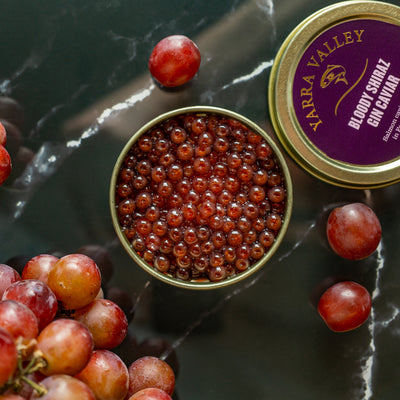
"Cocktail caviar" can refer to two different things: Traditional fish roe served alongside cocktails — this is what this guide primarily covers. Premium salmon roe, sturgeon caviar, or flying fish roe served as an accompaniment to cocktails, following the same principles as wine and caviar pairing. Molecular gastronomy "caviar pearls" — spherified liquid beads made using sodium alginate and calcium chloride, which can be made from virtually any liquid (cocktail ingredients, fruit juices, flavored oils). These are used as a garnish inside or on top of cocktails, adding a burst of flavor when bitten. Both are legitimate and delicious — this guide focuses on the former (traditional roe paired with cocktails), which is the more established and widely practiced tradition.
Q4: How much caviar should I serve per person for a cocktail pairing?
For a cocktail pairing (as an accompaniment rather than a main course), the standard serving is 10–15 grams (approximately 1–1.5 teaspoons) per person per cocktail. This is enough to experience the pairing without overwhelming the palate or the budget. For a more generous appetizer presentation, 20–30 grams per person is appropriate. For a full caviar service (multiple varieties, multiple courses), 50–60 grams per person is the traditional fine dining standard. Caviar is best served in small amounts — its intensity means that a little goes a long way, and the pairing experience is most effective when the caviar is a complement to the cocktail rather than the sole focus.
Q5: How should I store caviar before a cocktail party?
Proper storage is critical for maintaining caviar quality: Temperature: Store at 28–32°F — the coldest part of your refrigerator (typically the back of the bottom shelf or the meat drawer). Do not freeze. Unopened: Most premium caviar has a shelf life of 4–6 weeks refrigerated when unopened. Check the "best by" date on the tin. Opened: Once opened, consume within 2–3 days for optimal flavor and texture. Press plastic wrap directly onto the surface of the roe to minimize air exposure. Day of the party: Remove from the refrigerator no more than 5–10 minutes before serving. Keep the tin nestled in crushed ice throughout service. Never refreeze caviar that has been thawed — freezing damages the pearl structure and significantly degrades texture and flavor.
Q6: Are there vegetarian or vegan alternatives to caviar for cocktail pairings?
Yes — several plant-based alternatives can replicate the visual and textural experience of caviar in cocktail pairings: Seaweed caviar: Made from seaweed extract using spherification techniques; delivers a similar briny, oceanic flavor and "pop" texture. Available from specialty food retailers. Kelp caviar: Similar to seaweed caviar; some brands add natural flavors to replicate specific roe varieties. Tapioca pearls (flavored): Used in molecular mixology; can be infused with virtually any flavor. Olive caviar: Finely minced or spherified olives; the brininess and umami depth make them a reasonable substitute in cocktail garnish applications. These alternatives work best in the Moscow Mule and sparkling sake pairings, where the cocktail's bold flavors can accommodate the slightly different flavor profile of plant-based alternatives.
Related Products


Also in News

Snail Caviar: How White Escargot Caviar Is Farmed, Harvested and Made

The Dark Years of Pacific Salmon: A 20-Year Outlook for Alaska, Russia, and the Red Caviar Market

King Crab Legs Delivery: Is It Worth It? Exploring the Benefits and Best Options
Shop Now
Main
