
Ossetra Caviar and Caviar Pairings: How to Pair Different Types of Caviar

Ossetra Caviar and Caviar Pairings: How to Pair Different Types of Caviar
A multi-caviar tasting is one of the more instructive ways to understand the range of sturgeon roe — each variety has a distinct flavor signature, pearl size, and texture, and tasting them side-by-side reveals those differences more clearly than eating any one variety in isolation. This guide covers the major caviar types available through Global Seafoods, the flavor logic of pairing them together, and three serving formats: a tasting trio, a layered verrine, and deviled eggs.
Caviar varieties: flavor profiles
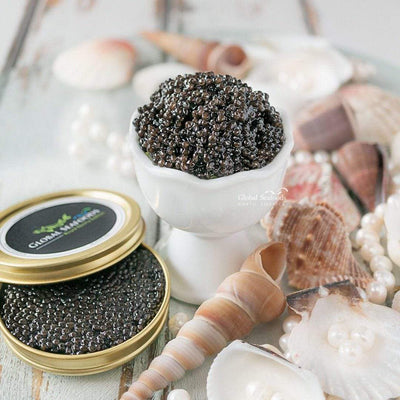
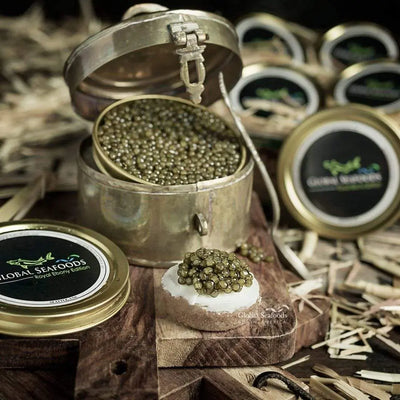
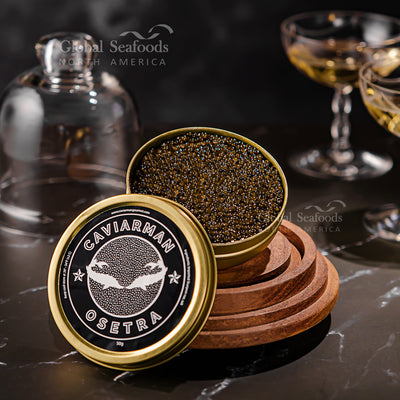
Ossetra caviar (Acipenser gueldenstaedtii): Medium pearls (2.5–3.5mm), golden-brown to amber. Nutty, buttery, clean briny finish. The defining flavor characteristic is the hazelnut/walnut note, which makes it distinctive among sturgeon caviars. Versatile — works on neutral bases and alongside other caviars without being dominated.
Beluga-style caviar: Note — commercial import of wild Caspian Beluga caviar (Huso huso) has been banned in the US since 2005 (CITES Appendix II). Beluga caviar sold in the US is farmed hybrid, typically Kaluga hybrid or farmed Beluga raised in aquaculture outside the US. Large pearls, silvery-gray, velvety texture. Flavor: creamy, mild, and subtly sweet — the mildest of the premium caviars. Best served on its own or with minimal accompaniment so the delicate flavor is not masked.
Sevruga caviar (Acipenser stellatus): Small pearls (1.5–2mm), dark gray. The most intensely briny and assertive of the three classic caviars. High in naturally occurring monosodium glutamate, which gives it a sharp umami punch. Best paired with something that absorbs or buffers the salinity: hard-boiled egg, butter, or crème fraîche.
Kaluga caviar (Huso dauricus × Acipenser schrenkii hybrid): Large pearls, golden-brown. Rich, buttery, and slightly nutty — often described as Beluga-adjacent in flavor but with more depth. Sustainable farmed hybrid; the primary Beluga alternative in the US market. Works well alongside Ossetra in a tasting: similar nut quality, different scale and richness.
Paddlefish caviar (Polyodon spathula): American species; not a sturgeon but a related order (Acipenseriformes). Small-medium dark pearls. Earthy, robust, distinct freshwater character. The most assertive flavor of the group; acidic accompaniments (lemon, pickled onion) balance it well. Entry-level price point; good for a tasting that includes non-sturgeon comparison.
Siberian sturgeon caviar (Acipenser baerii): Medium pearls, dark gray. Mild, slightly nutty, clean ocean brine. One of the most widely farmed sturgeon species globally; consistent quality. Good all-purpose caviar; less distinctive than Ossetra but reliable and well-priced for tasting flights.
Pairing logic
When building a multi-caviar tasting, order from mildest to boldest: Beluga-style → Kaluga → Ossetra → Siberian → Sevruga → Paddlefish. This prevents the stronger varieties from desensitizing the palate before the delicate ones. Serve each variety on a separate spoon or small plate — mixing different caviars in the same vessel combines flavors before you’ve assessed each individually, which is counterproductive for a tasting. Between varieties, reset the palate with plain blini (no toppings), still water, or unsalted butter on bread.
Utensils: Always use mother-of-pearl, bone, horn, or plastic spoons for caviar. Metal spoons (silver, stainless steel) react with the roe and impart a distinct metallic taste that distorts the flavor. This applies to serving spoons and eating utensils.
Serving formats
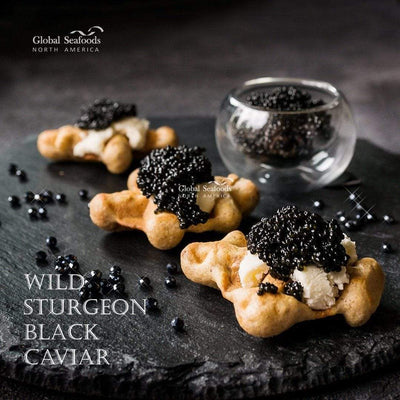
Caviar trio platter (serves 4–6 as amuse): Arrange 1 tbsp each of three caviar varieties in separate small bowls or on a chilled slate, ordered mild to bold. Serve with warm blinis, crème fraîche (separately, not pre-applied), and mother-of-pearl spoons. Label each variety so guests can track what they’re tasting. Keep the caviar tins on ice during service — temperature above 40°F degrades texture quickly.
Layered caviar verrine (serves 4): In chilled shot glasses or small verrines, layer: 1 tbsp crème fraîche; 1 tbsp finely sliced chives; 1 tbsp single caviar variety of choice (Ossetra or Kaluga work best for this format). The single-caviar verrine is more elegant than mixing varieties in one glass — you taste one caviar clearly against the crème fraîche backdrop. If serving multiple verrines, use different caviar in each glass and serve simultaneously so guests can compare.
Deviled eggs with caviar (serves 6 as amuse): 6 hard-boiled eggs; 2 tbsp crème fraîche; 1 tsp Dijon mustard; flaky salt; 1 tbsp Ossetra caviar + 1 tbsp Paddlefish caviar (contrasting: nutty/briny vs. earthy/robust).
- Halve eggs; press yolks through a fine sieve for smooth filling.
- Mix yolks with crème fraîche and Dijon. Season with flaky salt.
- Pipe into egg white halves. Top half with Ossetra, half with Paddlefish — the visual and flavor contrast side-by-side makes the pairing point clearly.
- Serve immediately on a chilled plate with mother-of-pearl spoons.
For premium caviar: Ossetra Sturgeon Caviar, Beluga-style Caviar, Kaluga Caviar, Paddlefish Caviar. For video recipes, subscribe to the Global Seafoods YouTube Channel.

Related Products


Also in News

Snail Caviar: How White Escargot Caviar Is Farmed, Harvested and Made

The Dark Years of Pacific Salmon: A 20-Year Outlook for Alaska, Russia, and the Red Caviar Market

King Crab Legs Delivery: Is It Worth It? Exploring the Benefits and Best Options
Shop Now
Main
