
Low-Salt Keta Caviar – First-Grade Delicacy Perfect for Gourmet Dining

Low-Salt Keta Caviar: First-Grade Quality and What It Means
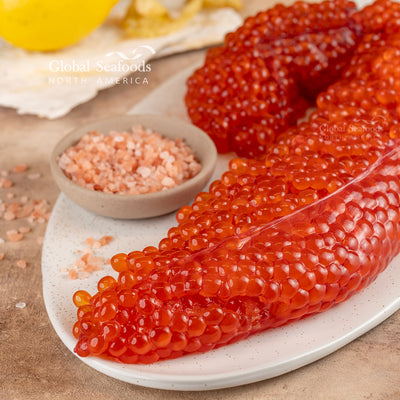
Keta Caviar (also called Chum Salmon Roe, Keta Roe, or by its Japanese name sujiko when still in the skein) is produced from Chum Salmon (Oncorhynchus keta), one of the most widely distributed Pacific salmon species. Keta salmon run from Alaska south through the Pacific Northwest and are also harvested commercially in Russia and Japan. Their roe is medium-large (approximately 4–5mm diameter), firm-skinned, mildly flavored, and one of the most prized roes in Japanese cuisine — it is the species most commonly used for commercial ikura production in Japan.
This article focuses on first-grade, low-salt Keta Caviar — what those quality designations mean, how to identify them, and why they matter for flavor and versatility.
Mercury: Chum/Keta Salmon is FDA "Best Choices" — the lowest mercury tier. Safe to eat 2–3 servings per week for all adults including pregnant women and children. Source: FDA Advice About Eating Fish.
Nutrition (per 1 oz / 28g, approximate): ~40 calories; ~6g protein; omega-3 EPA+DHA approximately 900–1,100mg per oz. Rich in vitamin B12, vitamin D, vitamin A, and selenium.
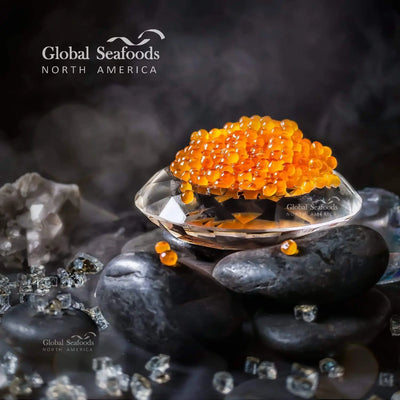
Product: Chum Salmon Caviar (Soft Shell) at Global Seafoods.
What "first-grade" means for salmon roe
Commercial salmon roe grading (used in Russian, Japanese, and Pacific Northwest production) classifies roe into quality tiers based on measurable attributes:
First-grade / Premium grade criteria:
- Bead uniformity: All eggs in the batch are consistent in diameter (within ~0.5mm variance). No mixed sizes from different fish or different stages of maturity.
- Membrane integrity: Zero or near-zero broken or deflated eggs. Each bead is intact, taut, and fully formed. Broken eggs in a jar are a grading defect — they release their contents, creating a cloudy brine and off-flavor.
- Color consistency: Uniform, vivid orange-red throughout the batch. No pale, overly dark, or discolored eggs (which indicate roe harvested at the wrong maturity stage or improperly stored).
- Odor: Clean, oceanic, and fresh. No ammonia notes (sign of bacterial degradation) or oxidized-fish smell (sign of improper cold chain).
- Flavor: Balanced salt level; natural sweetness and oceanic character detectable; no overwhelming brininess that masks the roe’s natural flavor.
Lower-grade roe may contain a higher percentage of broken eggs, mixed sizes, softer membranes (from late-season harvest when the fish have been in fresh water longer), or higher salt levels (used to compensate for less-than-optimal raw material quality).
What "low-salt" means and why it matters
Salt concentration in cured salmon roe is the primary variable distinguishing product styles:
Low-salt (mildly salted / малосольная икра): Approximately 3–3.5% salt by roe weight. The goal is to cure the roe just enough for preservation and flavor development while leaving the natural sweetness and oceanic freshness as the dominant flavor notes. This is the style preferred for standalone tasting, fine dining presentations, and any application where the roe’s natural flavor should be the centerpiece.
Standard salt: Approximately 4–5% salt. Longer shelf life; more assertive brine flavor; natural sweetness less prominent. Suitable for stronger-flavored preparations or longer storage needs.
Heavily salted: 6%+ salt. Used primarily for long-term storage or export; the salt flavor dominates; typically soaked in water before serving to reduce saltiness. Not what is sold as premium caviar in Western markets.
First-grade low-salt Keta Caviar is the intersection of the best raw material (uniform, intact, peak-season roe) and the lightest curing (preserving maximum natural flavor). It commands the highest price in commercial salmon roe markets and has the shortest shelf life — both a consequence of the minimal salt used.
Keta roe flavor and texture profile
Keta/Chum roe at first grade and low salt: mild oceanic brininess with a noticeable natural sweetness; less fat-driven richness than King or Coho roe (Chum salmon is one of the leaner Pacific salmon species); the firm, thick egg membrane produces a satisfying, clean pop that holds up well in preparations that involve some handling (sushi assembly, donburi service). The firm skin is Keta roe’s most distinctive textural attribute — it is notably firmer than Pink or Trout roe and produces the most defined pop-and-release of any common salmon roe.
In terms of flavor intensity: Keta is in the mild-to-medium range — milder than Coho or Sockeye, similar in intensity to Pink but with larger beads and a firmer skin that make the textural experience more pronounced.
How to identify first-grade low-salt Keta Caviar at purchase
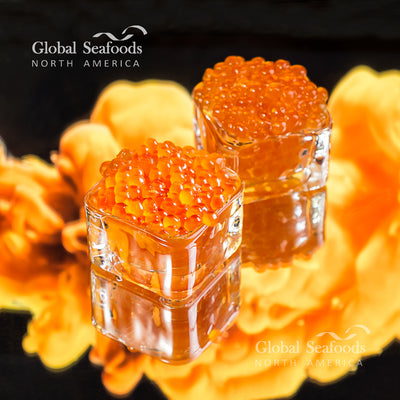
Visual: Open the jar (or inspect through the glass): all beads should be the same size with no broken or deflated eggs visible in the brine. Color: vivid, saturated orange-red with high gloss. Brine: should be clear or only very lightly colored, not cloudy (cloudy brine = broken eggs present).
Smell: Clean ocean smell. No ammonia. No "overly fishy" oxidation note.
Taste: The first impression should be a clean, mild brininess immediately followed by a natural sweetness. If the first impression is overwhelming salt with no sweetness detectable, the roe is either second-grade or heavily salted. If the membrane doesn’t pop, the roe was either harvested too late in the season or has been stored too long.
Storage before purchase: The product should have been kept at 28–32°F continuously. Products that have thawed and been refrozen (even once) show telltale signs: beads that are slightly deflated or wrinkled; brine that is cloudy; membrane that is soft rather than firm.
Serving and culinary uses
The firm skin and mild flavor of first-grade low-salt Keta Caviar make it exceptionally versatile:
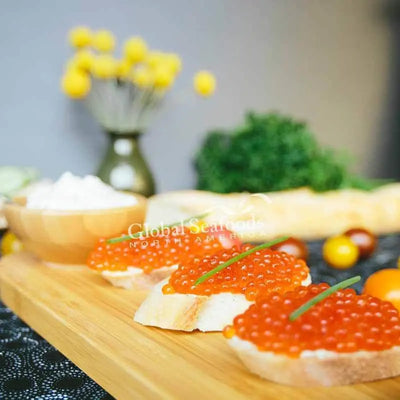
Standalone/traditional: Blinis with crème fraîche; toast with unsalted butter; deviled eggs. The mild sweetness of Keta roe is particularly well-matched to the slight sourness of crème fraîche.
Japanese: Ikura Don (rice bowl) — Keta roe is the species most commonly used for this dish in Japan; its firm skin holds up well against warm sushi rice. Nigiri with nori wrapper. Gunkan-maki.
As a garnish: The firm beads hold their shape well even after a few minutes of plating — better than Pink or Trout roe which soften more quickly. This makes Keta roe the most practical choice for restaurant plating where some time elapses between assembly and service.
Pasta and sauce: Off heat only — fold into warm pasta or sauce after removing from heat entirely; the firm Keta beads are slightly more forgiving of residual warmth than Pink or Trout roe, but heat above ~140°F still destroys the membrane. Serve immediately after folding in.
Always use mother-of-pearl, bone, or food-grade plastic spoons. Never metal.
Storage: unopened at 28–32°F; consume by the best-by date on the label (typically within 2 weeks of receipt for refrigerated fresh product). After opening: 3–4 days, tightly covered. Do not freeze after opening.
Also explore: Pink Salmon Caviar • Coho Salmon Caviar • Trout Red Caviar • Bloody Shiraz Infused Caviar • Rainbow Trout Pearls.
Videos: Global Seafoods YouTube Channel.
Related Products


Also in Video

Salmon Tender Monroe: Inside a Suquamish Tribal Vessel Unloading Wild Salmon
The Salmon Tender Monroe is a Suquamish Nation vessel operating in Puget Sound — collecting wild salmon from tribal fishing boats and delivering them to shore. This is the story of a living treaty right, a working vessel, and the wild salmon that have sustained the Suquamish people for thousands of years.

Vietnam Fisherman: Small Boat Leaving Lang Co Bay for the Night Catch
As the sun drops behind the Hải Vân Pass, a lone Vietnamese fisherman pushes off from Lang Co Bay and heads into the darkness of the South China Sea. This is the story of a single boat, a single night, and the ancient rhythm of fishing that still feeds communities across central Vietnam.

Lang Co, Vietnam: Inside the Coastal Fishing Life That Feeds a Nation
Lang Co is one of Vietnam’s most beautiful and storied fishing communities — a narrow strip of land between a turquoise lagoon and the South China Sea. This is the story of the fishermen, their boats, and the wild seafood traditions that have sustained this village for generations.
Shop Now
Main
