
Geoduck: From Sea to Plate – Harvesting, Preparation, Recipes & Health Benefits

Geoduck: From Sea to Plate – A Culinary Treasure
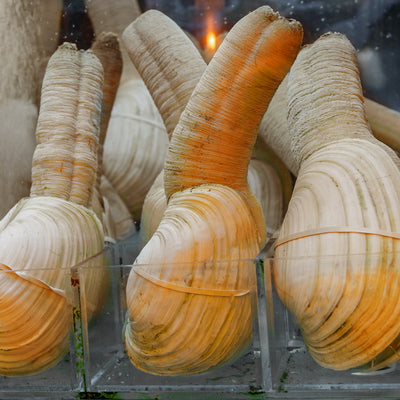
Few seafood delicacies captivate the senses like geoduck (pronounced “gooey-duck”). This rare, oversized clam, native to the Pacific Northwest, is renowned for its tender, crisp texture and sweet, briny taste. With its bizarre appearance yet irresistible flavor, geoduck has become a coveted delicacy in high-end restaurants and sushi bars worldwide.
But have you ever wondered how this deep-burrowing giant makes its way from the ocean floor to your plate?
Let’s take a deep dive into the remarkable journey of geoduck—from harvesting to preparation, and finally, to an exquisite dining experience.
Harvesting: The Deep-Digging Challenge
A Seafood Treasure Buried Beneath the Ocean Floor
Unlike most shellfish, geoducks live buried deep beneath the sandy ocean floor, often up to 3 feet underground. Their elongated siphon (neck) can stretch over a foot long, making them the largest burrowing clam in the world. A single geoduck can live over 100 years, making it one of the longest-lived animals on Earth.
🔹 Where Are Geoducks Found?
✔ Native to the coastal waters of Washington, British Columbia, and Alaska
✔ Thrive in cold, clean waters with soft sand or mud for burrowing
✔ Washington State manages the largest commercial geoduck fishery in the world, with harvest rights shared between the state and tribal nations
🔹 How Are Geoducks Harvested?
✔ Professional divers use high-powered water jets to safely loosen the sediment around the clam.
✔ Once exposed, divers carefully extract the geoduck, ensuring minimal damage to its delicate siphon.
✔ The clams are immediately placed in seawater tanks to maintain freshness before being shipped to top restaurants and seafood markets worldwide.
💡 Did You Know?
✔ Because geoducks take 5–7 years to mature, they are among the most expensive clams, often retailing for $30–$60+ per pound in the U.S. – and commanding even higher prices in Asian export markets where they are considered a luxury ingredient.
Cleaning & Preparation: Unlocking the Delicacy
Once harvested, geoducks require careful cleaning and preparation to unlock their full flavor potential.
🔹 Step 1: Shucking & Cleaning
✔ The outer shell is removed by blanching the geoduck in hot water for 10–15 seconds, then immediately shocking in ice water.
✔ The siphon skin is peeled away, revealing the firm, ivory-colored meat inside.
✔ The meat is then rinsed thoroughly in cold water to remove any residual sand.
🔹 Step 2: Slicing & Prepping for Cooking
✔ The siphon (neck) is the prized portion—it is often sliced thinly for sushi and sashimi.
✔ The body meat is slightly softer and is commonly stir-fried, grilled, or added to soups and chowder.
💡 Pro Tip: Raw geoduck should be sliced ultra-thin to highlight its sweetness and crisp texture. A sharp Japanese sushi knife (yanagiba) is ideal.
Cooking & Serving: A Seafood Masterpiece
From Japanese sushi bars to Peruvian cevicherias, geoduck is celebrated worldwide for its delicate flavor and unique texture.
🔥 Top Ways to Enjoy Geoduck:
🌊 1. Geoduck Sashimi (Japan)
✔ The purest way to experience geoduck’s natural sweetness
✔ Thinly sliced, served raw with soy sauce, wasabi, and fresh yuzu juice
✔ A favorite in high-end sushi restaurants
🥢 2. Geoduck Stir-Fry (China)
✔ Quickly stir-fried with ginger, garlic, and oyster sauce
✔ A Cantonese delicacy that highlights geoduck’s subtle umami flavor
✔ Best served over steamed jasmine rice
🥣 3. Geoduck Chowder (Pacific Northwest, USA)
✔ A rich, creamy soup with potatoes, onions, celery, and herbs
✔ Showcases geoduck’s tender bite and deep ocean flavor
✔ A must-try comfort food from the Pacific Northwest
🍋 4. Geoduck Ceviche (Peru)
✔ Geoduck is marinated in fresh lime juice, red onions, and chili peppers
✔ The acidity enhances its natural sweetness, creating a refreshing dish
✔ A delicious alternative to traditional white fish ceviche
💡 Pro Tip: Pair geoduck dishes with a crisp white wine (Chablis or Muscadet) or dry sake to enhance its natural flavors.
Health Benefits: A Nutrient-Packed Superfood
Beyond its exquisite taste, geoduck is also a nutritional powerhouse:
✔ High in Protein, Low in Fat – A lean, muscle-building seafood option with approximately 15–18g of protein per 3oz serving.
✔ Rich in Omega-3 Fatty Acids – Supports heart and brain health.
✔ Loaded with Essential Minerals – Contains zinc, iron, and selenium for immune and metabolic support.
✔ Low in Calories – Approximately 70–80 calories per 3oz serving, making it an excellent choice for health-conscious diners.
💡 Did You Know? Geoduck’s high zinc content supports immune function, wound healing, and energy metabolism – making it one of the most mineral-dense shellfish available.
Sustainability: Protecting the Geoduck Population
With the rising demand for geoduck in global seafood markets, sustainability is a key concern.
✔ Strict harvesting regulations in the U.S. and Canada ensure responsible fishing practices, including annual harvest quotas and rotational area management.
✔ Geoduck aquaculture (farming) is expanding in Washington State and British Columbia, reducing pressure on wild populations.
✔ Many farms operate environmentally friendly practices, helping maintain a healthy marine ecosystem.
💡 Choose responsibly sourced geoduck from reputable suppliers to support sustainable seafood practices.
Where to Buy Fresh Geoduck
Want to experience the ultimate seafood delicacy at home?
🦠 Order Live Geoduck Here – Sourced directly from the cold Pacific waters!
🌊 Explore More Live Seafood – Mussels, clams, and more delivered fresh to your door!
FAQs About Geoduck
What does geoduck taste like?
Geoduck has a sweet, clean, ocean-fresh flavor with a crisp, crunchy bite—often compared to a mix between clam and scallop. The siphon (the long neck) is the most prized part for raw preparations; it is less briny than most clams and has a naturally refreshing, delicate sweetness. The body meat is slightly softer and more suited to cooked preparations.
Can you eat geoduck raw?
Absolutely! Sashimi and ceviche are some of the best ways to enjoy geoduck’s natural sweetness. When sourced from a reputable, licensed supplier like Global Seafoods, live geoduck is safe to eat raw. The blanch-and-peel preparation removes the outer skin while keeping the meat raw and pristine. Individuals who are pregnant, immunocompromised, or have liver conditions should consult their healthcare provider before consuming raw shellfish.
How do you store fresh geoduck?
✔ Keep it cold but not frozen (store at 34°F to 38°F).
✔ Wrap in a damp cloth or damp newspaper and place in a bowl – do not submerge in fresh water.
✔ Consume within 24–48 hours of delivery for maximum freshness and sushi-quality flavor.
How long does geoduck live, and why does that affect the price?
Geoduck is one of the longest-lived animals on Earth, with a lifespan of over 100 years. However, it takes 5–7 years to reach harvest size, which limits annual supply. Combined with the labor-intensive hand-diving harvest method, strict quota management, and enormous export demand from Asian markets, geoduck commands premium prices of $30–$60+ per pound at retail in the U.S.
What is the difference between the siphon and the body meat?
The siphon (neck) is the long, firm, ivory-colored tube that extends from the shell. It has the most delicate flavor and signature crunch, making it the preferred cut for sashimi, nigiri, and ceviche. The body meat (the mantle and adductor muscle inside the shell) is slightly softer and more intensely flavored, making it better suited for stir-fries, chowder, and soups. Both parts are edible and delicious – they simply shine in different preparations.
Final Thoughts: The Ultimate Seafood Experience
From the depths of the Pacific Northwest to the finest dining tables worldwide, geoduck is more than just seafood—it’s an adventure.
🔗 Are you ready to experience geoduck’s exquisite flavor?
Order Yours Today!
🎥 Watch expert geoduck preparation on our YouTube Channel!
Related Products

Also in News

Live King Crab During Pregnancy – A Nutritious & Delicious Choice
Eating live king crab during pregnancy provides essential nutrients, omega-3s, and protein that support fetal development and maternal health. Find out how to safely enjoy this luxurious seafood while reaping its incredible benefits!

Live King Crab Sushi Rolls: The Ultimate Seafood Indulgence
Live King Crab Sushi Rolls are the epitome of luxury dining. Discover the exquisite flavors, expert tips for making them at home, and where to buy the freshest king crab for an unforgettable sushi experience.

IKURA Caviar Guide: How to Buy, Store & Serve Salmon Roe
Discover everything you need to know about buying IKURA caviar, including quality selection, pricing, storage tips, and the best serving methods. Find premium IKURA today!
Shop Now
Main
