
Elevate Your Culinary Experience: Luxury Kaluga Caviar Pairings You Need to Try

Luxury Kaluga Caviar Pairings You Need to Try
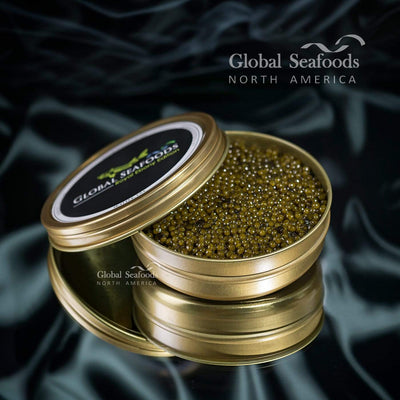
Kaluga caviar -- often called "River Beluga" -- is prized for its large, firm pearls, creamy-nutty flavor, and gentle brininess. Produced from Kaluga sturgeon (Huso dauricus), native to the Amur River basin and now sustainably farm-raised, it offers a Beluga-comparable experience at a more accessible price point. This guide covers the best food and drink pairings, serving technique, tasting party setup, and storage.
Kaluga Caviar at Global Seafoods | Full Caviar Collection
Watch caviar pairing videos on the Global Seafoods YouTube Channel
Kaluga Caviar: Key Qualities
- Flavor: Creamy, nutty, with a gentle brininess and a long, clean finish. Less intensely briny than Sevruga; richer and more complex than Siberian.
- Texture: Large, firm pearls that pop cleanly -- the defining characteristic that distinguishes Kaluga from smaller-egg varieties.
- Color: Golden-brown to dark gray, depending on the individual fish and processing.
- Sustainability: Farm-raised, making it one of the more environmentally responsible large-egg caviar options.
Serving Technique
1. Serve on Crushed Ice with Mother-of-Pearl Spoons
Place the tin on a bed of crushed ice throughout service. Use mother-of-pearl, bone, or silicone spoons -- metal imparts a metallic taste that interferes with Kaluga's delicate flavor. Do not open the tin until ready to serve, and limit service time to 15-20 minutes at room temperature.
2. Blinis with Crème Fraîche
The classic base. Small Russian buckwheat blinis provide a neutral, slightly earthy platform that lets the caviar's buttery flavor dominate. A small amount of crème fraîche balances the saltiness with creaminess without competing with the caviar's flavor. Keep the crème fraîche portion small -- too much overwhelms the caviar.
3. Toast Points with Unsalted Butter
A simpler alternative. Lightly toasted brioche or white bread, buttered with unsalted butter, adds a subtle crunch and richness. The unsalted butter is important -- salted butter competes with the caviar's natural brininess.
4. Baked Potato or Potato Chips
A classic American pairing. The mild, starchy flavor of potato provides a neutral backdrop that lets the caviar's complexity shine. Thin, unsalted potato chips work particularly well as a vehicle -- the crunch contrasts with the caviar's soft pop.
Kaluga Caviar at Global Seafoods
Drink Pairings
Brut or Extra Brut Champagne
The classic pairing. Champagne's high acidity and effervescence cleanse the palate between bites and contrast with Kaluga's richness. Brut or Extra Brut only -- the residual sugar in Extra Dry or Demi-Sec Champagne competes with the caviar's natural sweetness. Blanc de Blancs (100% Chardonnay) Champagne is particularly well-suited to caviar's delicate flavor.
Chilled Dry Vodka
The traditional Russian pairing. High-quality, neutral vodka served ice-cold provides a clean palate reset between bites, allowing the caviar's complexity to register fully without interference. The neutrality of vodka is its virtue here -- avoid flavored vodkas.
Dry White Wine with Mineral Character
Chablis (unoaked Chardonnay) or a mineral-driven Sauvignon Blanc (Sancerre, Pouilly-Fumé) are the best white wine options. Their high acidity and mineral profile complement Kaluga's buttery texture and nutty undertones without overpowering them. Avoid oaked whites -- the oak competes with the caviar's delicate flavor.
Food Pairings
Seafood: Oysters, Scallops, Lobster
The briny, oceanic qualities of fresh oysters and scallops echo Kaluga's marine character, creating a seamless combination. Lobster's buttery richness pairs naturally with Kaluga's creamy texture. Serve caviar as a topping or alongside -- not mixed in -- to preserve the distinct character of each.
Egg-Based Dishes
The classic pairing in fine dining. Eggs provide a creamy, neutral base that amplifies rather than competes with caviar's flavor. Soft scrambled eggs (cooked low and slow with butter), deviled eggs, or a simple omelet all work well. The fat in the eggs carries the caviar's flavor and extends the finish.
Potato Dishes
Mild, starchy, and neutral -- potato in any form (chips, blinis, roasted, baked) provides an ideal backdrop. Avoid heavily seasoned potato preparations; the potato's role is to carry the caviar, not to add competing flavors.
Full Caviar Collection at Global Seafoods
Note: Paddlefish Caviar is a sustainable and affordable alternative worth exploring alongside Kaluga. Paddlefish (Polyodon spathula) is not a sturgeon species but is often grouped with sturgeon caviars in the market -- it has a milder, earthier flavor than Kaluga.
Hosting a Kaluga Caviar Tasting Party
- Set the table: Caviar tins on crushed ice, mother-of-pearl spoons, Champagne flutes, small tasting plates.
- Brief the guests: Introduce Kaluga's origin (Amur River basin, sustainably farm-raised), flavor profile, and how it compares to Beluga. Guests who understand what they're tasting appreciate it more.
- Set up pairing stations: Blinis with crème fraîche, toast points with unsalted butter, potato chips, and at least two drink options (Champagne and vodka at minimum). Encourage guests to try the caviar alone first, then with each accompaniment.
- Serve in order: Start with the caviar alone, then with neutral bases (potato, toast), then with richer accompaniments (eggs, crème fraîche). This progression lets guests experience the full flavor range.
Storage
- Temperature: 28°F–32°F -- the coldest part of the refrigerator.
- Unopened: Up to 4-6 weeks at correct temperature.
- Opened: Consume within 1-2 days. Once exposed to air, quality degrades rapidly.
- Do not freeze: Freezing destroys the texture and flavor of Kaluga caviar.
FAQs
How should Kaluga caviar be stored?
28°F–32°F in the coldest part of the refrigerator, sealed in the original tin. Consume within 1-2 days of opening.
Can Kaluga caviar be frozen?
No -- freezing destroys the texture and flavor. Kaluga caviar should always be served fresh.
Which drink pairs best with Kaluga caviar?
Brut or Extra Brut Champagne is the classic choice. Chilled dry vodka is the traditional Russian pairing. Chablis or Sancerre are the best white wine options. All three work -- the choice depends on personal preference and the occasion.
How long can Kaluga caviar be kept after opening?
1-2 days maximum, properly refrigerated. Plan to finish an opened tin at a single sitting when possible.
Can you eat Kaluga caviar by itself?
Yes -- eating it alone (or from the back of the hand, the traditional tasting method) is the best way to evaluate its flavor without interference from accompaniments. Many enthusiasts prefer this for the first taste of a new tin.
Related Products


Also in News

Salmon Roe (Ikura) Guide: Types, Taste, Processing & How to Buy

The Perfect Salmon Storm of 2026: Alaska & Russia Harvest Numbers Confirm the Warning
We hoped the early scientific warnings about the 2026 Pacific salmon season would prove wrong. They did not. Near-final harvest data from Alaska (83.6 million fish, 69% of projection, all five species below forecast) and Russia (down 60.2% from the comparison period) confirms a historic simultaneous decline across the North Pacific. With Japanese landings still to come, this analysis covers what caused the Perfect Salmon Storm of 2026, what it means for wild salmon and red caviar supply through 2027, and why the geographic buffer that normally protects global supply failed this year.

Snail Caviar: How White Escargot Caviar Is Farmed, Harvested and Made
Shop Now
Main
