
Oysters vs. Clams: Which Shellfish Reigns Supreme?

Oysters vs. Clams: Which Shellfish Reigns Supreme?
Oysters and clams are two of the most beloved shellfish in the world — both bivalve mollusks, both filter feeders, and both prized for their flavor and nutrition. But they are very different in taste, texture, culinary application, and nutritional profile. Whether you're deciding what to order at a seafood restaurant, planning a dinner party, or stocking your kitchen, this guide will help you understand the key differences and choose the right shellfish for your needs.
Oysters: The Flavorful Delicacy
Taste & Texture
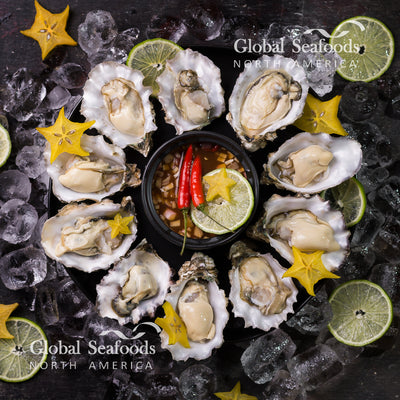
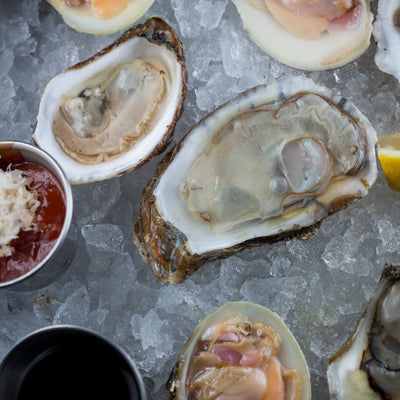
Oysters are celebrated for their bold, briny, complex flavor and silky, creamy texture. Unlike most seafood, oysters have a concept of merroir (the marine equivalent of wine's terroir) — their flavor is profoundly influenced by the water temperature, salinity, mineral content, and food sources of their growing region. An oyster from the cold waters of the Pacific Northwest will taste dramatically different from one grown in the warm, brackish waters of the Gulf of Mexico or the mineral-rich waters of Brittany, France. This regional flavor variation is one of the things that makes oysters so fascinating to explore.
Common flavor descriptors: briny, metallic, cucumber, melon, butter, seaweed, mineral, sweet. The texture is silky and slippery when raw — a sensation that divides people strongly.
Cooking Methods
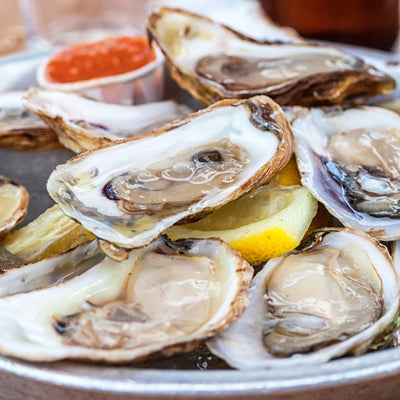
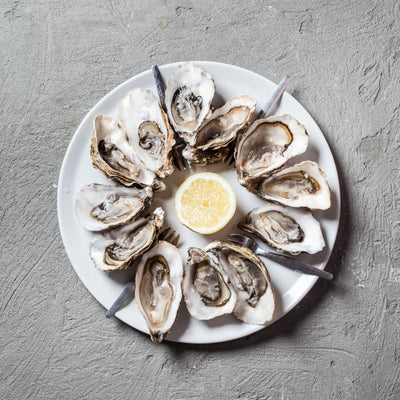
- Raw on the half shell: The classic preparation — shuck and serve with mignonette (shallots/red wine vinegar/black pepper), cocktail sauce, or simply lemon. The preferred method for appreciating the full flavor complexity.
- Grilled: Place on a hot grill until the shells pop open (3–5 minutes); top with compound butter (garlic/herb/lemon) or Rockefeller topping (spinach/Parmesan/breadcrumbs).
- Baked (Oysters Rockefeller): A classic American preparation — baked on the half shell with spinach, Parmesan, breadcrumbs, and butter.
- Fried: Breaded and deep-fried; used in po’boys, tacos, and as appetizers.
- In soups and stews: Oyster stew (oysters in cream, butter, and milk) is a classic American dish; oysters also appear in some Asian soups and congee.
- Smoked: Hot-smoked oysters are a popular pantry item; excellent on crackers with cream cheese.
Nutritional Profile
- Zinc: Oysters are the single richest dietary source of zinc — a 3 oz serving provides over 500% of the daily recommended intake. Zinc is essential for immune function, wound healing, testosterone production, and reproductive health.
- Omega-3 fatty acids: Excellent source — approximately 500–700mg per 100g
- Vitamin B12: Very high — supports nerve function and red blood cell production
- Iron: Good source — supports red blood cell production and energy
- Vitamin D: One of the few natural dietary sources
- Calories: ~68 kcal per 100g — one of the lowest-calorie protein sources available
- Protein: ~9g per 100g — lower than clams but still a quality protein source
Clams: The Versatile Gems
Taste & Texture
Clams have a milder, sweeter, cleaner flavor compared to oysters — briny and oceanic but without the bold complexity of oysters. The taste is approachable and crowd-pleasing, making clams an excellent choice for those who find oysters too intense. The texture is tender with a slight chew — more substantial than oysters. Clam broth (the liquid released during cooking) is intensely flavorful and is itself a prized ingredient in soups, sauces, and pasta dishes.
Common flavor descriptors: clean, briny, slightly sweet, oceanic, mild. The texture is firm and chewy — very different from the silky softness of oysters.
Cooking Methods
- Steamed: Steam in white wine, garlic, and butter until shells open (6–8 minutes). The broth is as valuable as the clams themselves — serve with crusty bread for dipping.
- Pasta (spaghetti alle vongole): One of the great Italian pasta dishes — clams in white wine, garlic, olive oil, and parsley over spaghetti or linguine.
- Chowder: New England clam chowder (cream-based) and Manhattan clam chowder (tomato-based) are two of the most iconic American seafood dishes.
- Baked/stuffed (clams casino): Baked on the half shell with breadcrumbs, bacon, and peppers — a classic American appetizer.
- Grilled: Place directly on a hot grill; shells open in 3–5 minutes; top with compound butter.
- Raw: Small clams (littlenecks, cherrystones) can be eaten raw on the half shell — though this is less common than raw oysters.
Nutritional Profile
- Protein: ~25g per 100g — one of the highest protein-to-calorie ratios of any food
- Vitamin B12: Exceptionally high — one of the richest natural sources; a 3 oz serving provides over 1,000% of the daily recommended intake
- Iron: Very high — one of the best dietary sources of heme iron; particularly important for those at risk of iron deficiency anemia
- Selenium: Excellent source — supports thyroid function and antioxidant defense
- Omega-3 fatty acids: Good source, though lower than oysters
- Calories: ~148 kcal per 100g — low in fat, high in protein
Oysters vs. Clams: Side-by-Side Comparison
| Category | Oysters | Clams |
|---|---|---|
| Flavor | Bold, briny, complex (terroir-influenced) | Mild, sweet, clean, oceanic |
| Texture | Silky, creamy, slippery | Tender with slight chew |
| Protein (per 100g) | ~9g | ~25g |
| Zinc | Exceptionally high (500%+ DRI per serving) | Good |
| Omega-3s | ~500–700mg/100g | Good (lower than oysters) |
| Vitamin B12 | Very high | Exceptionally high (1,000%+ DRI) |
| Iron | Good | Exceptionally high |
| Calories (per 100g) | ~68 kcal | ~148 kcal |
| Best eaten | Raw, grilled, baked, fried | Steamed, pasta, chowder, stuffed |
| Cooking versatility | Moderate | Very high |
| Sustainability | Excellent (farmed oysters improve water quality) | Excellent (filter feeders) |
| Price | Premium ($$$) | More affordable ($$) |
Which Should You Choose?
- Choose oysters if you enjoy bold, complex, briny flavors; want to explore regional flavor variations (merroir); prefer raw shellfish; want the highest zinc and omega-3 content; or are planning a special occasion or dinner party centerpiece.
- Choose clams if you prefer a milder, more approachable flavor; want maximum cooking versatility; are making chowder, pasta, or steamers; want the highest protein, B12, and iron content; or are cooking for a crowd on a budget.
- Use both in seafood stews, mixed shellfish platters, and paella — they complement each other beautifully.
Shop Fresh Shellfish at Global Seafoods
- 🔗 Fresh Clams — ideal for chowder, pasta, and garlic butter steamers
- 🔗 Geoduck — a rare and highly prized delicacy with a sweet, crisp texture
- 🔗 Fresh Mussels — perfect for garlic butter steamers, paella, and pasta
- 🔗 Gooseneck Barnacles — a gourmet delicacy with an intense briny flavor
- 🔗 Full Live Seafood Collection
🎥 Watch shellfish cooking videos and seafood recipes on the Global Seafoods YouTube Channel
FAQs: Oysters vs. Clams
Q1: Are raw oysters safe to eat?
Raw oysters are safe for most healthy adults when sourced from reputable suppliers with proper cold-chain handling and harvested from certified, regularly tested waters. However, raw oysters carry a real risk of Vibrio vulnificus bacteria — a serious pathogen that can cause severe illness in vulnerable individuals. Pregnant women, young children, the elderly, and immunocompromised individuals should not eat raw oysters. For these groups, cooked oysters (grilled, baked, fried, or in stews) are a safe alternative. Signs of a bad oyster: off or sour smell; dry or shriveled meat; shell that doesn't close when tapped before shucking. When in doubt, don't eat it.
Q2: Which is better for a seafood pasta dish — oysters or clams?
Clams are strongly preferred for pasta. Spaghetti alle vongole (clams in white wine, garlic, olive oil, and parsley) is one of the great Italian pasta dishes — the clam broth released during cooking becomes the sauce. Clams' firm, chewy texture holds up well to cooking and their clean, briny flavor integrates beautifully with pasta. Oysters can be used in pasta (particularly in cream-based sauces), but their silky texture becomes very soft when cooked and their bold flavor can overpower the dish. For most pasta applications, clams are the clear choice.
Q3: Are oysters and clams sustainable seafood choices?
Yes — both are among the most sustainable seafood choices available. Both are filter feeders that require no feed input, no freshwater, and no land — they actually improve water quality by filtering phytoplankton, bacteria, and particulates from the water. Farmed oysters and clams are consistently rated "Best Choice" by the Monterey Bay Aquarium Seafood Watch. Oyster farming in particular is considered one of the most environmentally beneficial forms of aquaculture — oyster reefs provide habitat for other marine species and help reduce coastal eutrophication. Both shellfish have a significantly lower carbon footprint than land-based protein sources and most finfish.
Q4: What is merroir and why does it matter for oysters?
Merroir (from the French mer, meaning sea) is the marine equivalent of wine's terroir — the idea that the flavor of an oyster is profoundly shaped by its growing environment: water temperature, salinity, mineral content, tidal flow, and the phytoplankton available as food. An oyster from the cold, high-salinity waters of the Pacific Northwest (e.g., Kumamoto, Olympia) will taste dramatically different from one grown in the warm, brackish waters of the Gulf of Mexico (e.g., Gulf oysters) or the mineral-rich waters of Brittany, France (e.g., Belon). This regional flavor variation is one of the things that makes oysters so fascinating — tasting oysters from different regions is a genuine sensory exploration. Clams have much less pronounced merroir — their flavor is more consistent across regions.
Q5: How do I store oysters and clams at home?
Oysters: Store cup-side down (flat side up) in the refrigerator on a bed of ice or a damp cloth; cover with a damp cloth or paper towel. Use within 1–2 days. Never store in a sealed airtight container or submerged in water. Live oysters should be tightly closed or close when tapped — discard any that remain open. Clams: Store in the refrigerator in a bowl covered with a damp cloth (not in water, not in a sealed bag — they need to breathe). Use within 1–2 days. Scrub shells under cold running water before cooking. Discard any with cracked shells or that don't close when tapped. Both: Never freeze live shellfish — freeze only after cooking.
Q6: Which has more nutritional value — oysters or clams?
They excel in different areas: Oysters win on: Zinc (the single richest dietary source — over 500% DRI per serving), omega-3 fatty acids (~500–700mg per 100g), and calories (~68 kcal per 100g — one of the lowest-calorie protein sources). Clams win on: Protein (~25g vs. ~9g per 100g), vitamin B12 (over 1,000% DRI per serving — one of the richest natural sources), and iron (one of the best dietary sources of heme iron). Bottom line: If you're prioritizing zinc and omega-3s, choose oysters. If you're prioritizing protein, B12, and iron, choose clams. Both are exceptional nutritional choices — eating a variety of shellfish gives you the full spectrum of benefits.

Related Products


Also in News

Snail Caviar: How White Escargot Caviar Is Farmed, Harvested and Made

The Dark Years of Pacific Salmon: A 20-Year Outlook for Alaska, Russia, and the Red Caviar Market

King Crab Legs Delivery: Is It Worth It? Exploring the Benefits and Best Options
Shop Now
Main
