
From Roe to Table: Exploring the Intricate Journey of Salmon Caviar

From Roe to Table: Salmon Caviar
Salmon caviar — known as ikra (икра) in Russian and ikura (イクラ) in Japanese — is among the most recognized and widely consumed fish roe in the world. Vibrant orange, briny, and satisfying in its firm-yet-bursting texture, it stands apart from sturgeon caviar both in flavor profile and in its production story. This guide covers the full journey of salmon caviar from harvest to table: processing methods, curing styles, nutritional value, serving traditions, storage, and how to evaluate quality when buying.
What Is Salmon Caviar?
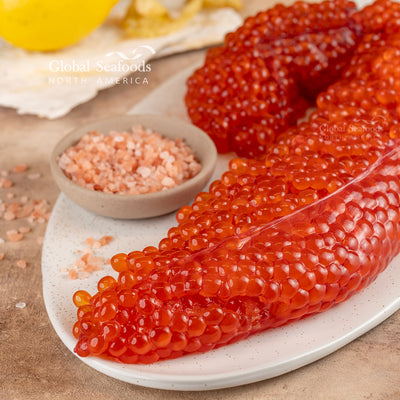
Salmon caviar is the cured roe of salmon species — most commonly Chum (Oncorhynchus keta), Sockeye (O. nerka), Coho (O. kisutch), and Pink (O. gorbuscha) — harvested during the spawning season when the eggs are fully developed. The roe is separated from the skein (the membrane encasing the eggs), cleaned, graded, and cured in salt or soy sauce before packaging.
Key characteristics by species:
- Chum salmon roe — the largest eggs (5–8mm), mildest flavor, lightest orange; the standard for premium-grade ikura in Japanese markets. Available from Global Seafoods: Chum Salmon Caviar.
- Sockeye salmon roe — smaller, deeper red-orange, more intense and briny flavor. Dense, firm eggs.
- Coho salmon roe — medium-sized, balanced flavor between chum and sockeye, bright orange. Coho Salmon Caviar.
- Pink salmon roe — smallest of the common species, mild, budget-friendly; often used in blended or processed roe products.
Historical and Cultural Significance
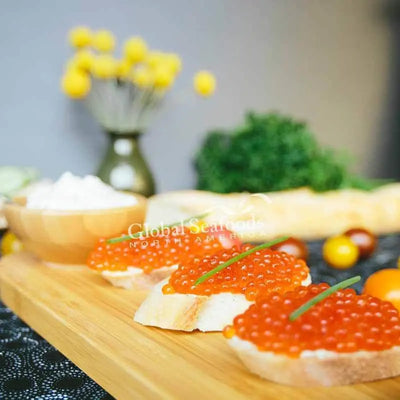
In Russian cuisine: Ikra has been a symbol of celebration and hospitality in Russian culture for centuries. Served on blinis with sour cream and accompanied by vodka or champagne, red caviar appears at weddings, New Year’s feasts, and formal gatherings. During the Soviet era, “ikra buterbrody” (open-faced caviar sandwiches) were a marker of special occasion eating, served on white bread with butter.
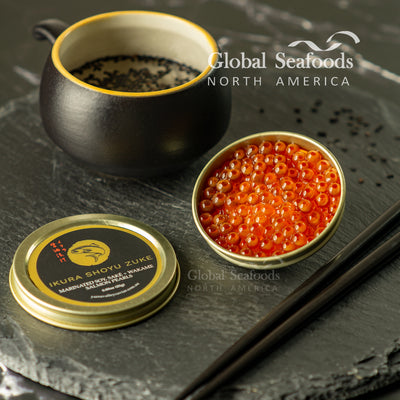
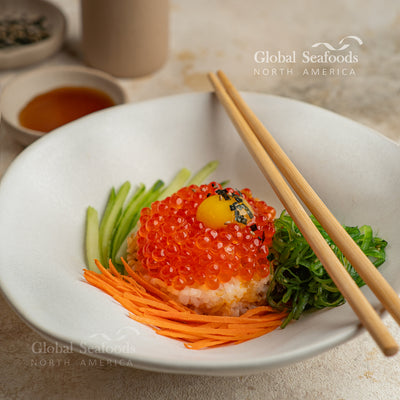
In Japanese cuisine: Ikura entered Japanese culinary culture through Hokkaido, where Ainu fishing communities had long harvested salmon. Today it is a standard sushi topping — classically served as ikura gunkan-maki (battleship-style sushi wrapped with nori to contain the loose roe) and in ikuradon (rice bowl topped generously with marinated roe). Shoyu-zuke (soy sauce-cured) ikura is particularly prized.
In North American cuisine: Salmon roe has been harvested and eaten by Pacific Northwest Indigenous peoples — including the Haida, Tlingit, and many other nations — for thousands of years, both fresh and dried. Commercial production for export markets (primarily Japan) developed in Alaska in the late 19th and early 20th centuries. Domestic appreciation has grown substantially since the 2000s as sushi culture expanded.
How Salmon Caviar Is Harvested and Processed
The quality of the finished product is determined almost entirely by the speed and precision of post-harvest handling. Roe quality degrades quickly after the fish is caught — delay at any stage reduces egg integrity, flavor, and shelf life.
- Harvest timing: Salmon are caught during the spawning run — the brief annual window when adult salmon return from the ocean to their natal rivers to spawn. Roe harvested too early (eggs underdeveloped) or too late (eggs over-ripe, membrane weakened) produces inferior product. Peak harvest windows vary by species and region but typically fall July through October in Alaska.
- Roe extraction: The skein (membrane sac containing the eggs) is removed from the cavity of female fish. Speed matters — the skein should be separated and processing begun within hours of harvest. In high-quality operations, this happens dockside or on processing vessels immediately after landing.
- Separation: Eggs are separated from the skein membrane using one of two methods: hand-stripping (gentlest, highest quality, most labor-intensive — eggs rolled through a mesh screen) or mechanical separation (faster, higher volume, some egg breakage). Hand-separated roe commands premium pricing.
- Cleaning and grading: Separated eggs are rinsed in cold, clean water to remove membrane fragments, blood, and debris. Grading separates eggs by size uniformity, color consistency, and membrane integrity. Broken or discolored eggs are removed.
-
Curing: The clean, graded roe is cured in one of two ways:
- Salt cure (malossol): “Malossol” is Russian for “lightly salted” — typically 3–5% salt by weight. This is the traditional Russian method and the standard for premium market-grade ikra. The salt draws out excess moisture, firms the eggs, and extends shelf life while preserving the natural flavor.
- Soy sauce cure (shoyu-zuke): The Japanese method — roe is marinated in a mixture of soy sauce, mirin, and sake (ratios vary by producer). The result is a deeper umami character, darker color, and silkier texture. Shoyu-zuke ikura is not interchangeable with malossol ikra — they are distinct products with different flavor profiles.
- Packaging: Cured roe is packed in airtight glass jars or vacuum-sealed containers. Premium product is packed under refrigerated conditions and shipped cold-chain. Properly processed and stored malossol salmon roe has a refrigerated shelf life of 3–6 months unopened.
Shop responsibly sourced salmon caviar: Global Seafoods Red Caviar Collection.
Health Benefits of Salmon Caviar
Omega-3 fatty acids: Salmon roe is one of the most concentrated dietary sources of long-chain omega-3s (EPA and DHA). A 30g (1 oz) serving provides approximately 1,000–1,500mg of omega-3s — comparable to a full serving of oily fish. DHA in particular is critical for brain development and function; EPA supports cardiovascular health and reduces systemic inflammation. The omega-3s in roe are in phospholipid form, which research suggests may be more bioavailable than the triglyceride form found in fish oil supplements.
Complete protein: Salmon roe provides all essential amino acids. A 30g serving contains approximately 6–8g of protein at roughly 40–50 calories — an exceptionally high protein-to-calorie ratio.
Vitamins and minerals: Particularly high in Vitamin B12 (a single serving can provide 150–200% of the daily recommended value), Vitamin D, selenium (a potent antioxidant), and Vitamin A. Sodium content is significant in cured roe (approximately 300–500mg per 30g serving) — relevant for those monitoring sodium intake.
How to Serve Salmon Caviar
Classic presentations:
- On blinis with crème fraîche — the definitive Russian serving style. Buckwheat blinis (slightly earthy, nutty) complement the brininess of the roe better than plain wheat blinis.
- On buttered toast points — the simplest and most accessible introduction; unsalted butter on lightly toasted brioche or pain de mie.
- Ikura gunkan-maki — battleship sushi: a finger of sushi rice wrapped with a nori band, filled with ikura. The nori contains the loose eggs and adds a complementary sea-vegetable flavor.
- Ikuradon — a bowl of warm Japanese short-grain rice topped generously with shoyu-zuke ikura. Simple and exceptional.
- As a garnish — a small spoonful on deviled eggs, oysters, pasta with butter sauce, or potato blinis adds visual impact and a burst of brininess.
Service notes: Never serve salmon caviar with a metal spoon — metal reacts with the delicate oils in the roe and imparts a metallic off-flavor. Use mother-of-pearl, bone, wood, or plastic spoons. Serve cold, directly from refrigeration.
Drink pairings: Champagne or dry sparkling wine (the acidity and bubbles cut through the richness), ice-cold vodka (the traditional Russian pairing — neutral spirit, ice-cold temperature), or dry sake for Japanese-style presentations.
For video preparation and serving ideas, visit the Global Seafoods YouTube Channel.
Storage and Handling
Refrigeration: Store unopened jars in the coldest part of the refrigerator — aim for 32–38°F (0–3°C), which is the coldest zone of most home refrigerators (typically the back of the bottom shelf or a dedicated deli drawer). Unopened malossol roe keeps 3–6 months refrigerated. Once opened, consume within 2–3 days.
Never use a metal spoon to serve directly from the jar — use a clean non-metal utensil. Minimize the time the jar is open and close tightly after each use.
Freezing: Salmon roe can be frozen, but the cell walls of the eggs are fragile — ice crystal formation during freezing weakens the membrane, and thawed roe will have a softer, sometimes mushy texture compared to never-frozen product. If freezing is necessary (e.g., for long storage), freeze in small portions, freeze quickly at the coldest setting, and consume within 3 months for best quality. Thaw overnight in the refrigerator, never at room temperature.
Where to Buy Premium Salmon Caviar
- Chum Salmon Caviar — largest eggs, mildest flavor, premium grade
- Coho Salmon Caviar — medium eggs, balanced briny flavor
- Golden Pearls Brook Trout Caviar — a milder freshwater alternative
- Full Red Caviar Collection
Frequently Asked Questions
What is the difference between salt-cured and soy-cured salmon roe?
Salt-cured (malossol) ikra uses only fine sea salt at 3–5% by weight, producing a clean, briny, ocean-forward flavor with a bright orange color. It is the traditional Russian style and the international commercial standard. Soy-cured (shoyu-zuke) ikura uses soy sauce, mirin, and sake — the result is deeper amber-red in color, with a more complex umami character, slightly sweeter, and silkier in texture. They are genuinely different products suited to different culinary applications: malossol for blinis and European-style service, shoyu-zuke for Japanese rice dishes and sushi.
What makes salmon caviar different from sturgeon caviar?
Salmon caviar eggs are significantly larger (4–8mm vs. 1–3mm for sturgeon), more vividly colored (bright orange vs. dark gray to black), and have a more assertive briny flavor. Sturgeon caviar (beluga, osetra, sevruga) is more subtle, buttery, and complex, with a longer finish — which is why it commands higher prices. Salmon caviar is more accessible in both price and flavor intensity and is generally considered a better introduction to the category.
How can I tell if caviar is fresh?
Fresh, high-quality salmon caviar has firm, glossy eggs that hold their shape; a clean, briny, ocean aroma (not fishy, sulfurous, or ammonia-like); vibrant, uniform orange color with no dull or grayish eggs; and minimal excess liquid in the jar. Mushy or collapsed eggs, off-odors, and cloudy brine are signs of poor quality or age.
What’s the best way to serve caviar for the first time?
Serve simply on lightly buttered toast (unsalted butter, brioche or good white bread) at cold temperature. This lets the flavor of the roe speak without distraction. Add a small amount of crème fraîche once you’ve tasted it plain — the acidity and fat of crème fraîche are the classic complement. Avoid overpowering accompaniments (strong cheeses, heavy sauces) for your first tasting.
Is salmon caviar sustainable?
Alaska wild-caught salmon — the primary source of North American commercial salmon roe — is managed under Alaska’s constitutional mandate for sustained yield, with the Alaska Department of Fish and Game setting annual harvest quotas based on escapement goals (the number of fish that must reach spawning grounds). Alaska salmon fisheries are among the most rigorously managed in the world. Look for Marine Stewardship Council (MSC) certification as an additional third-party verification of sustainable practice.
Can children eat salmon caviar?
Yes — salmon roe is safe and nutritious for children and is a rich source of DHA, which supports brain development. The main consideration is sodium content (cured roe is salty) and any fish allergy. Introduce in small amounts. Shoyu-zuke ikura also contains soy and alcohol (mirin/sake), which is relevant for families avoiding those ingredients.
Related Products


Also in News

Snail Caviar: How White Escargot Caviar Is Farmed, Harvested and Made

The Dark Years of Pacific Salmon: A 20-Year Outlook for Alaska, Russia, and the Red Caviar Market

King Crab Legs Delivery: Is It Worth It? Exploring the Benefits and Best Options
Shop Now
Main
