
Cliff Point Petite Oysters – Flavor, Nutrition, Pairings & How to Enjoy Them

Cliff Point Petite Oysters: A Premium Oyster for Seafood Lovers
Cliff Point Petite Oysters are a small, deeply cupped Pacific oyster with a clean briny-sweet flavor and a smooth, creamy texture. Their bite-sized form — typically 2–3 inches — makes them ideal for raw half-shell service and elegant appetizer presentations. This guide covers their flavor profile, nutritional value, serving and pairing options, how to shuck and store them, and where to order.
Flavor and Characteristics
- Size: Petite and bite-sized — typically 2–3 inches, ideal for a single mouthful.
- Flavor: A balanced combination of brine, mild sweetness, and clean oceanic finish — approachable for raw service, not aggressively salty.
- Texture: Smooth and creamy with slight firmness; satisfying mouthfeel without being rubbery.
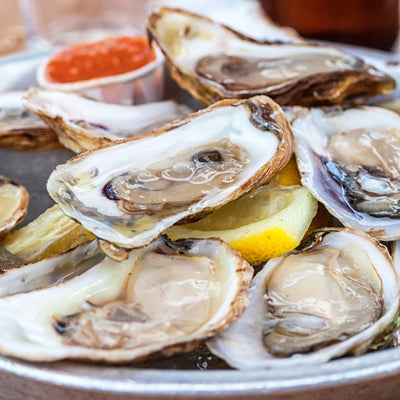
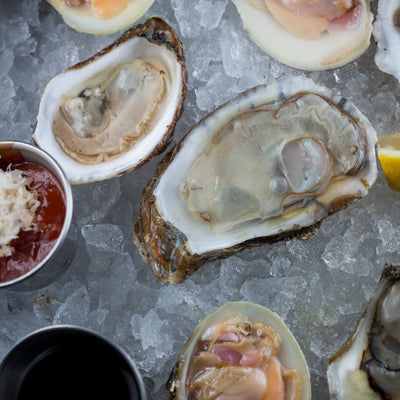
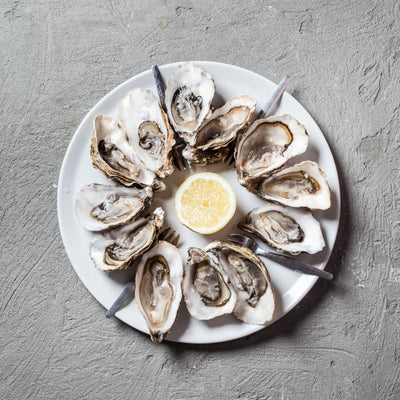
- Appearance: Deep-cupped shells with a greenish hue from the algae in their growing waters. The green tint is natural and not an indicator of quality issues.
How to Enjoy Cliff Point Petite Oysters
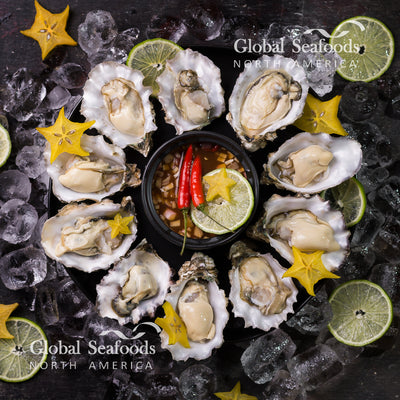
Raw on the half-shell — the best way to experience the full flavor. Serve chilled on crushed ice with a squeeze of fresh lemon, a small spoon of mignonette sauce (shallot, red wine vinegar, cracked black pepper), or a few drops of Tabasco. Horseradish and cocktail sauce are traditional additions for those who prefer more assertive accompaniments.
Grilled or baked — for those who prefer cooked oysters. Classic preparations: garlic butter and herbs; Parmesan and breadcrumbs (oysters Rockefeller-style); bacon and jalapeño for a smoky, spicy version. Grill or bake in the shell just until the edges begin to curl — overcooking makes them rubbery.
Oyster shooters — a fresh oyster in a shot glass with chilled vodka or sake, a splash of tomato juice, and a dash of hot sauce. A bracing, refreshing appetizer format.
Drink Pairings
- Champagne and sparkling wine: The classic pairing. High acidity and fine bubbles complement brine and cut through creaminess. Blanc de Blancs (100% Chardonnay) is the traditional choice; Crémant or Cava are excellent accessible alternatives.
- Dry white wine: Muscadet (particularly Muscadet sur lie — the Loire Valley oyster wine), Chablis, Sauvignon Blanc. Lean, mineral-driven, high-acid whites work best. Avoid oaked Chardonnay — it overpowers the delicate flavor.
- Beer: Dry Irish stout (Guinness is a classic pairing, particularly with grilled or cooked oysters), light pilsner, or a citrusy pale ale. The roasted notes in stout complement the briny, mineral character of the oyster.
- Sake: A dry junmai or ginjo-style sake brings out the umami element; a natural complement given both are products of fermentation with clean, oceanic associations.
- Vodka: Straight chilled vodka alongside raw oysters is a traditional pairing — neutral and palate-cleansing between oysters.
How to Shuck Cliff Point Petite Oysters
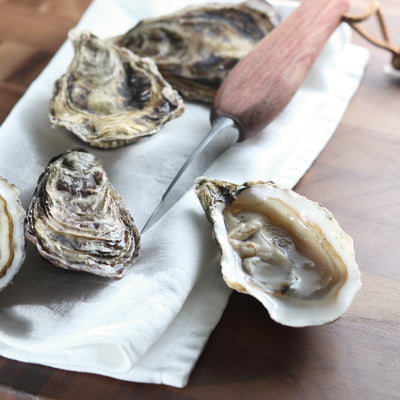
- Protect your hand: Fold a thick kitchen towel several times and wrap it around the hand holding the oyster, or use a cut-resistant glove. A slipping oyster knife is the most common shucking injury.
- Position the oyster: Cup-side down (the rounded side down, flat side up) on the folded towel. Point the hinge — the narrow, pointed end — toward your dominant hand.
- Insert the knife at the hinge: Work the tip of the oyster knife into the hinge with a gentle wiggling motion. Do not stab — ease it in. You are looking for the gap between the two shells at the hinge point.
- Twist to pop the top shell: Once the knife tip is seated in the hinge, twist your wrist firmly — like turning a key — to pop the top shell up. You should hear or feel a click.
- Slide and cut the adductor muscle: Keeping the blade flat against the inside of the top shell, slide it toward the bowl of the oyster to cut the adductor muscle (the small, firm connection holding the top shell). Remove the top shell.
- Loosen the oyster: Run the knife under the oyster to cut the lower adductor muscle, freeing the oyster from the bottom shell. Keep the oyster level to preserve the natural liquor — the briny liquid in the shell is part of the flavor.
- Check for shell fragments: Inspect the surface for any small shell chips; remove with the tip of the knife or a quick rinse if absolutely necessary (though rinsing dilutes the liquor).
Nutritional Benefits
- High in protein: Approximately 6g of protein per 3 oysters, supporting muscle repair and overall function.
- Exceptionally rich in zinc: A serving of 6 oysters provides a substantial portion of the daily value for zinc — one of the highest zinc concentrations of any food. Zinc supports immune function, wound healing, and enzyme activity.
- Rich in omega-3 fatty acids: Supports heart health and reduces inflammation.
- Excellent source of vitamin B12: Essential for brain function, nerve health, and energy production.
- Low in calories: Approximately 10–15 calories per oyster (roughly 60–90 calories for 6), making them one of the most nutrient-dense, low-calorie animal proteins available.
- Rich in iron and selenium: Iron supports oxygen transport; selenium provides antioxidant protection.
Harvesting and Pricing
Cliff Point Petite Oysters are cultivated in nutrient-rich coastal waters using sustainable farming practices. Oyster aquaculture is one of the most environmentally beneficial forms of seafood production — oysters are filter feeders that naturally improve water quality by removing excess phytoplankton, nitrogen, and particulates from their growing environment. They require no feed inputs, no antibiotics, and no freshwater beyond their natural habitat.
A dozen Cliff Point Petite Oysters typically range from $20 to $40, depending on availability and location. For a premium petite oyster with a distinctive flavor profile, this represents strong value relative to comparable single-origin oysters.
Order fresh Cliff Point Petite Oysters from Global Seafoods.
How to Store Fresh Oysters
Keep live oysters in the refrigerator at 35–40°F (2–4°C), cup-side down (rounded side down), covered with a damp cloth or damp newspaper — not in an airtight container and never submerged in fresh water, which will kill them. Consume within 5–7 days of harvest date for best flavor. Live oysters should close — or at least react — when tapped; discard any that remain open and do not close when handled.
Shop Fresh Oysters at Global Seafoods
- Cliff Point Petite Oysters
- Carbajal Oysters
- Tidepoint Oysters
- Willapa Bay Oysters
- Miyagi Oysters
- Maine Oysters
- Full Oyster Collection
Serving videos: Global Seafoods YouTube Channel.
Frequently Asked Questions
Are Cliff Point Petite Oysters sustainable?
Yes. Oyster aquaculture is one of the most environmentally beneficial forms of seafood production. Oysters are filter feeders that improve water quality by removing excess phytoplankton, nitrogen, and particulates from their growing environment. They require no feed inputs, no antibiotics, and minimal freshwater. Cliff Point Petite Oysters are sustainably farmed under careful management to maintain quality and environmental integrity.
How should I store fresh Cliff Point Petite Oysters?
Refrigerate at 35–40°F (2–4°C), cup-side down, covered with a damp cloth or damp newspaper. Do not store in an airtight container or submerge in fresh water — both will kill the oysters. Consume within 5–7 days of harvest. Live oysters should close or react when tapped; discard any that remain open and unresponsive.
Can I eat Cliff Point Petite Oysters raw?
Yes, they are safe to eat raw when sourced from a reputable, licensed supplier operating under state and federal shellfish safety regulations. Keep them cold until serving and consume promptly after shucking. Individuals who are pregnant, immunocompromised, elderly, or have liver conditions should consult their healthcare provider before consuming raw shellfish — raw bivalves carry a small but real risk of Vibrio and other bacterial contamination for higher-risk individuals.
What is the best way to shuck Cliff Point Petite Oysters?
Insert an oyster knife at the hinge (the narrow, pointed end of the shell) with a gentle wiggling motion, then twist firmly to pop the top shell. Slide the blade flat along the inside of the top shell to cut the upper adductor muscle, then remove the top shell. Run the knife under the oyster to cut the lower adductor and free the oyster from the bottom shell. Keep the oyster level throughout to preserve the natural liquor. Always protect your holding hand with a thick folded towel or cut-resistant glove.
What is the difference between Cliff Point Petite Oysters and other oysters?
Cliff Point Petites are distinguished by their small, bite-sized form (2–3 inches), deep-cupped shell, and a balanced briny-sweet flavor that is milder than many East Coast oysters (such as Blue Points). Compared to larger Pacific oysters, they are more delicate in size and flavor, making them particularly well-suited to raw half-shell service where the oyster is consumed in a single mouthful. Their approachable flavor profile also makes them a good choice for oyster beginners.
How many oysters should I serve per person?
For a raw half-shell appetizer: 6 oysters per person is the standard restaurant serving. For a dedicated oyster-focused first course or casual oyster gathering: 12 oysters per person is common. As part of a larger seafood spread or multi-course meal: 3–6 per person is sufficient. Scale up for confirmed oyster enthusiasts — demand tends to exceed initial estimates at oyster events.
Related Products


Also in News

Snail Caviar: How White Escargot Caviar Is Farmed, Harvested and Made

The Dark Years of Pacific Salmon: A 20-Year Outlook for Alaska, Russia, and the Red Caviar Market

King Crab Legs Delivery: Is It Worth It? Exploring the Benefits and Best Options
Shop Now
Main
