
Coho Salmon Caviar: A Burst of Flavor and Gourmet Elegance

Coho Salmon Caviar: A Burst of Flavor and Gourmet Elegance
Coho salmon caviar — also called Silver Salmon caviar or ikura in Japanese cuisine — is one of the most recognized and versatile Pacific salmon roes in the world. Its bright orange color, mild briny flavor, and firm-popping medium eggs make it the entry point for many first-time caviar tasters and a reliable choice for experienced palates. This overview covers what makes Coho caviar distinctive, how it compares to other Pacific salmon roes, and how to choose, serve, and store it correctly.
Shop premium Coho salmon caviar: Global Seafoods Coho Salmon Caviar.
What Is Coho Salmon Caviar?
Coho salmon (Oncorhynchus kisutch) is a Pacific salmon species native to the North Pacific, with major commercial populations in Alaska, British Columbia, and the Russian Far East. It is anadromous — born in freshwater, spending 1–2 years at sea, then returning to spawn. The commercial roe harvest occurs during the fall spawning run (August–November in Alaska), with ADF&G quota management ensuring escapement goals are met before any harvest proceeds.
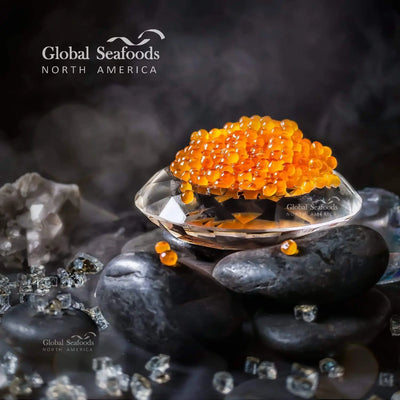
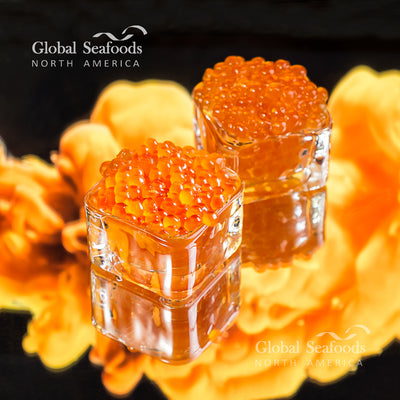
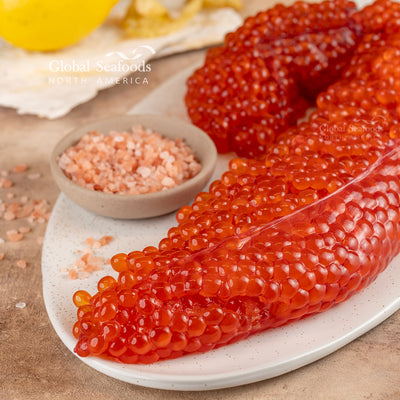
Coho caviar characteristics: bright to deep orange, approximately 4–5mm egg diameter, mild briny flavor with a clean slightly tangy finish, firm membrane delivering a satisfying pop. Marketed in the US as Coho salmon caviar or silver salmon caviar; in Japan as ikura (a broader term covering all salmon roe, but Coho is among the most common varieties used).
Coho vs. Other Pacific Salmon Roes
Understanding where Coho sits in the Pacific salmon roe spectrum helps with both purchasing decisions and pairing choices.
Pink salmon roe (Oncorhynchus gorbuscha): Smallest eggs (~3–4mm). Lightest flavor — mild, subtle brininess. Most abundant and most affordable. Good entry-level product; less dramatic texture than Coho.
Coho salmon roe (Oncorhynchus kisutch): Medium-large eggs (~4–5mm). Mild briny flavor with a slightly tangy, clean finish. Most approachable flavor profile among the mid-tier roes. Firm pop. Versatile across pairing styles from Japanese to Western.
Chum salmon roe (Oncorhynchus keta): Largest Pacific salmon eggs (~5–8mm). Mildest flavor of the group — almost sweet. The premium standard for Japanese ikura (gunkan-maki, ikuradon). Most visually dramatic presentation. Higher price point than Pink and Coho.
Sockeye salmon roe (Oncorhynchus nerka): Medium eggs (~4–5mm, similar to Coho). More assertive, intensely briny flavor. Deeper red-orange color. Better suited to experienced palates or preparations where a bold roe flavor is desired. Less versatile for mild-paired dishes.
In summary: For first-time tasters or versatile everyday use, Coho is the best choice. For the most dramatic presentation and traditional Japanese use, Chum. For a bolder, more assertive roe, Sockeye. For maximum affordability with a lighter flavor, Pink.
How Coho Salmon Caviar Is Made
Roe is extracted from female Coho at dockside immediately after landing — speed is the primary quality determinant. The skein is separated from the eggs using a mesh screen or by hand, rinsed in cold water, graded for membrane integrity and size uniformity, then malossol-cured at 3–5% salt by weight for 10–20 minutes. Malossol (“little salt” in Russian) preserves the product, enhances natural flavor, and firms the membrane, all without masking the roe’s character. Finished product is packed in airtight glass jars or lacquered tins under continuous refrigeration. For the complete production journey in detail, see our From Waters to Delicacy guide.
Browse our Red Caviar Collection for premium options.
Nutritional Highlights
Per 30g (1 oz) serving: approximately 1,000–1,500mg omega-3 fatty acids (EPA+DHA) in phospholipid form — more bioavailable than most fish oil supplement formats; 6–8g complete protein; 150–200% of daily Vitamin B12; meaningful Vitamin D and selenium; approximately 40–50 calories. Sodium: 300–500mg per 30g. The omega-3s support cardiovascular health (primarily triglyceride reduction) and normal brain function per AHA guidance. For the full nutritional analysis, see our Coho Salmon Caviar Nutritional Benefits guide.
How to Serve Coho Salmon Caviar
Two rules that apply to every serving context: (1) never add caviar to hot food — heat collapses the egg membrane and destroys the pop; (2) never use metal utensils — metal reacts with roe oils and imparts metallic off-flavor. Use mother-of-pearl, bone, wood, or food-safe plastic spoons only. Caviar always goes on last, on plated food that has cooled from hot to warm.
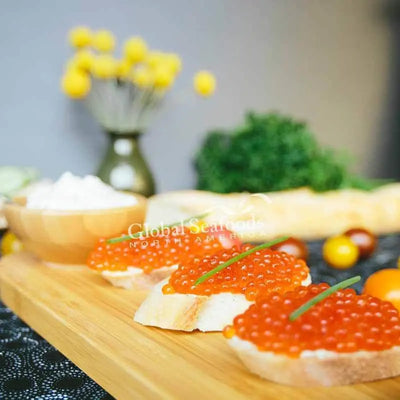
Classic pairings: Blinis and crème fraîche (the definitive presentation), unsalted butter on toast, cucumber rounds with cream cheese, deviled eggs, oysters on the half shell.
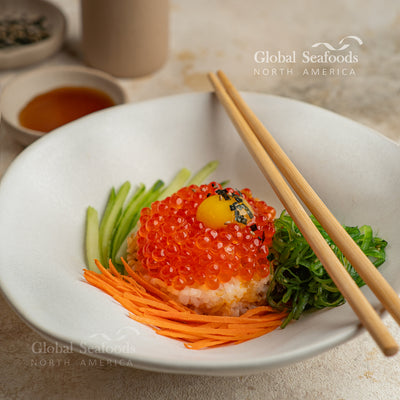
Modern uses: On warm (not hot) pasta, on plated risotto after a 45–60 second rest, on seared fish after plating, on sushi rice (gunkan-maki or roll topping, added just before service), scrambled eggs plated and rested 20–30 seconds.
For complete recipes with quantities and step-by-step instructions, see our Creative Culinary Adventures with Coho Salmon Caviar and Coho Salmon Caviar Pairings guide.
For serving and preparation videos: Global Seafoods YouTube Channel.
Sustainability
Alaska wild-caught Coho salmon is managed under Alaska’s constitutional sustained-yield mandate. ADF&G sets annual quotas based on escapement goals; fisheries close in real time when goals are not met. Alaska Coho fisheries hold Marine Stewardship Council (MSC) certification. Look for Alaska origin and MSC labeling as the primary indicators of responsibly sourced Coho roe.
Where to Buy
- Coho Salmon Caviar
- Pink Salmon Caviar
- Rainbow Trout Pearls
- Chum Salmon Caviar
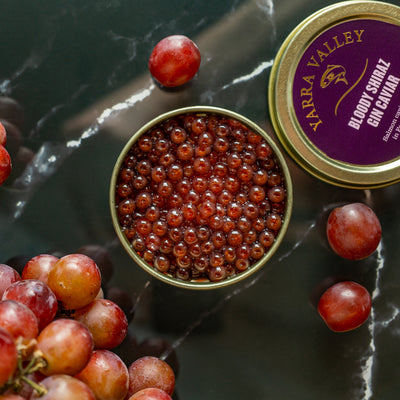
- Bloody Shiraz Infused Caviar
- Full Red Caviar Collection
Frequently Asked Questions
How does Coho salmon caviar compare to other Pacific salmon roes?
Coho sits in the middle of the Pacific roe spectrum by both size and flavor intensity. Pink salmon roe is smaller and milder; Chum is larger and even milder (the Japanese ikura premium standard); Sockeye is similar in size but significantly more assertive in brininess. Coho is the most versatile and approachable — the right choice for most pairing contexts and for first-time caviar tasters.
What makes Coho salmon caviar unique?
Medium-large eggs (~4–5mm), bright orange, mild briny flavor with a clean slightly tangy finish, and firm membrane integrity. Among Pacific salmon roes, it delivers the best balance of visual appeal, flavor accessibility, and texture across the widest range of serving contexts.
How should I store Coho salmon caviar?
Refrigerate at 32–38°F (0–3°C) — the coldest zone of the home refrigerator (back of bottom shelf or deli drawer). Unopened: 3–6 months. Opened: 2–3 days. Always use a non-metal spoon and close tightly after each use.
Is Coho salmon caviar sustainable?
Alaska wild-caught Coho roe is among the most sustainably managed seafood products available. Alaska’s constitutional sustained-yield mandate, ADF&G escapement-based quota management, and MSC third-party certification provide a robust framework. Look for Alaska origin and MSC labeling.
Can I freeze Coho salmon caviar?
Not recommended for premium product. Ice crystal formation weakens the egg membrane during freezing, resulting in softer texture and loss of pop after thawing. If necessary, freeze in small portions and consume within 3 months. Thaw overnight in the refrigerator.
What is the best way to serve Coho salmon caviar for the first time?
Start with blinis and crème fraîche — the traditional presentation that lets the roe’s flavor lead with minimal distraction. Warm (not hot) blinis, a spoonful of crème fraîche, a generous half-teaspoon of caviar added last with a non-metal spoon, fresh dill garnish. Serve immediately. This combination highlights everything that makes Coho caviar worth tasting: the pop, the mild brininess, and the clean finish.
Related Products


Also in News

Snail Caviar: How White Escargot Caviar Is Farmed, Harvested and Made

The Dark Years of Pacific Salmon: A 20-Year Outlook for Alaska, Russia, and the Red Caviar Market

King Crab Legs Delivery: Is It Worth It? Exploring the Benefits and Best Options
Shop Now
Main
