
Creative Culinary Adventures with Coho Salmon Caviar

Creative Culinary Adventures with Coho Salmon Caviar
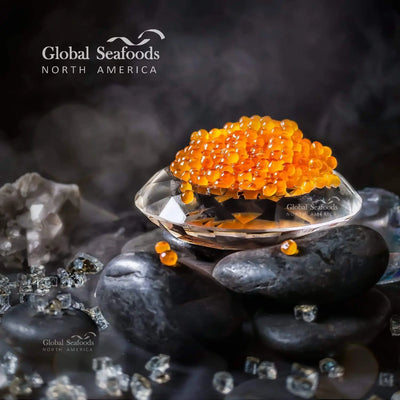
Coho salmon caviar — bright orange, mildly briny, with a clean tangy finish and satisfying firm pop — is one of the most versatile and approachable roes for cooking. Its flavor is assertive enough to stand out but restrained enough to complement rather than dominate a wide range of ingredients. This guide covers three complete recipes with quantities and technique, classic serving ideas, pairing principles, and the handling rules that protect the caviar’s delicate texture.
Shop premium Coho salmon caviar: Global Seafoods Coho Salmon Caviar.
The Rule That Applies to Every Recipe Below
Never add caviar to hot food. Heat collapses the egg membrane, destroys the firm-pop texture, and dulls the bright flavor. Caviar always goes on last — on plated food that has rested and cooled to warm or below — using a non-metal spoon (metal reacts with roe oils and imparts a metallic off-flavor; use mother-of-pearl, bone, wood, or food-safe plastic).
Classic Serving Ideas
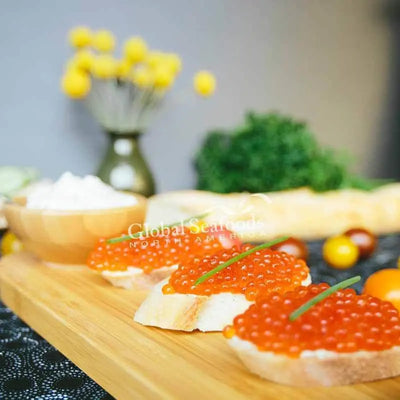
Blinis with crème fraîche: The definitive presentation. Warm blinis to just barely warm (not hot), spread with crème fraîche, add a generous half-teaspoon of caviar per blini, garnish with fresh dill. Serve immediately on a chilled platter.
Deviled eggs: Pipe the yolk filling into egg white halves, refrigerate. Add caviar on top just before serving using a non-metal spoon. Undersalt the filling — caviar adds significant saltiness.
Toast points: Lightly toast thin-sliced brioche or pain de mie. Spread with unsalted butter (not salted — the caviar provides the salt). Let cool to room temperature, then add caviar. Serve within a few minutes.
Recipe 1: Coho Salmon Caviar Pasta
A fast, elegant 20-minute pasta where Coho’s mild, tangy flavor complements a simple garlic-lemon-butter base. The key technique: let the pasta cool 30 seconds before adding caviar, and never toss the caviar into the hot pan.
Ingredients (serves 2):
- 200g (7 oz) spaghetti or linguine
- 3 tbsp extra-virgin olive oil
- 2 garlic cloves, thinly sliced
- Zest of 1 lemon + 1 tbsp lemon juice
- 2 tbsp unsalted butter or crème fraîche
- 2–3 tbsp Coho salmon caviar
- Fresh chives or dill, finely chopped
- White pepper; salt (use sparingly — caviar adds saltiness)
Instructions:
- Cook pasta in well-salted boiling water to al dente. Reserve ½ cup pasta water before draining.
- Warm olive oil over medium-low heat in a wide pan. Add garlic and cook gently until softened and fragrant but not browned — about 2 minutes. Remove from heat.
- Add drained pasta to the pan. Add butter (or crème fraîche), lemon zest, lemon juice, and a splash of pasta water. Toss to coat. Season with white pepper; go light on salt.
- Plate the pasta. Rest 30 seconds. Spoon caviar over the top — do not return the pan to heat after adding caviar, and do not toss caviar in. Scatter herbs. Serve immediately.
Why Coho works here: Coho’s mild, slightly tangy flavor integrates cleanly with the lemon-garlic base without overpowering it. Chum’s larger, milder eggs are also excellent; Sockeye would be more assertive.
Recipe 2: Caviar-Topped Potato Pancakes (Draniki)
Crispy potato pancakes — a staple of Eastern European and Jewish cooking — with sour cream and Coho caviar. The crisp starch, cool sour cream, and briny pop of the roe make a genuinely outstanding combination. The key technique: wring maximum moisture from the grated potato, and add caviar only when the pancakes have cooled to warm.
Ingredients (makes 8–10 pancakes, serves 4 as an appetizer):
- 3 medium russet potatoes (about 600g), peeled
- 1 small yellow onion
- 1 egg, beaten
- 2 tbsp all-purpose flour
- ½ tsp salt, ¼ tsp black pepper
- Neutral oil for frying (canola or grapeseed)
- Sour cream or crème fraîche
- 2–3 tbsp Coho salmon caviar
- Fresh dill to garnish
Instructions:
- Grate potatoes and onion on the coarse side of a box grater. Transfer to a kitchen towel and wring out as much liquid as possible. This step is critical — excess moisture causes steaming, not crisping.
- Combine squeezed potato-onion mixture with egg, flour, salt, and pepper. Mix well.
- Heat ¼ inch of oil in a heavy skillet (cast iron preferred) over medium-high heat until shimmering. Drop heaping spoonfuls (~3 tbsp each), press to flatten. Cook 3–4 minutes per side until deep golden brown. Drain on paper towels; season immediately with a pinch of salt.
- Cool to warm (not hot) before serving. Top each pancake with a dollop of sour cream and a spoonful of Coho caviar using a non-metal spoon. Garnish with fresh dill. Add caviar at the last moment before service.
Recipe 3: Coho Caviar Sushi Rolls
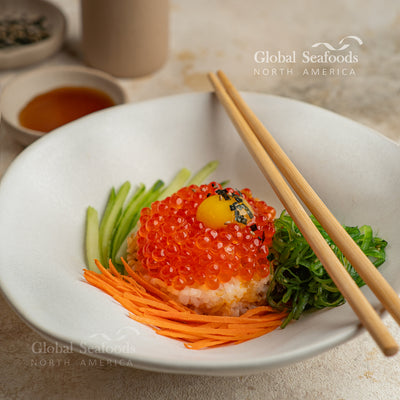
A straightforward inside-out or traditional maki roll with smoked salmon, avocado, and Coho ikura on top. The Coho’s mild flavor pairs naturally with the slightly sweet sushi rice and the richness of avocado. Caviar goes on top of sliced rolls at room temperature — sushi rice should never be served hot.
Ingredients (makes 2 rolls, 12–16 pieces):
- 1½ cups prepared sushi rice (seasoned with rice vinegar, sugar, salt)
- 2 sheets nori (full size)
- 80g (3 oz) cold-smoked salmon, thinly sliced
- ½ ripe avocado, thinly sliced
- 2–3 tbsp Coho salmon caviar
- Soy sauce, pickled ginger, and wasabi to serve
Instructions:
- Place a nori sheet shiny side down on a bamboo sushi mat (or a clean kitchen towel). With wet hands, spread a thin, even layer of sushi rice over the nori, leaving a 1-inch strip at the far edge uncovered.
- Lay smoked salmon and avocado slices in a horizontal line across the center of the rice.
- Roll firmly using the mat, pressing gently as you go. Seal the edge with a little water. Repeat for the second roll.
- With a sharp, wet knife, slice each roll into 6–8 pieces using a single drawing motion (do not saw — it compresses the roll).
- Arrange pieces on a plate. Top each piece with a small spoonful of Coho caviar using a non-metal spoon. Serve immediately. Add caviar no more than a few minutes before serving — sushi rice at room temperature is fine; the issue is time, as caviar sitting on rice absorbs moisture and the eggs soften.
Ikura gunkan-maki variation: For a more traditional Japanese presentation, make gunkan (battleship) sushi: form small rice ovals by hand, wrap a strip of nori around each to form a wall, and fill generously with Coho ikura. This style shows the roe most dramatically and is the classic way to serve ikura in Japanese cuisine.
For more serving and preparation ideas: Global Seafoods YouTube Channel.
Pairing Principles
Food: Fat-rich bases (crème fraîche, butter, cream cheese, avocado, egg yolk) complement the richness and carry the flavor. Acid accents (lemon, crème fraîche, pickled ginger) cut through it. Neutral starch (blinis, rice, toast, potato) lets the caviar lead. Seafood companions (smoked salmon, oysters, scallops) enhance rather than compete. Avoid: strong cheeses, heavily spiced foods, hot food.
Drinks:
- Champagne or dry sparkling wine — the definitive pairing; acidity and fine bubbles cleanse the palate between bites
- Ice-cold vodka — traditional Russian; neutral spirit, near-freezing temperature
- Dry white wine — Chablis, Muscadet, or dry Alsatian Riesling; avoid oaky Chardonnay, which competes with the delicate briny flavor of Coho roe
- Dry sake — junmai or junmai ginjo; pairs naturally with Japanese-style preparations
Health Benefits
A 30g (1 oz) serving of Coho salmon caviar provides approximately 1,000–1,500mg of omega-3 fatty acids (EPA+DHA), 6–8g of complete protein, and 150–200% of the daily recommended value of Vitamin B12, at roughly 40–50 calories. Also rich in Vitamin D, selenium, and iron. The American Heart Association emphasizes the importance of regular omega-3 fatty acid consumption from whole seafood sources for maintaining cardiovascular health. Sodium: approximately 300–500mg per 30g serving.
Where to Buy Premium Coho Salmon Caviar
- Coho Salmon Caviar — wild-caught, sustainably sourced
- Chum Salmon Caviar — largest eggs, mildest flavor
- Pink Salmon Caviar — smaller eggs, excellent value
- Rainbow Trout Pearls — delicate freshwater roe
- Full Red Caviar Collection
Frequently Asked Questions
What’s the best caviar to use for sushi rolls — Coho or another variety?
Coho is an excellent choice for sushi — its mild, slightly tangy flavor and medium egg size (4–5mm) work well with sushi rice and avocado without dominating the roll. For gunkan-maki where the roe is the feature, Chum ikura (larger eggs, 5–8mm, very mild) is the premium Japanese standard and the most visually striking. Sockeye roe has more intense brininess, which some find too assertive in sushi applications. For home cooking, Coho or Chum are the most versatile and widely available choices.
How is Coho salmon caviar different from other types of caviar?
Coho roe eggs are medium-large (approximately 4–5mm) with a mildly briny, slightly tangy, clean flavor — less intense than Sockeye, milder and rounder than Chum. Among Pacific salmon roes it is widely considered the most approachable for first-time tasters. Compared to sturgeon caviars (Kaluga, Ossetra), it is more assertively briny, more vividly orange, and significantly more affordable.
Can Coho salmon caviar be frozen?
Not recommended for premium product. Ice crystal formation weakens the egg membrane, resulting in softer texture after thawing. If necessary, freeze in small portions and consume within 3 months. Thaw overnight in the refrigerator.
How should I store Coho salmon caviar?
Refrigerate at 32–38°F (0–3°C) — the coldest zone of the home refrigerator (back of bottom shelf or deli drawer). Unopened: 3–6 months. Opened: 2–3 days. Always use a non-metal spoon and close tightly after each use.
What is the best way to serve Coho salmon caviar?
Cold, on a neutral fat-rich carrier (blinis with crème fraîche, buttered toast, cucumber rounds), added at the last moment before serving using a non-metal spoon. Never heated, never tossed into hot food. For sushi: on room-temperature rice, added just before service.
Is Coho salmon caviar healthy?
Yes — approximately 1,000–1,500mg omega-3s (EPA+DHA), 6–8g complete protein, and 150–200% daily Vitamin B12 per 30g serving at roughly 40–50 calories. Sodium is approximately 300–500mg per 30g — relevant for those monitoring intake.
Related Products


Also in News

Snail Caviar: How White Escargot Caviar Is Farmed, Harvested and Made

The Dark Years of Pacific Salmon: A 20-Year Outlook for Alaska, Russia, and the Red Caviar Market

King Crab Legs Delivery: Is It Worth It? Exploring the Benefits and Best Options
Shop Now
Main
