
Exploring the Delicacy: Unveiling the Wonders of Coho Salmon Caviar

Coho Salmon Caviar: Flavor, Nutrition, and How to Enjoy It
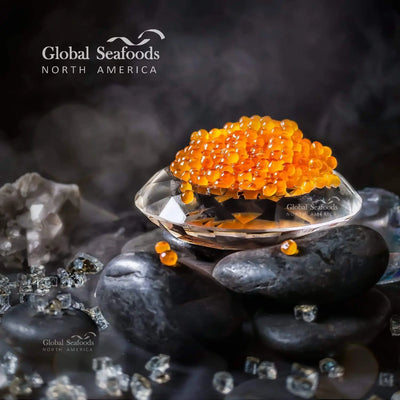
Coho salmon caviar — the salt-cured roe of Oncorhynchus kisutch, the silver salmon — occupies a distinctive position among Pacific salmon roes. It sits between the large, mild eggs of chum salmon and the smaller, intensely briny eggs of sockeye: medium-sized (approximately 3–4mm), bright orange to deep amber in color, with a balanced flavor profile that is tangy, mildly briny, and faintly sweet. Its flavor complexity and visual appeal make it one of the most versatile red caviars for both raw service and cooked applications.
Shop premium Coho salmon caviar: Coho Salmon Caviar | Full Red Caviar Collection.
Flavor and Physical Characteristics
Coho roe is distinguished by several physical and sensory attributes that set it apart from other Pacific salmon species:
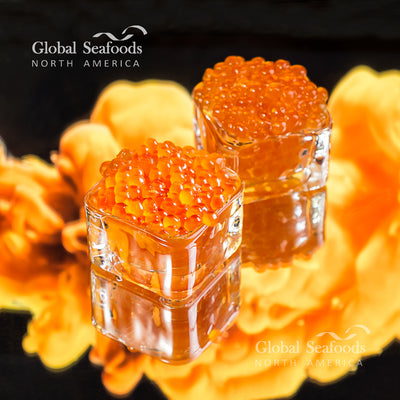
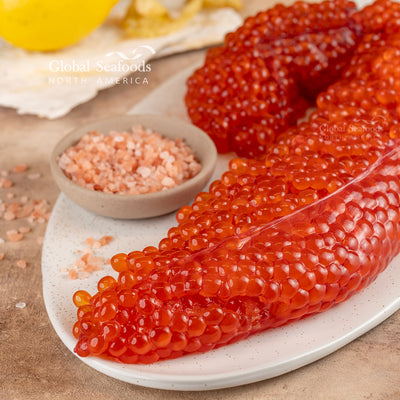
- Color: Bright orange to deep amber-red depending on the individual fish's diet and region of harvest. The color is visually striking and consistent within a well-graded batch.
- Grain size: Approximately 3–4mm — medium by Pacific salmon standards. Larger than sockeye (3–3.5mm), smaller than chum (4–6mm). The membrane is moderately firm, producing a satisfying burst that is more defined than chum but less aggressive than sockeye.
- Flavor: A balanced combination of mild brininess, gentle oceanic sweetness, and a faint tanginess. Less assertive than sockeye; more characterful than pink or chum. Well-suited to preparations where the caviar should complement rather than dominate the other flavors.
How Coho Salmon Caviar Is Produced
Harvest. Wild Coho salmon are harvested from Alaska’s cold Pacific waters during the late summer to early fall season. Alaska’s Coho fisheries are managed by the Alaska Department of Fish and Game under annual stock assessment protocols, catch quotas, and escapement goals — ensuring that sufficient fish return to spawn each year. Selective gear types (gillnets, purse seines, trolls) are used to minimize bycatch of non-target species. Many Alaska salmon fisheries hold Marine Stewardship Council (MSC) certification for sustainable wild capture.
Roe extraction. Immediately after harvest, the roe skeins are carefully removed from the female fish. Speed and temperature control at this stage are critical — the roe begins to deteriorate rapidly at ambient temperature. The skeins are kept at near-freezing temperatures until processing.
Cleaning and curing (malossol process). The roe is separated from the skein membrane using fine mesh screens, rinsed under cold water to remove blood and membrane fragments, and then cured using the malossol method: approximately 3–5% salt by weight. This is the minimum salt level needed for preservation while allowing the natural flavor of the roe to dominate. Higher salt percentages indicate lower-quality roe requiring more salt to mask off-flavors. The curing time is brief — typically 15–30 minutes — before packing.
Grading and packaging. Cured roe is inspected for egg integrity (no broken or burst eggs), color consistency, and aroma. Premium-grade product is packed into airtight, non-reactive containers and immediately refrigerated. The best products are vacuum-sealed to further extend shelf life and prevent oxidation.
Nutritional Profile
Coho salmon roe is genuinely nutritionally dense — the following applies to a standard 30g serving:
- Omega-3 fatty acids (EPA + DHA): Approximately 600–900mg of combined long-chain marine omega-3s per 30g serving. These are the two forms with the strongest evidence base for human health — EPA for cardiovascular and anti-inflammatory effects, DHA for neurological and retinal function. The NIH Office of Dietary Supplements and the American Heart Association both recommend regular consumption of marine omega-3 sources. Omega-3s are well-established for reducing serum triglycerides (a primary cardiovascular risk factor) and modulating inflammatory pathways; their effect on LDL cholesterol specifically is more complex and varies by individual.
- Complete protein: All essential amino acids; important for muscle maintenance, tissue repair, and enzyme synthesis.
- Vitamin B12: One of the richest dietary sources; essential for red blood cell formation, neurological function, and DNA synthesis.
- Vitamin D: One of the few non-fortified dietary sources with meaningful content; supports calcium absorption, bone metabolism, and immune regulation.
- Selenium: Cofactor for glutathione peroxidase, the primary intracellular antioxidant enzyme; also supports thyroid hormone metabolism.
- Iron: Heme iron (most bioavailable form from animal sources); supports hemoglobin synthesis and oxygen transport.
- Caloric density: Approximately 75–85 kcal per 30g serving — moderate at typical serving sizes, which allows regular consumption without significant caloric impact.
Serving Suggestions
Coho salmon caviar’s balanced flavor makes it one of the most versatile red roes for both traditional and contemporary service:
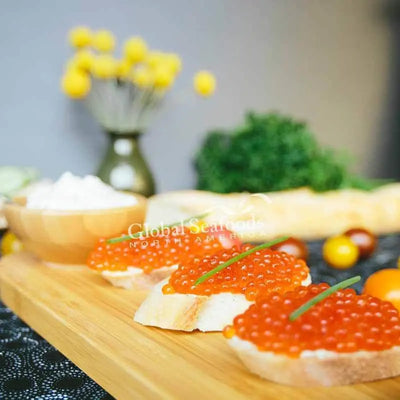
Classic presentations: Blinis with crème fraîche — the standard Russian and French service that allows the caviar’s flavor to be appreciated without distraction. Toast points with lightly salted butter. Served chilled directly from the jar on crushed ice with mother-of-pearl spoons.
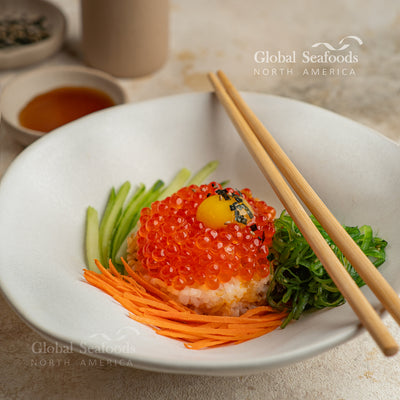
Contemporary applications: Deviled eggs garnished with coho caviar — the richness of the yolk filling balances the brininess of the roe. Potato blini or latkes with sour cream and caviar. Premium sushi rolls or hand rolls where the caviar adds a visual and textural accent. Potato chips with crème fraîche and caviar — a modern playful presentation that has become a staple at contemporary events.
Cooked applications: Caviar pasta — freshly cooked pasta (linguine or spaghetti) tossed with high-quality butter or olive oil, finished off heat with a generous spoonful of caviar stirred through; the residual heat warms but does not cook the roe. Seafood risotto finished with caviar immediately before serving. Flaky white fish (halibut, sablefish) with lemon butter sauce and caviar garnish. Note: add caviar off heat or at the last moment in all cooked preparations — sustained cooking above approximately 120°F will burst the egg membranes and destroy the characteristic texture.
For preparation techniques and more serving ideas, visit the Global Seafoods YouTube Channel.
Sustainability
Alaska’s Coho salmon fisheries are managed as a public trust resource under the Alaska Constitution’s sustained yield mandate, which legally requires management for long-term sustainability rather than short-term harvest maximization. Annual stock assessments by the Alaska Department of Fish and Game set harvest limits based on spawning escapement goals — ensuring that enough fish return to reproduce each year to maintain population stability. Many Alaska salmon fisheries are MSC-certified, which provides third-party verification of sustainable harvest practices. When purchasing Coho salmon caviar, look for products that identify Alaska wild-caught origin and, ideally, the specific fishery or region of harvest. Global Seafoods’ Coho Salmon Caviar is sourced from Alaska’s sustainably managed wild fisheries.
Where to Buy
- Coho Salmon Caviar
- Chum Salmon Caviar Soft Shell — larger eggs, milder flavor; the ikura standard
- Rainbow Trout Pearls — smaller eggs, lower salinity; excellent entry point
- Pink Salmon Caviar — most delicate and affordable of the Pacific salmon roes
Explore the complete Red Caviar Collection.
Frequently Asked Questions
What does Coho salmon caviar taste like?
Coho salmon caviar has a balanced, approachable flavor: mildly briny with a faint oceanic sweetness and gentle tanginess. It is less assertive than sockeye roe (which has a more intense, robust brininess) and more characterful than pink salmon roe (which is the most delicate and subtle of the Pacific salmon roes). The 3–4mm eggs have a moderately firm membrane that produces a clean, satisfying burst. The overall profile is versatile — it complements rather than dominates other flavors in composed dishes.
How does Coho salmon caviar compare to chum or sockeye roe?
Chum (keta) salmon produces the largest eggs (4–6mm) with the mildest, most buttery flavor and the most delicate membrane — the standard for Japanese ikura. Sockeye produces smaller eggs (3–3.5mm) with the most intensely briny, assertive flavor and the firmest membrane. Coho sits between the two: medium grain, moderate membrane firmness, and a flavor that is more complex than chum but more approachable than sockeye. All three are nutritionally comparable in omega-3, protein, and micronutrient content.
What sets Coho salmon caviar apart from sturgeon caviar?
Sturgeon caviar (beluga, osetra, sevruga) is from a completely different family of fish (Acipenser species vs. Oncorhynchus species). Sturgeon roe is smaller (1–3mm), more mineral and nutty in flavor, and significantly more expensive due to the rarity of the source fish and the lengthy aquaculture production cycle (7–10+ years to first harvest). Coho salmon caviar is larger-grained, more oceanic and sweet in flavor, and substantially more affordable while still offering the characteristic burst-texture eating experience and a strong nutritional profile.
How should Coho salmon caviar be stored?
Unopened: refrigerate at 32–38°F (0–3°C) — the coldest zone of the refrigerator, typically the bottom shelf toward the back. Consume by the manufacturer’s best-by date (typically 2–3 weeks from purchase for fresh malossol product). After opening: transfer to an airtight non-metallic container, press plastic wrap against the surface to minimize air contact, and consume within 2–3 days. Do not use metal utensils or store in metal containers — metal reacts with the roe’s oils and produces a metallic off-flavor.
Can Coho salmon caviar be frozen?
Yes, but the freeze-thaw cycle weakens the egg membrane, reducing the characteristic burst texture — thawed roe will be noticeably softer than fresh. For raw presentations where texture is the primary eating experience, fresh is strongly preferred. Frozen caviar is better suited to cooked applications (pasta, risotto, sauces) where the burst texture is less critical. If freezing: pack in a small airtight container, freeze at 0°F (−18°C), use within 3 months, and thaw overnight in the refrigerator — never at room temperature.
Is Coho salmon caviar sustainably sourced?
Wild Alaskan Coho salmon fisheries are managed under Alaska’s constitutionally mandated sustained yield principles, with annual escapement goals and harvest limits set by the Alaska Department of Fish and Game. Many Alaska salmon fisheries hold MSC (Marine Stewardship Council) certification, providing independent third-party verification. When purchasing, look for products that identify Alaska wild-caught origin and, ideally, specific fishery or regional information.
Related Products


Also in News

Snail Caviar: How White Escargot Caviar Is Farmed, Harvested and Made

The Dark Years of Pacific Salmon: A 20-Year Outlook for Alaska, Russia, and the Red Caviar Market

King Crab Legs Delivery: Is It Worth It? Exploring the Benefits and Best Options
Shop Now
Main
