
Coho Salmon Caviar Pairings for Gourmet Delights

Coho Salmon Caviar Pairings for Gourmet Delights
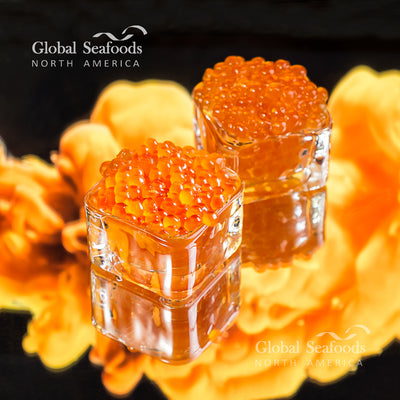
Coho salmon caviar — also called Silver Salmon caviar or ikura in Japanese cuisine — is one of the most pairing-friendly roes available. Its mild, slightly tangy brininess complements fat-rich bases, neutral starches, light acids, and clean proteins without dominating them. This guide covers eight well-developed pairings, three complete recipes, and the handling rules that protect the roe in each context.
Shop premium Coho salmon caviar: Global Seafoods Coho Salmon Caviar.
The Cardinal Rule for All Pairings
Caviar always goes on last, on food that has cooled to warm or below, using a non-metal spoon. Heat collapses the egg membrane and destroys both texture and flavor. Metal reacts with roe oils and imparts a metallic off-flavor. These two rules apply without exception to every pairing and recipe below.
How Coho Salmon Caviar Is Made
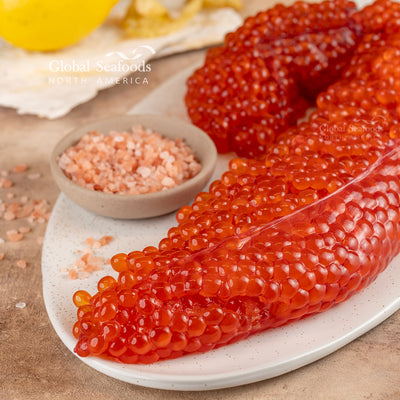
Understanding the production process helps explain why handling matters. Roe is harvested from female Coho salmon during the fall spawning run (typically August–November in Alaska). It is separated from the skein, rinsed in cold water, graded by egg size and membrane integrity, then cured as malossol — lightly salted at 3–5% by weight. This minimal salt level preserves the roe while keeping its natural flavor forward. The finished product is packed in airtight glass jars or tins and held under continuous refrigeration. The egg membrane’s integrity — its ability to deliver the firm pop — is entirely determined by how gently and quickly the roe is handled at every stage. The same principle applies in your kitchen: gentle handling, cold environment, non-metal contact only.
Eight Pairings for Coho Salmon Caviar
1. Blinis and crème fraîche — The definitive classic. Warm buckwheat or plain blinis to just barely warm. Spread crème fraîche. Add a generous half-teaspoon of caviar per blini. Garnish with fresh dill. The slightly sour crème fraîche cuts through the richness; the blini provides neutral starch. Serve immediately on a chilled platter.
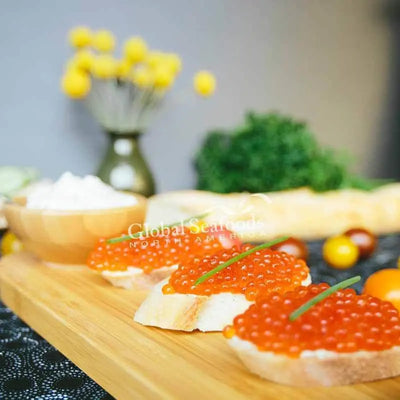
2. Unsalted butter on baguette or brioche toast — Toast thin-sliced baguette or brioche until golden. Let cool to room temperature — this is critical; hot bread will affect the caviar. Spread with room-temperature unsalted butter (not salted — the caviar provides the salt). Add caviar. The butteriness amplifies the richness of the roe; the toasted crust provides textural contrast.
3. Crispy potato chips with sour cream — A more casual but genuinely delicious pairing. Plain, lightly salted kettle chips — the crunch and neutral starch work the same way as blinis or toast. Top each chip with a small spoonful of sour cream and a few pearls of caviar. Served at room temperature; no heat issue. A crowd-pleaser at informal gatherings.
4. Cucumber rounds with cream cheese — Slice English cucumber into ¾-inch rounds (do not peel). Pipe or spoon whipped cream cheese mixed with lemon zest and chives into each cup. Add caviar just before serving. The cool cucumber and tangy cream cheese provide a clean, refreshing contrast. Gluten-free; no cooking required.
5. Deviled eggs — Pipe a smooth Dijon-mayo yolk filling into egg white halves. Refrigerate. Add caviar on top using a non-metal spoon just before serving. Undersalt the filling — the caviar adds significant saltiness. The rich, creamy egg yolk and the briny roe pop is one of the best flavor combinations in the caviar repertoire.
6. Oysters on the half shell — Shuck fresh oysters and serve on crushed ice. Add a small spoonful of Coho caviar to each oyster just before service. The combination of two distinct ocean flavors — the briny, mineral oyster and the clean, tangy salmon roe — is striking. No accompaniment needed; lemon is optional. Best with milder oyster varieties (Pacific, Kumamoto) that don’t overwhelm the caviar.
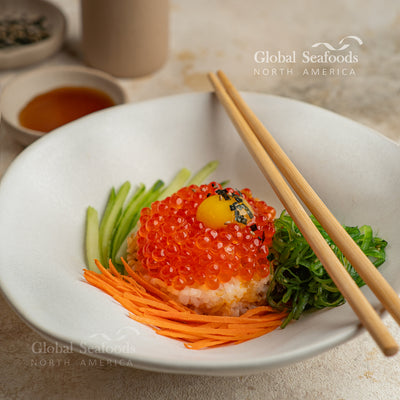
7. Sushi — ikura gunkan-maki or roll topping — Form small sushi rice ovals by hand, wrap a strip of nori around each to form a wall (gunkan/battleship style), and fill generously with Coho ikura. Or slice completed maki rolls and top each piece with a small spoonful of caviar. Sushi rice is served at room temperature — no heat issue — but add caviar no more than a few minutes before service as the eggs absorb moisture from the rice over time.
8. Scrambled eggs — Cook soft, creamy scrambled eggs (low heat, pulled early) and plate. Rest 20–30 seconds. Add a generous spoonful of Coho caviar on top. Do not stir in; serve immediately. The warm, custardy egg and the cold, briny pop of the caviar is a contrast that works remarkably well. This is a classic luxury breakfast in the caviar-serving tradition.
Recipe 1: Alaskan Halibut with Lemon Butter and Caviar
Pan-seared halibut with a quick lemon butter pan sauce, finished with Coho caviar on the plated fish — never in the hot sauce.
Ingredients (serves 2):
- 2 halibut fillets (150–180g / 5–6 oz each), skin on or off
- 2 tbsp neutral oil for searing
- 3 tbsp cold unsalted butter, cubed
- Juice of 1 lemon
- 1 tbsp fresh chives or dill, finely chopped
- Salt and white pepper
- 1–2 tbsp Coho salmon caviar
Instructions:
- Pat halibut dry. Season with salt and white pepper on both sides.
- Heat oil in a heavy skillet (cast iron preferred) over high heat until just smoking. Sear halibut presentation side down 3–4 minutes without moving until a golden crust forms. Flip; cook 1–2 minutes until just cooked through (internal temp 130–135°F). Remove to plates.
- Reduce heat to low. Add lemon juice to the pan; swirl in cold butter one cube at a time until emulsified into a glossy sauce. Add herbs. Season. Spoon sauce over the halibut on the plate.
- Rest 30 seconds. Add a small spoonful of Coho caviar on top of each fillet using a non-metal spoon. Serve immediately — the fish should be warm, not hot, when caviar is added.
Recipe 2: Creamy Risotto with Caviar
Classic Parmesan risotto, plated and rested, with Coho caviar added on top after the dish has cooled from steaming hot to warm.
Ingredients (serves 2 as a starter):
- 150g (5 oz) Arborio or Carnaroli rice
- 1 shallot, finely diced
- 1 garlic clove, minced
- 2 tbsp unsalted butter + 1 tbsp olive oil
- 60ml (2 oz) dry white wine
- 600–700ml (2.5–3 cups) warm chicken or vegetable stock
- 40g (1.5 oz) Parmigiano-Reggiano, finely grated
- Salt and white pepper
- 1–2 tbsp Coho salmon caviar per plate
- Fresh chives to garnish
Instructions:
- Warm stock in a separate pan; keep at a gentle simmer.
- Melt 1 tbsp butter with olive oil over medium heat. Soften shallot 3–4 minutes. Add garlic, cook 1 minute. Add rice; toast 2 minutes, stirring, until edges are translucent.
- Add wine; stir until absorbed. Add warm stock one ladle at a time, stirring frequently, waiting for each ladle to absorb before adding the next. Continue 18–22 minutes until rice is al dente with a creamy sauce consistency.
- Remove from heat. Stir in remaining 1 tbsp cold butter and Parmigiano. Season. The risotto should flow gently when the plate is tilted (“all’onda” consistency).
- Plate immediately. Rest 45–60 seconds — this is essential. The surface temperature drops from steaming to warm during this time. Add caviar on top using a non-metal spoon. Garnish with chives. Serve at once.
Why the rest matters: Risotto served straight from the pan is 185–195°F — enough to cook the caviar eggs on contact and destroy the membrane. After 45–60 seconds on the plate the surface temperature drops to the safe warm zone. Do not skip this step.
Recipe 3: Sockeye Salmon Tartare with Avocado and Caviar
Raw preparation — no heat involved. Diced fresh Sockeye salmon, creamy avocado, and Coho caviar on top. A stunning starter with contrasting textures and complementary ocean flavors.
Ingredients (serves 2 as a starter):
- 200g (7 oz) sushi-grade Sockeye salmon, skin removed, finely diced (5–6mm cubes)
- 1 ripe avocado, finely diced
- 1 tbsp finely diced shallot
- 1 tbsp lemon juice
- 1 tsp soy sauce (light)
- 1 tsp sesame oil
- ½ tsp fresh ginger, grated
- White pepper; salt to taste (go light — caviar adds salt)
- 1–2 tbsp Coho salmon caviar
- Microgreens, cucumber slices, or rice crackers to serve
Instructions:
- Dice salmon and avocado and refrigerate separately until ready to assemble — keep everything cold.
- In a bowl, combine salmon with shallot, lemon juice, soy sauce, sesame oil, ginger, and white pepper. Toss gently. Taste and adjust seasoning before salting — the caviar will add saltiness.
- Fold in avocado gently. Do not over-mix — the avocado should remain in distinct pieces.
- Plate using a ring mold or spoon into chilled serving glasses. Top with Coho caviar using a non-metal spoon. Garnish with microgreens. Serve immediately with cucumber slices or rice crackers alongside.
For more serving ideas: Global Seafoods YouTube Channel.
Sustainability
Alaska wild-caught Coho salmon is managed under Alaska’s constitutional sustained-yield mandate, with ADF&G setting annual quotas based on escapement goals and conducting in-season monitoring with authority to close fisheries when needed. Alaska Coho salmon fisheries hold Marine Stewardship Council (MSC) certification. When purchasing Coho roe, look for Alaska origin and MSC labeling as primary indicators of responsible sourcing.
Where to Buy
- Coho Salmon Caviar
- Chum Salmon Caviar
- Pink Salmon Caviar
- Rainbow Trout Pearls
- Full Red Caviar Collection
Frequently Asked Questions
What are the best food pairings for Coho salmon caviar?
The best pairings share one characteristic: they provide a fat-rich or neutral base that lets the caviar’s briny, tangy flavor lead. Crème fraîche and blinis is the classic; unsalted butter on toast is the simplest. Cucumber and cream cheese, deviled eggs, oysters, and sushi rice all work well. Avoid strongly flavored bases (smoked or cured meats, sharp cheeses, heavily spiced foods) that compete with rather than frame the roe.
Can I add caviar to hot dishes?
Only as a garnish on food that has cooled from hot to warm. Never stir caviar into a hot sauce, hot pasta, or hot risotto directly. The heat collapses the egg membrane and destroys the pop texture and bright flavor. The standard approach: plate the hot food, rest 30–60 seconds, then add caviar on top using a non-metal spoon. Serve immediately.
Is Coho salmon caviar sustainable?
Alaska wild-caught Coho roe is among the most sustainably managed seafood products available. Alaska’s constitutional sustained-yield mandate, ADF&G escapement-based quota management, and MSC third-party certification provide a robust sustainability framework. Look for Alaska origin and MSC labeling.
How should I store Coho salmon caviar?
Refrigerate at 32–38°F (0–3°C) — the coldest zone of the home refrigerator (back of bottom shelf or deli drawer). Unopened: 3–6 months. Opened: consume within 2–3 days. Always use a non-metal spoon and close tightly after each use.
What are the health benefits of Coho salmon caviar?
Per 30g serving: approximately 1,000–1,500mg omega-3 fatty acids (EPA+DHA, primarily reducing triglycerides and supporting cardiovascular health per AHA guidance); 6–8g complete protein; 150–200% of daily Vitamin B12; meaningful Vitamin D and selenium. Omega-3s are in phospholipid form, which research suggests is more bioavailable than the forms in most fish oil supplements. Sodium is approximately 300–500mg per 30g — relevant for those monitoring intake.
Where can I buy high-quality Coho salmon caviar?
Global Seafoods offers wild-caught, sustainably sourced Coho salmon caviar: Coho Salmon Caviar. Look for Alaska origin and MSC certification when purchasing from any supplier.
Related Products


Also in News

Snail Caviar: How White Escargot Caviar Is Farmed, Harvested and Made

The Dark Years of Pacific Salmon: A 20-Year Outlook for Alaska, Russia, and the Red Caviar Market

King Crab Legs Delivery: Is It Worth It? Exploring the Benefits and Best Options
Shop Now
Main
