
Creative Culinary Adventures with Salmon Caviar

Creative Culinary Adventures with Salmon Caviar
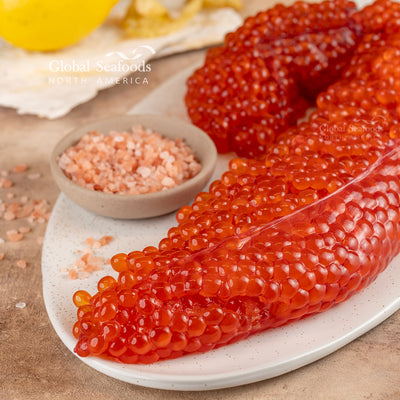
Salmon caviar is one of the most versatile luxury ingredients in the kitchen. Its vibrant orange color, firm pop, and bold briny flavor make it equally at home as a garnish, a recipe centerpiece, or a quick weekday upgrade to an otherwise simple dish. This guide covers creative applications beyond the traditional blini — recipes, plating ideas, pairing principles, and the technique rules that protect caviar’s delicate flavor and texture.
Shop premium salmon caviar: Global Seafoods Red Caviar Collection.
The Cardinal Rule: Never Heat Salmon Caviar
Before the recipes: the most important technique principle for cooking with salmon caviar is that it should never be cooked or added to hot food. Heat destroys the delicate membrane of the eggs, collapses their firm-pop texture, dulls the bright flavor, and turns the color dull. Caviar is always added at the last moment — on top of finished, plated food that has had a moment to cool slightly, or on cold preparations. This applies to pasta, scrambled eggs, pizza, or any other hot dish. Plate first, let it rest 30 seconds, then spoon caviar on top.
Creative Uses for Salmon Caviar
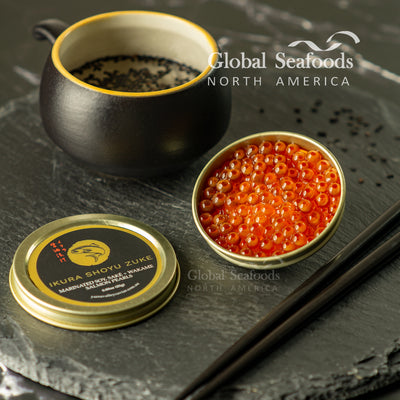
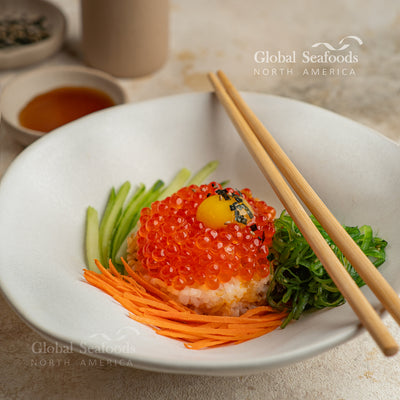
Sushi and Japanese-inspired dishes: Ikura gunkan-maki (battleship sushi, nori-wrapped around rice with a generous fill of roe) is the classic application. Also excellent in chirashi bowls, poke bowls, and as a topping for hand rolls. For a simple weeknight upgrade: steamed Japanese short-grain rice, a spoonful of soy-marinated ikura, and a sheet of toasted nori.
Gourmet appetizers:
- Caviar deviled eggs — pipe or spoon the filling into egg white halves, top each with a small spoonful of caviar just before serving. The richness of the yolk filling and the briny pop of the roe are an excellent combination.
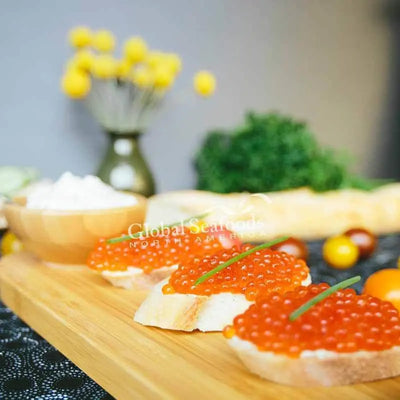
- Crostini — toasted baguette rounds, a thin layer of crème fraîche or whipped cream cheese, a slice of cold-smoked salmon, and a spoonful of caviar on top. Classic, elegant, 10 minutes to assemble.
- Cucumber rounds — thick-cut cucumber discs as the base (no bread required); top with a small amount of crème fraîche and caviar. Light, clean, gluten-free.
Breakfast presentations:
- Scrambled eggs with caviar — make soft, gently cooked scrambled eggs (low heat, constant stirring, pulled slightly underdone and finished off heat). Plate, let cool 20–30 seconds, then top with caviar. Do not cook caviar into the eggs — the heat destroys the texture and flavor.
- Bagel with cream cheese and caviar — the classic New York deli combination upgraded: toasted bagel, whipped cream cheese, thin-sliced red onion, capers, and a generous spoonful of salmon caviar instead of (or alongside) smoked salmon.
Recipe: Salmon Caviar Pasta
A fast, elegant pasta that takes 20 minutes and requires no special technique. The key: cool the pasta slightly before adding the caviar so the heat doesn’t collapse the eggs.
Ingredients (serves 2):
- 200g (7 oz) spaghetti or linguine
- 3 tbsp good-quality extra-virgin olive oil
- 2 garlic cloves, thinly sliced
- Zest of 1 lemon + 1 tbsp lemon juice
- 2 tbsp crème fraîche or unsalted butter
- 2–3 tbsp salmon caviar (chum or coho works best — mild, large eggs)
- Fresh chives or dill, finely chopped
- Flaky sea salt and white pepper to taste
Instructions:
- Cook pasta in well-salted boiling water to al dente. Reserve ½ cup pasta water before draining.
- In a wide pan, warm olive oil over medium-low heat. Add garlic and cook gently until softened and fragrant but not browned — about 2 minutes. Remove from heat.
- Add drained pasta to the pan. Add crème fraîche (or butter), lemon zest, lemon juice, and a splash of pasta water. Toss to coat. Season with white pepper; taste for salt (caviar adds saltiness — undersalt the pasta slightly).
- Plate the pasta. Let it sit for 30 seconds to cool slightly. Then spoon caviar over the top — do not toss caviar into the hot pasta. Scatter fresh chives or dill. Serve immediately.
Tip: Chum or Coho salmon caviar — large, mild, visually striking — are the best choices for pasta. Their mild brininess complements without overwhelming the delicate garlic-lemon base.
Recipe: Caviar-Topped Potato Pancakes (Draniki)
The Eastern European classic — potato pancakes (called draniki in Russian/Belarusian cuisine, latkes in Jewish cooking) — is the ideal vehicle for salmon caviar. The crisp, starchy pancake, cool sour cream, and briny caviar are one of the great three-ingredient combinations in food.
Ingredients (makes 8–10 pancakes, serves 4 as an appetizer):
- 3 medium russet potatoes (about 600g), peeled
- 1 small yellow onion
- 1 egg, beaten
- 2 tbsp all-purpose flour
- ½ tsp salt, ¼ tsp black pepper
- Neutral oil for frying (vegetable, canola, or grapeseed)
- Sour cream or crème fraîche to serve
- 3–4 tbsp salmon caviar to serve
- Fresh dill to garnish
Instructions:
- Grate potatoes and onion on the coarse side of a box grater (or use a food processor). Transfer to a clean kitchen towel and wring out as much liquid as possible — this is the most important step; excess moisture causes the pancakes to steam rather than crisp.
- Combine squeezed potato and onion mixture with beaten egg, flour, salt, and pepper in a bowl. Mix well.
- Heat ¼ inch of oil in a heavy skillet (cast iron preferred) over medium-high heat until shimmering. Drop heaping spoonfuls of batter (about 3 tbsp each), press gently to flatten. Cook 3–4 minutes per side until deep golden brown and crisp. Do not crowd the pan.
- Drain on paper towels. Season immediately with a pinch of salt.
- Serve warm (not hot) topped with a dollop of sour cream and a spoonful of salmon caviar. Garnish with fresh dill. Add caviar just before serving — not while pancakes are steaming hot.
Pairing Principles
Food pairings that work: Salmon caviar pairs best with ingredients that offer either fat (to complement the richness — butter, crème fraîche, cream cheese, avocado, egg yolk), acidity (to cut through it — lemon, crème fraîche, pickled onion), or neutral starch (to carry it without competing — blinis, toast, potato, plain rice). It complements other seafood (smoked salmon, oysters, scallops) and is superb on cold butter-sauced fish.
Pairings to avoid: Strong cheeses (blue cheese, aged cheddar) — the competing intensity overwhelms the caviar’s nuance. Heavily spiced foods. Anything acidic enough to “cook” the eggs (high-acid dressings applied directly to caviar).
Drink pairings:
- Champagne or dry sparkling wine — the effervescence and acidity cut through the richness and cleanse the palate between bites.
- Ice-cold vodka — the traditional Russian pairing; the neutral spirit and cold temperature complement the brininess without competing.
- Dry white wine — Chablis, white Burgundy, or dry Alsatian Riesling; avoid oaky Chardonnay, which clashes with briny roe.
- Dry sake — for Japanese-style presentations; junmai or junmai ginjo styles work well.
Where to Buy Premium Salmon Caviar
- Chum Salmon Caviar — largest eggs, mildest flavor; ideal for pasta and potato pancakes
- Coho Salmon Caviar — medium eggs, balanced flavor
- Pink Salmon Caviar — smaller eggs, mild, budget-friendly
- Rainbow Trout Pearls — freshwater roe, delicate flavor, beautiful presentation
- Full Red Caviar Collection
Storage and Handling
- Refrigerate at 32–38°F (0–3°C) — the coldest zone of the home refrigerator (back of the bottom shelf or deli drawer). Unopened: 3–6 months. Opened: consume within 2–3 days.
- Never use a metal spoon — metal reacts with the oils in the roe and imparts a metallic off-flavor. Use mother-of-pearl, bone, wood, or plastic.
- Minimize air exposure — close the jar tightly after each use.
- Freezing: possible but not recommended for premium product — ice crystal formation weakens the egg membrane. If necessary, freeze in small portions and consume within 3 months. Thaw overnight in the refrigerator.
For preparation and serving videos, visit the Global Seafoods YouTube Channel.
Frequently Asked Questions
Why should I never use a metal spoon with salmon caviar?
Metal — particularly silver and stainless steel — reacts with the delicate oils in salmon roe and imparts a distinctly metallic, unpleasant off-flavor that alters the tasting experience. This is why traditional caviar service uses mother-of-pearl spoons (the gold standard), with bone, wood, or food-safe plastic as acceptable alternatives. Even briefly touching caviar with a metal spoon before serving affects the flavor. This rule applies to all types of roe.
What is the best way to serve salmon caviar?
Served cold, on a neutral carrier (blinis, buttered toast, cucumber rounds, or potato pancakes) with a small amount of fat (crème fraîche, unsalted butter, or cream cheese) to complement the richness, and an acidic element (lemon, pickled onion) to cut through it. Add caviar last, just before serving. Never heat it.
Can I freeze salmon caviar?
Technically yes, but it is not recommended for premium product. Freezing causes ice crystal formation that weakens the egg membrane, resulting in softer, sometimes mushy texture after thawing. If freezing is necessary, use small portions, freeze quickly at the coldest setting, and consume within 3 months. Thaw overnight in the refrigerator, never at room temperature.
Is salmon caviar healthy?
Yes — it is one of the most nutrient-dense foods per calorie. A 30g (1 oz) serving provides approximately 1,000–1,500mg of omega-3 fatty acids (EPA + DHA), 6–8g of complete protein, and 150–200% of the daily recommended value of Vitamin B12, at approximately 40–50 calories. Sodium is significant (300–500mg per 30g) — relevant for those monitoring intake.
What’s the difference between salmon caviar and sturgeon caviar?
Salmon roe eggs are larger (4–8mm vs 1–3mm), more vividly orange (vs dark gray to black), and have a more direct, assertive briny flavor. Sturgeon caviar (beluga, osetra, sevruga) is subtler, more buttery, and more complex with a longer finish — and significantly more expensive. Salmon caviar is an excellent entry point to roe appreciation at a fraction of the price.
Where can I buy premium salmon caviar online?
Global Seafoods offers a full range of wild-caught, sustainably sourced salmon roe: Red Caviar Collection. Ships with cold-chain packaging.
Related Products


Also in News

Snail Caviar: How White Escargot Caviar Is Farmed, Harvested and Made

The Dark Years of Pacific Salmon: A 20-Year Outlook for Alaska, Russia, and the Red Caviar Market

King Crab Legs Delivery: Is It Worth It? Exploring the Benefits and Best Options
Shop Now
Main
