
Ikura Caviar: A Burst of Flavor and Color for Your Gourmet Table

Ikura Caviar: A Burst of Flavor and Color for Your Gourmet Table
Ikura caviar (salmon roe) is as much a visual ingredient as it is a culinary one. Its bright orange spheres catch the light, hold their shape on the plate, and signal “gourmet” immediately to anyone who sees them. This guide covers what makes ikura visually and culinarily distinctive, the key species and their color differences, how it’s produced, its nutritional profile, how to plate it for maximum visual impact, and how to store it correctly.
The Color and Visual Appeal of Ikura
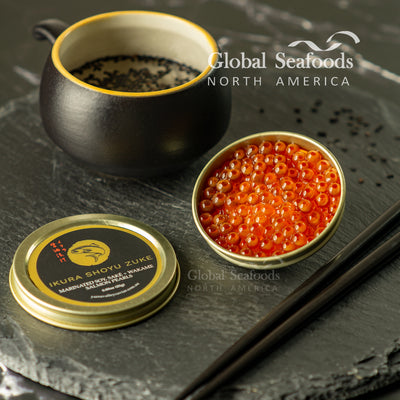
The color of ikura ranges from pale amber-orange (fresh pink salmon roe, early season) through bright orange (Coho, standard chum ikura) to deep orange-red (late-season chum, sockeye). The pigment responsible is astaxanthin — the same ketocarotenoid that colors salmon flesh and shrimp — accumulated naturally from the salmon’s diet. Wild-caught Alaskan salmon roe gets its color entirely from natural dietary astaxanthin; no synthetic colorants are added to premium product.
Color intensity varies by species, season, and diet. Chum salmon ikura (the Japanese premium standard) tends toward a vivid, consistent orange. Sockeye roe is the deepest red-orange of the Pacific salmons. Coho is bright orange with slightly more translucency. Pink salmon is the palest. When sourcing for presentation purposes, chum or Coho ikura delivers the most visually consistent and vibrant result.
The translucency of premium ikura is also a visual quality indicator: intact, firm eggs are semi-translucent, catching light and appearing almost luminous on a dark background. Broken or overripe eggs appear opaque and dull. When you open a jar of quality ikura, the eggs should be uniform in size, intact, glistening, and bright — not clumped or pale.
Species Overview
Chum salmon (Oncorhynchus keta): Largest eggs (~5–8mm), mildest flavor, most vibrant and consistent orange, the Japanese premium standard for ikura presentation. See: Chum Salmon Caviar.
Coho salmon (Oncorhynchus kisutch): Medium-large eggs (~4–5mm), bright orange, mild tangy flavor, the most versatile for both Japanese and Western presentations. See: Coho Salmon Caviar.
Pink salmon (Oncorhynchus gorbuscha): Smallest eggs (~3–4mm), palest color, lightest flavor, most affordable. Good for casual presentation and traditional Japanese rice bowls. See: Pink Salmon Caviar.
Production: From Ocean to Jar
Roe is extracted from the skein (membrane sac) at dockside, rinsed in cold water, graded by size uniformity and membrane integrity, then cured. Two methods:
Malossol cure (salt): 3–5% salt by weight, 10–20 minutes at refrigerated temperature. Produces the clean, oceanic flavor of standard premium ikura. Packed in airtight glass jars or tins under cold chain.
Shoyu-zuke (soy sauce marinade): Soy sauce, mirin, and sake (approximately 3:1:1 ratio), warmed and cooled before use. Marination 4–12 hours refrigerated. Produces amber-colored ikura with umami depth; used primarily for ikuradon and sushi rice applications.
Plating for Visual Impact
Ikura’s color makes it one of the most effective garnishes in the kitchen — a small quantity transforms the appearance of a dish. Guidelines for maximum visual effect:
Background contrast: Bright orange ikura reads most dramatically against dark or neutral backgrounds: black sesame rice, dark slate or ceramic plates, white rice, dark rye bread, green avocado, pale crème fraîche. Avoid bright red or yellow backgrounds that compete with the roe’s color.
Quantity and placement: Ikura should be applied in a deliberate spoonful or cluster, not scattered. A single generous spoonful (1–2 tablespoons) placed at the center or as a defined accent reads as intentional and generous. Scattered single eggs read as an afterthought. Use a non-metal spoon and handle gently — broken eggs blur the visual effect.
Height and surface: Ikura holds its shape on flat or slightly recessed surfaces. On gunkan-maki, the nori collar creates a vessel that keeps the roe mounded above the rice — this is the most dramatic single-ingredient presentation in Japanese cuisine. On blinis, a small dome of crème fraîche under the roe lifts it slightly above the surface.
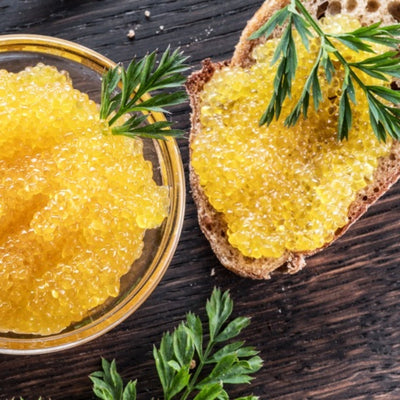
Garnish pairings that work visually: Fresh dill (green feathery texture against orange), microgreens, thinly sliced chive, lemon zest (yellow-white against orange), black sesame seeds, edible gold leaf for special occasion service. Avoid heavy garnishes that obscure the eggs.
Temperature and timing: Ikura must go on last — immediately before service — and on food that has cooled from hot to warm. Hot food collapses the egg membrane (the visual pop disappears and the eggs go flat and opaque). Serve immediately after plating ikura. Even 5–10 minutes at warm temperature begins to soften the membrane.
Photography: Ikura photographs best in natural side-lighting or a 45-degree overhead angle that catches the translucency of the eggs. A dark slate or matte ceramic surface eliminates competing reflections. Macro or close-up shots work extremely well due to the spherical geometry and color saturation of the eggs.
Culinary Uses
Japanese classics: Ikura gunkan-maki (battleship sushi), ikuradon (seasoned rice bowl — add roe to room-temperature or warm rice, never hot), ikura temaki, sashimi platter garnish. For ikuradon with shoyu-zuke ikura, no additional soy sauce is needed — the marinade provides the seasoning. With malossol ikura, a light drizzle of dashi-based tare may be added.
Western: Blinis with crème fraîche (the definitive Western presentation), buttered dark rye bread (Russian style), deviled eggs, scrambled eggs (plated and rested 20–30 seconds before adding roe), canapés, avocado toast, oysters on the half shell.
Pasta and risotto (correctly): Plate the dish, rest 30–60 seconds, then add ikura on top with a non-metal spoon. Do not stir into hot sauce — heat destroys both the visual quality and the flavor.
Soups: Ladle into bowl and allow to cool to warm (below 140°F / 60°C) before adding ikura as a garnish on top. Never add to the pot or to freshly boiled soup — the heat cooks the eggs.
For recipe videos: Global Seafoods YouTube Channel.
Nutritional Highlights
Per 30g (1 oz) serving: approximately 1,000–1,500mg omega-3 fatty acids (EPA+DHA) in phospholipid form; 6–8g complete protein; 150–200% of daily Vitamin B12; meaningful Vitamin D and selenium; approximately 40–50 calories. The AHA cites omega-3 consumption from whole seafood sources as supporting reduced triglyceride levels and overall cardiovascular health. For the full nutritional analysis with quantified values, see our Ikura Health Benefits and Omega-3 Guide.
Sustainability
Premium ikura from Alaska wild-caught Pacific salmon is managed under Alaska’s constitutional sustained-yield mandate and ADF&G escapement-based quota management, with MSC third-party certification available. For freshwater roe alternatives, explore Golden Pearls Brook Trout Caviar.
How to Store Ikura
Refrigerate at 32–38°F (0–3°C) — the coldest zone of the home refrigerator. Unopened malossol: 3–6 months. Shoyu-zuke: 1–2 weeks. Opened: 2–3 days. Always use a non-metal spoon. Do not freeze premium product — ice crystals break the egg membrane, ruining both texture and visual quality.
Frequently Asked Questions
How is ikura different from sturgeon caviar?
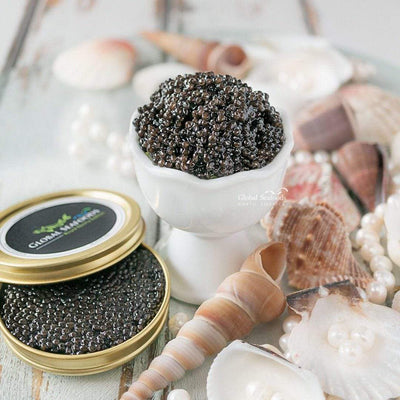
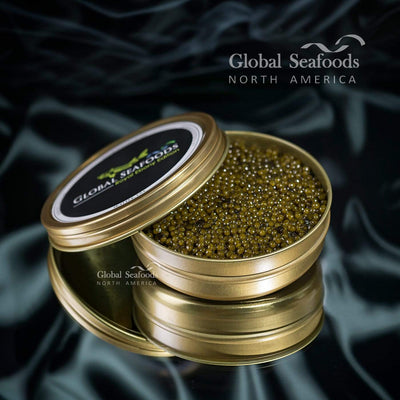
Ikura (salmon roe) eggs are significantly larger (3–8mm vs 1–4mm for sturgeon), bright orange to red rather than grey to black, and have a clean briny flavor rather than the complex nutty and buttery notes of premium sturgeon caviar. Both are cured malossol at the premium level. Ikura is far more affordable and visually more dramatic due to egg size and color. For a full comparison, see our Ikura vs. Caviar guide.
What gives ikura its orange color?
Astaxanthin — a ketocarotenoid pigment accumulated naturally from the salmon’s diet (primarily krill and other crustaceans). The same pigment colors salmon flesh, shrimp, and flamingos. In wild-caught Alaskan salmon roe, astaxanthin is entirely natural; no synthetic colorants are added to premium product. Color intensity varies by species, season, and diet — Sockeye roe is the deepest red-orange; Pink salmon roe the palest.
How should I store ikura?
Refrigerate at 32–38°F (0–3°C) in an airtight container. Unopened malossol: 3–6 months. Opened: 2–3 days. Always use a non-metal spoon and reseal tightly after each use. Do not freeze — ice crystal formation breaks the egg membrane, ruining texture and visual quality.
Can ikura be frozen?
Not recommended for premium product. Ice crystal formation weakens the egg membrane during freezing, resulting in broken, opaque eggs after thawing — the visual quality is lost along with the pop texture. If necessary, freeze in small portions and consume within 3 months; thaw overnight in the refrigerator.
Is ikura a healthy choice?
Yes — approximately 1,000–1,500mg omega-3 fatty acids (EPA+DHA, supporting reduced triglycerides and cardiovascular health per AHA guidance), 6–8g complete protein, and 150–200% of daily Vitamin B12 per 30g serving at roughly 40–50 calories. Omega-3s in phospholipid form are more bioavailable than most supplement formats.
Which salmon species produces the best-looking ikura for presentation?
Chum salmon ikura — the largest eggs (5–8mm) with the most vivid, consistent orange and the most dramatic visual presence on the plate. It is also the premium standard in Japanese cuisine for ikuradon and gunkan-maki. Coho is the best versatile choice for both presentation and flavor across a wide range of dishes. Pink salmon roe, while lighter in color and smaller, is an excellent value option for casual presentation.
Related Products


Also in News

Snail Caviar: How White Escargot Caviar Is Farmed, Harvested and Made

The Dark Years of Pacific Salmon: A 20-Year Outlook for Alaska, Russia, and the Red Caviar Market

King Crab Legs Delivery: Is It Worth It? Exploring the Benefits and Best Options
Shop Now
Main
