
The Health Benefits of Red Caviar: Why You Should Include It in Your Diet

The Health Benefits of Red Caviar: Nutrition, Science, and How to Eat It
Red caviar — the cured roe of salmon and trout — is one of the most nutritionally concentrated foods available. A single tablespoon (14g) delivers an extraordinary density of omega-3 fatty acids, vitamin B12, vitamin D, and high-quality protein relative to its calorie count. It is not merely a luxury food; it is a genuinely functional food with a well-documented nutritional profile. This article covers the specific nutritional data, the evidence-based health benefits, the important caveats (sodium content, pregnancy safety), and practical ways to incorporate red caviar into your diet.
🔗 Red Caviar Collection at Global Seafoods | Coho Salmon Caviar | Chum Salmon Caviar
What Is Red Caviar?
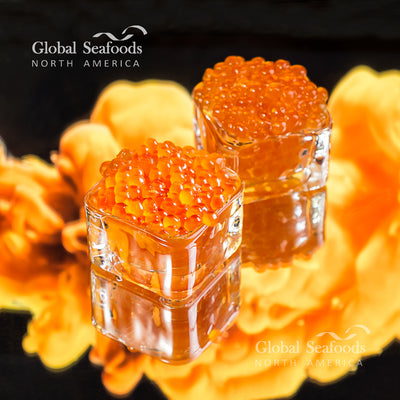
Red caviar refers to the cured roe (eggs) of salmon and trout species. The most common varieties available at Global Seafoods:
- Sockeye salmon roe: deep red-orange; firm eggs; intense, rich flavor; the most prized salmon roe
- Coho salmon roe: bright orange; medium-sized eggs; slightly milder flavor than sockeye; 🔗 Coho Salmon Caviar
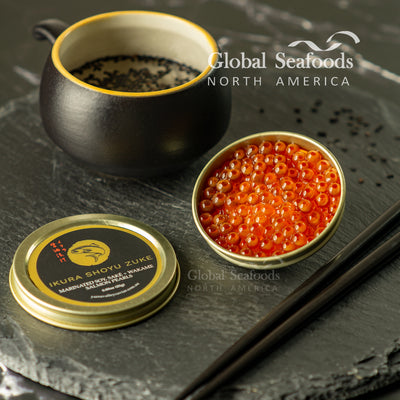
- Chum salmon roe (ikura): large, bright orange eggs; mild, clean flavor; the most common salmon roe in Japanese cuisine; 🔗 Chum Salmon Caviar
- Pink salmon roe: smaller eggs; mild flavor; the most affordable salmon roe; 🔗 Pink Salmon Caviar
- Trout roe: small, golden-orange eggs; delicate, slightly nutty flavor; 🔗 Trout Red Caviar | Golden Pearls Brook Trout Caviar
Nutritional Profile of Red Caviar
Per 1-oz (28g) serving — approximately 2 tablespoons (approximate; values vary by species and curing method):
- Calories: ~40–50 kcal (very low calorie for the nutrient density delivered)
- Protein: ~4–6g
- Fat: ~2–3g (primarily omega-3 fatty acids)
- Omega-3 fatty acids (EPA+DHA): ~1,000–1,500mg per tablespoon (14g) — one of the highest omega-3 concentrations per gram of any food; a single tablespoon of salmon roe provides approximately the same EPA+DHA as a 3-oz serving of wild-caught salmon
- Vitamin B12: ~3–5mcg per tablespoon (~125–200% of the daily value) — an exceptional B12 source
- Vitamin D: ~100–150 IU per tablespoon (~15–20% of the daily value)
- Vitamin A: meaningful amounts; supports vision, immune function, and skin health
- Selenium: ~10–15mcg per tablespoon (~20–25% of the daily value)
- Iron: ~0.5–1mg per tablespoon
- Sodium: ~240–400mg per tablespoon — the most important caveat; red caviar is high in sodium due to the curing process; people on sodium-restricted diets should be mindful of portion sizes
Key nutritional insight: red caviar delivers an extraordinary concentration of omega-3 fatty acids and vitamin B12 in a very small serving size and very few calories. It is one of the most nutrient-dense foods per calorie available. The primary limitation is its sodium content, which limits how much can be consumed daily.
Evidence-Based Health Benefits of Red Caviar
1. Cardiovascular Health (Omega-3 EPA and DHA)
The EPA and DHA in red caviar are the most well-researched omega-3 fatty acids for cardiovascular health. Their documented effects include: reduction of serum triglycerides by 15–30% at doses of 2–4g per day; modest reductions in blood pressure (2–5 mmHg systolic at doses of 3g+ per day); anti-platelet effects that reduce the risk of blood clots; and stabilization of arterial plaque. The American Heart Association recommends eating fatty fish or fish roe at least twice a week for cardiovascular health. A tablespoon of red caviar provides approximately 1,000–1,500mg EPA+DHA — a meaningful contribution toward the AHA’s recommended 500mg per day.
2. Brain Health and Cognitive Function (DHA)
DHA is the primary structural fat in the brain — approximately 60% of the brain’s dry weight is fat, and DHA is the most abundant fatty acid in brain tissue. Adequate DHA intake is associated with better cognitive performance, slower cognitive decline in aging, and better mood outcomes. DHA is also essential for fetal brain and retinal development during pregnancy (see the pregnancy FAQ below for important safety caveats about raw caviar during pregnancy).
3. Immune Function (Vitamin D and Selenium)
Vitamin D is essential for the activation of T-cells and other immune defenses; vitamin D deficiency is associated with increased susceptibility to infections and autoimmune conditions. Red caviar is one of the few natural food sources of vitamin D (most foods are fortified rather than naturally rich). Selenium is a cofactor for glutathione peroxidase, one of the body’s primary antioxidant enzymes; adequate selenium intake supports immune function and reduces oxidative stress.
4. Eye Health (Vitamin A and DHA)
Vitamin A is essential for the production of rhodopsin, the light-sensitive pigment in the retina; deficiency causes night blindness and increases the risk of age-related macular degeneration. DHA is also the primary structural fat in the retina; adequate DHA intake is associated with reduced risk of AMD. Red caviar provides meaningful amounts of both.
5. Skin Health (Omega-3s, Vitamin E, Selenium)
Omega-3 fatty acids maintain the skin’s lipid barrier, which retains moisture and protects against environmental irritants. Adequate omega-3 intake is associated with reduced skin inflammation, which may benefit conditions like eczema, psoriasis, and acne. Vitamin E and selenium are antioxidants that protect skin cells from oxidative damage caused by UV radiation and environmental pollutants. These are well-established mechanisms; the specific claim that red caviar “slows aging” is a reasonable inference from these mechanisms but has not been directly tested in clinical trials.
6. Energy and Stamina (Vitamin B12 and Protein)
Vitamin B12 is essential for the production of red blood cells, which carry oxygen to muscles and organs; B12 deficiency causes fatigue, weakness, and neurological symptoms. Red caviar is one of the richest natural sources of B12 available — a tablespoon provides 125–200% of the daily value. Its protein content (4–6g per oz) also supports muscle maintenance and sustained energy.
How to Eat Red Caviar
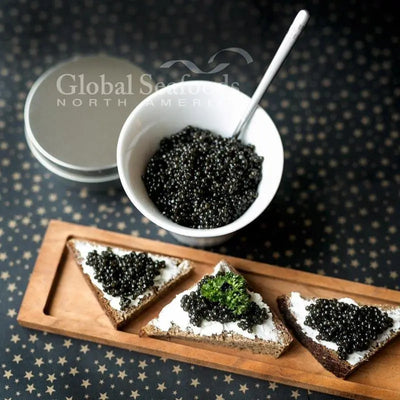
- On blinis or toast with crème fraîche: the classic presentation; the richness of the crème fraîche balances the saltiness of the roe; top with a small sprig of dill
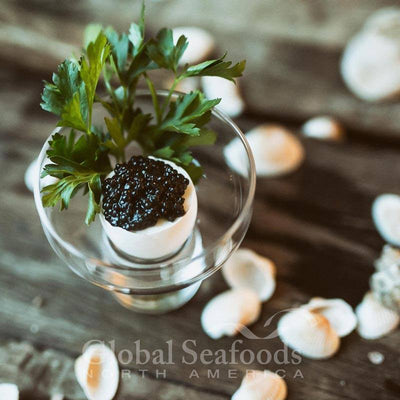
- On soft-boiled or deviled eggs: a spoonful of red caviar on a soft-boiled egg is one of the simplest and most elegant preparations; the egg yolk’s richness complements the roe’s brininess
- In sushi (ikura nigiri or maki): chum salmon roe (ikura) is the traditional Japanese preparation; served on a small mound of seasoned rice with a strip of nori
- On pasta: toss cooked pasta with butter, lemon zest, and crème fraîche; top with a generous spoonful of red caviar off heat (heat destroys the delicate flavor and texture of the roe)
- As a salad topper: a spoonful of red caviar on a simple green salad with lemon vinaigrette adds flavor, texture, and a significant nutritional boost
- Serving temperature: serve red caviar cold (35–40°F); never heat it directly; heat causes the eggs to burst and the flavor to become bitter and fishy
- Serving size: 1–2 tablespoons per person is the standard serving; this provides significant nutritional benefit while keeping sodium intake manageable
🔗 Salmon Caviar | Rainbow Trout Pearls | Bloody Shiraz Infused Caviar
🎥 Watch caviar recipes on the Global Seafoods YouTube Channel
FAQs: Red Caviar
How much sodium is in red caviar, and how do I manage my intake?
Red caviar is high in sodium due to the salt used in the curing process: approximately 240–400mg of sodium per tablespoon (14g), depending on the species and curing method. For context, the FDA’s recommended daily sodium limit is 2,300mg for healthy adults; a 2-tablespoon serving of red caviar provides approximately 480–800mg — 20–35% of the daily limit. Management strategies: (1) Portion control: 1–2 tablespoons per serving is the standard; this provides significant nutritional benefit while keeping sodium manageable; (2) Pair with low-sodium foods: serve on unsalted blinis or toast; use unsalted butter or crème fraîche; avoid adding additional salt to dishes that include caviar; (3) Frequency: 2–3 times per week rather than daily is appropriate for most people; (4) Who should be especially careful: people with hypertension, kidney disease, or heart failure on sodium-restricted diets should consult a physician about appropriate serving sizes; (5) Rinsing: some people rinse caviar briefly under cold water to reduce sodium content; this reduces the saltiness but also dilutes some of the flavor; not recommended for premium caviar.
Is red caviar safe during pregnancy, and what are the risks?
This requires a careful answer: (1) Raw/unpasteurized caviar during pregnancy: raw caviar carries a risk of Listeria monocytogenes contamination; listeria is particularly dangerous during pregnancy because it can cross the placenta and cause miscarriage, stillbirth, premature delivery, or serious illness in the newborn; the FDA and CDC advise pregnant women to avoid raw or unpasteurized seafood, including raw caviar; (2) Pasteurized caviar during pregnancy: pasteurized caviar has been heat-treated to eliminate listeria and other pathogens; it is generally considered safe during pregnancy in moderate amounts; check the label — pasteurized caviar will be labeled as such; (3) Nutritional benefit during pregnancy: the DHA in red caviar is genuinely beneficial for fetal brain and retinal development; the vitamin B12 and vitamin D are also important during pregnancy; (4) Sodium during pregnancy: moderate sodium intake is generally safe during pregnancy; excessive sodium may contribute to fluid retention and elevated blood pressure; (5) Recommendation: pregnant women who want to include caviar in their diet should choose pasteurized caviar and consult their obstetrician; do not assume that all commercially available caviar is pasteurized — most premium caviar is not pasteurized.
What is the difference between red caviar and black caviar nutritionally, and which is healthier?
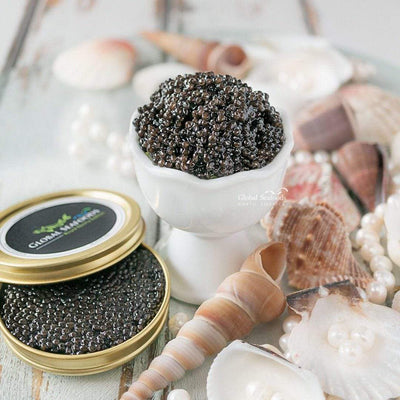
Both are nutritionally exceptional; the differences are modest: (1) Omega-3 content: red caviar (salmon roe) and black caviar (sturgeon roe) have similar EPA+DHA content per gram — approximately 1,000–1,500mg per tablespoon for both; (2) Vitamin B12: both are exceptional B12 sources; black caviar (particularly beluga and osetra) may have slightly higher B12 content per gram; (3) Sodium: both are high in sodium; black caviar is often slightly lower in sodium than red caviar because it is typically cured with less salt (the “malossol” style — Russian for “little salt”); (4) Calories: similar; both are approximately 40–50 kcal per oz; (5) Price: black caviar (sturgeon roe) is significantly more expensive than red caviar (salmon roe); beluga caviar can cost $200–$500+ per oz; premium red caviar is $10–30 per oz; (6) Which is healthier? nutritionally, they are comparable; red caviar provides essentially the same health benefits as black caviar at a fraction of the cost; for most people, red caviar is the more practical choice for regular consumption.

Related Products


Also in News

Snail Caviar: How White Escargot Caviar Is Farmed, Harvested and Made

The Dark Years of Pacific Salmon: A 20-Year Outlook for Alaska, Russia, and the Red Caviar Market

King Crab Legs Delivery: Is It Worth It? Exploring the Benefits and Best Options
Shop Now
Main
