
Where to Buy Live King Crab for the Freshest Taste

Where to Buy Live King Crab for the Freshest Taste
Buying king crab is as much about understanding the supply chain as it is about finding a trusted supplier. As Thomas Keller has said: "A recipe has no soul. You, as the cook, must bring soul to the recipe." That starts with knowing what you’re actually buying — what “live” means in commercial king crab, what freshness signals really indicate, and which suppliers can be trusted to maintain cold chain integrity from Alaska to your door.
Shop: Live King Crab • Jumbo Alaskan Red King Crab Legs • Golden King Crab • King Crab Leg Pieces.
What “live king crab” actually means
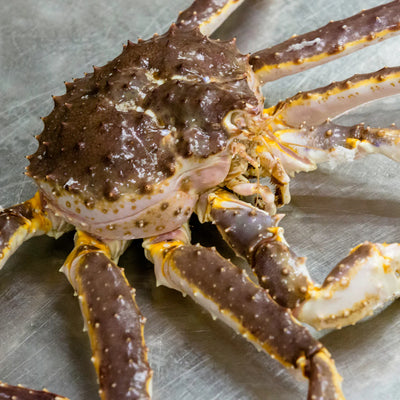
In commercial seafood, “live king crab” refers to crab that was alive at the time of harvest — not crab that arrives alive at your home. The vast majority of Alaskan Red King Crab is cooked and flash-frozen on the vessel immediately after catch, while the crab is still at peak freshness. This is not a quality compromise; it is the primary method by which peak freshness is preserved across the supply chain. A king crab cooked and frozen within hours of harvest is often superior in flavor and texture to a “fresh” crab that has spent several days in a live transport tank.
True live king crab delivery (arriving alive at your door) requires specialized aerated shipping containers, overnight express logistics, and same-day cooking — it is available from a small number of specialty suppliers but carries a significant premium and logistical complexity. For most buyers, premium flash-frozen king crab from a trusted supplier is the practical best option.
What to look for when buying: quality signals that actually matter
For frozen king crab (the most common format):
- No freezer burn: White, dry, papery patches on the shell indicate oxidation from improper storage or freeze-thaw cycling. Avoid.
- Glaze intact: Commercially frozen king crab legs are coated in a thin layer of ice (glaze) to protect from freezer burn. The glaze should be intact and uniform, not partially melted or missing.
- Shell color: Vibrant red-orange (Alaskan Red King Crab) or golden-brown (Golden King Crab). Faded, dull, or graying shell color suggests age or temperature abuse.
- No excessive liquid: When thawed, some liquid is normal. Excessive pooling or a strong “fishy” odor on thawing indicates freeze-thaw cycling or age.
- Source transparency: A reputable supplier can tell you the harvest region (e.g., Bering Sea, Bristol Bay), season, and whether the product is wild-caught (all commercial Alaskan King Crab is wild-caught and regulated by NOAA).
For true live king crab (rare, specialty format):
- Active movement: Legs should respond to touch. Lethargic or unresponsive crab may be stressed or near death, which affects flavor — a crab that dies before cooking loses quality rapidly.
- Intact shell: No cracks, missing legs, or visible injury.
- Ocean-fresh aroma: Clean, mildly briny — never “fishy” or ammonia-like.
- Cook the same day: Live king crab should be cooked within hours of receipt. It cannot be held live in a standard home refrigerator for more than a few hours safely.
What to look for in a supplier
Cold chain transparency: Can they tell you how the crab was processed, frozen, and shipped? Flash-frozen-at-sea is the gold standard for Alaskan King Crab. Any supplier who can’t answer this question is a red flag.
Wild-caught, sustainably sourced: All commercial Alaskan King Crab is wild-caught and managed under NOAA quota systems, which are among the most rigorously managed fisheries in the world. “Sustainably sourced” for Alaskan King Crab means purchasing from suppliers who source from NOAA-quota-compliant fisheries and can document their supply chain. Certification programs like the Marine Stewardship Council (MSC) provide independent third-party verification.
Overnight shipping with insulated packaging: King crab should arrive frozen solid (or, for live crab, still responsive). Shipping should be overnight express with dry ice or gel packs sufficient to maintain temperature for the full transit time plus a buffer. A reputable supplier guarantees arrival condition.
Global Seafoods sources Alaskan Red King Crab and Golden King Crab from Alaskan fisheries and ships with overnight delivery and temperature-controlled packaging. Their selection includes whole legs, clusters, leg pieces, and premium cut options.
King crab varieties: what’s the difference?
Alaskan Red King Crab (Paralithodes camtschaticus): The largest and most prized variety. Harvested primarily in the Bering Sea and Bristol Bay. Meat is sweet, firm, and snow-white with a red shell. The benchmark of premium king crab; commands the highest price. Available as whole legs, clusters, and leg pieces.
Golden King Crab (Lithodes aequispinus): Smaller than Red King Crab, with a slightly sweeter, more delicate flavor and a golden-orange shell. Harvested in deeper Alaskan waters. Often more accessible in price than Red King Crab while still delivering an excellent eating experience. Excellent for preparations where the meat is incorporated (soups, pastas, crab cakes) as well as for standalone legs.
Blue King Crab (Paralithodes platypus): Similar in size and flavor profile to Red King Crab. Harvested near St. Matthew Island and the Pribilof Islands. Less commonly available than Red or Golden; considered a premium product when found.
Storage after delivery
Frozen king crab (arrived frozen): Transfer immediately to your freezer if not cooking the same day. Optimal frozen storage: 0°F or below, in the original sealed packaging or vacuum-sealed. Shelf life at 0°F: up to 6 months with no significant quality loss; up to 12 months technically safe but quality declines after 6 months. Do not refreeze after thawing.
Thawed king crab: Refrigerate at 32–38°F and cook within 2 days. Do not hold thawed crab at room temperature.
Live king crab (arrived alive): Cook the same day. If holding briefly: place in a container covered with a damp cloth in the coldest part of the refrigerator (32–38°F). Do not submerge in fresh water (fresh water kills marine shellfish rapidly). Cook within 2–3 hours of receipt for best quality.
As Anthony Bourdain observed: "Your body is not a temple, it’s an amusement park. Enjoy the ride." King crab is one of the great indulgences — buy it well, store it correctly, and cook it simply. It rewards you every time.
Videos: Global Seafoods YouTube Channel.
Frequently Asked Questions
Is flash-frozen king crab as good as fresh?
Yes, when properly handled. King crab cooked and flash-frozen on the vessel within hours of harvest is at peak freshness at the moment of freezing. The freezing process, when done correctly (rapid blast freezing, not slow home-freezer-style), preserves flavor and texture almost identically to fresh. The quality differential between flash-frozen and fresh king crab is far smaller than the quality differential between well-handled and poorly-handled crab. The key variables are handling temperature history and freeze-thaw cycling, not simply fresh vs. frozen.
How do I know if frozen king crab has been freeze-thaw cycled?
Signs: excessive liquid pooling on thawing (beyond normal drip), dry or papery patches on the shell (freezer burn), faded shell color, soft or mushy texture after thawing, or an off “fishy” odor when thawing. Any of these indicate quality loss from temperature abuse. Well-handled flash-frozen crab should thaw with minimal liquid, firm texture, bright color, and a clean ocean scent.
What’s the difference between Alaskan Red King Crab and Golden King Crab?
Red King Crab: largest variety, Bering Sea/Bristol Bay harvest, bright red shell, sweet and firm white meat, highest price. Golden King Crab: slightly smaller, golden-orange shell, sweeter and more delicate flavor, deeper water harvest, typically more accessible in price. Both are wild-caught and managed under NOAA quota. Golden King Crab is excellent for applications where the meat is incorporated into dishes (chowders, pasta, crab cakes) and for standalone legs. Red King Crab is the classic centerpiece-presentation choice.
How should I store frozen king crab after it arrives?
Transfer immediately to your freezer at 0°F or below in the original sealed packaging. Best quality within 6 months; technically safe up to 12 months. To thaw: overnight in the refrigerator only — never at room temperature or in warm water. Once thawed, refrigerate and cook within 2 days. Do not refreeze after thawing.
How much king crab should I order for a dinner party?
As a main course: 1.5–2 lbs of whole legs per person (shell accounts for 40–50% of weight; meat yield is approximately 50–60%). For a 6-person dinner: order 9–12 lbs of whole legs. As part of a multi-course seafood spread alongside other proteins: 1 lb per person is sufficient. Order in whole-cluster increments for easier portioning and better presentation. Add 10–15% overage for a crowd (people always want more king crab).
Is Alaskan King Crab sustainable?
Alaskan King Crab fisheries are managed by NOAA under annual quota systems based on population surveys — among the most rigorously managed fisheries in the world. When stocks decline, quotas are reduced or seasons closed (as happened with Bristol Bay Red King Crab in 2021–2023 due to cold stun and population decline events). Purchasing from suppliers who source from NOAA-quota-compliant Alaskan fisheries and can document their supply chain is the responsible choice. MSC-certified products provide independent third-party verification of sustainability claims.
Related Products


Also in News

Snail Caviar: How White Escargot Caviar Is Farmed, Harvested and Made

The Dark Years of Pacific Salmon: A 20-Year Outlook for Alaska, Russia, and the Red Caviar Market

King Crab Legs Delivery: Is It Worth It? Exploring the Benefits and Best Options
Shop Now
Main
