
Orange and Red Caviar: A Gourmet Delight for Seafood Lovers

Orange and Red Caviar: A Complete Gourmet Guide
Orange and red caviar — the roe of salmon, trout, and related species — are among the most versatile and accessible luxury ingredients available. Unlike black sturgeon caviar, which commands extraordinary prices and requires careful sourcing, red and orange caviar is relatively affordable, widely available, and genuinely delicious. The eggs are larger, the flavor is bolder and more approachable, and the visual impact on a dish is stunning. This guide covers everything you need to know: the different types, how they taste, how to serve them, and how to cook with them.
Types of Orange and Red Caviar
Salmon Roe (Red Caviar)
Salmon roe is the most widely consumed red caviar in the world. The eggs are large (4–6mm), with a characteristic "pop" when bitten, releasing a burst of rich, briny, slightly savory flavor. Color ranges from deep orange to bright red depending on the species. Several salmon species produce roe with distinct flavor profiles:
- Coho (Silver) Salmon Caviar: Medium-sized eggs with a clean, mild, slightly sweet flavor. One of the most popular choices for its balanced taste and beautiful orange-red color. 🔗 Shop Coho Salmon Caviar
- Chum (Keta) Salmon Caviar: The largest salmon roe eggs; firm texture with a pronounced pop; bold, savory, briny flavor. Often considered the premium choice for traditional Russian-style caviar service. 🔗 Shop Chum Salmon Caviar
- Pink Salmon Caviar: Smaller eggs; milder, more delicate flavor; lighter orange color. An excellent entry-level red caviar — approachable flavor at an accessible price. 🔗 Shop Pink Salmon Caviar
Trout Caviar (Orange Caviar)
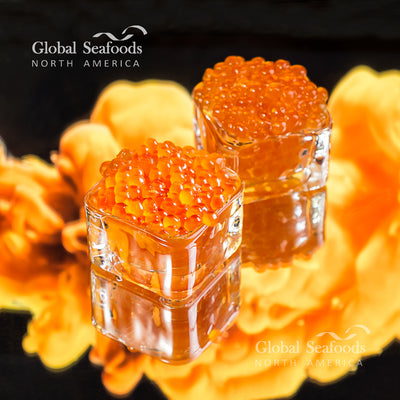
Trout roe is smaller than salmon roe (2–3mm), with a firmer texture and a mildly sweet, briny flavor with less intensity than salmon caviar. The color is a vivid, uniform orange — visually striking as a garnish. Trout caviar is an excellent choice for those new to caviar, as its milder flavor is more approachable. It's also ideal for garnishing dishes where you want visual impact without overpowering the base flavors. 🔗 Shop Trout Caviar
Pike Roe
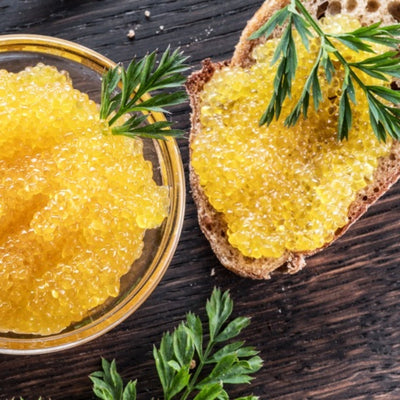
Pike roe is a rarer, more unusual caviar — golden-orange in color, with small, firm eggs and a mildly sweet, delicate flavor. It's less commonly available than salmon or trout roe and is considered a specialty item. Pike roe works beautifully as a garnish for delicate dishes where its subtle flavor won't compete with other ingredients. 🔗 Shop Pike Roe
Red Caviar vs. Black Caviar: What's the Difference?
- Source: Black caviar comes from sturgeon species (beluga, osetra, sevruga); red/orange caviar comes from salmon, trout, and pike.
- Egg size: Black caviar eggs are smaller (1–3mm); red caviar eggs are larger (2–6mm depending on species).
- Flavor: Black caviar has a more complex, nutty, buttery flavor with subtle brininess; red caviar has a bolder, more pronounced briny-savory flavor with a satisfying pop.
- Price: Black sturgeon caviar is dramatically more expensive — premium beluga caviar can cost thousands of dollars per ounce. Red caviar is a fraction of the price while still delivering a genuine luxury experience.
- Sustainability: Wild sturgeon populations are critically endangered; most black caviar is now farmed. Pacific salmon roe is a byproduct of sustainable wild-caught salmon fisheries — red caviar is generally the more sustainable choice.
- Versatility: Red caviar's bolder flavor and larger eggs make it more versatile in cooking — it holds up to stronger flavors and works in a wider range of preparations.
How to Serve Red & Orange Caviar
Caviar is best served simply — the goal is to let the roe's natural flavor shine. Key serving principles:
- Temperature: Serve cold, straight from the refrigerator. Place the jar or serving dish on a bed of crushed ice to maintain temperature during service.
- Utensils: Use non-metallic spoons — mother-of-pearl, bone, or plastic. Metal spoons (especially silver) can impart a metallic taste to delicate caviar. This matters more for black caviar than red, but it's good practice.
- Portion size: A typical serving is 1–2 tablespoons (15–30g) per person as a garnish or canapé topping; 50–100g per person for a dedicated caviar course.
- Accompaniments: Blinis, toasted baguette, or plain crackers; crème fraîche or sour cream; fresh dill; lemon wedges; finely minced shallots; hard-boiled egg (white and yolk separated).
Best Pairings for Red & Orange Caviar
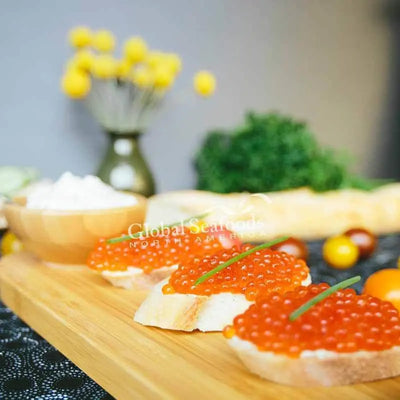
- Blinis with crème fraîche: The classic Russian presentation — warm buckwheat blinis, a dollop of crème fraîche, and a spoonful of red caviar topped with fresh dill.
- Champagne or sparkling wine: The classic beverage pairing — the acidity and bubbles cut through the richness of the roe. Blanc de blancs Champagne is the traditional choice.
- Vodka: The traditional Russian pairing — ice-cold vodka served neat alongside caviar canapés.
- Sushi and sashimi: Orange trout caviar or salmon roe (ikura) is a staple in Japanese cuisine — used as a topping for nigiri, gunkan maki, and chirashi bowls.
- Grilled or seared seafood: A spoonful of orange caviar on seared scallops, grilled salmon, or oysters adds visual drama and a burst of briny flavor.
- Avocado: The richness of avocado is a natural complement to the briny pop of red caviar — on toast, in a salad, or as a simple canapé.
- Dry white wine: Chablis, Muscadet, or Sancerre — crisp, mineral whites that complement the oceanic flavor of the roe.
Three Classic Red Caviar Recipes
Recipe 1: Classic Caviar Blini Canapés
The definitive caviar presentation — elegant, simple, and perfect for entertaining.
Ingredients (makes 12 canapés):
- 12 small buckwheat blinis (store-bought or homemade)
- ¼ cup crème fraîche or sour cream
- 3–4 tbsp red or orange caviar
- Fresh dill sprigs
- Lemon zest (optional)
Instructions:
- Warm blinis briefly in a dry pan or oven (30 seconds — they should be warm, not hot).
- Spread a small dollop of crème fraîche on each blini.
- Add a small spoonful of caviar (about ½ tsp per blini).
- Garnish with a small sprig of fresh dill and a pinch of lemon zest.
- Serve immediately on a chilled platter.
Recipe 2: Red Caviar Sushi Rolls (Ikura Gunkan Maki)
Gunkan maki ("battleship" sushi) is the traditional Japanese format for serving salmon roe — a small oval of sushi rice wrapped in nori with caviar piled on top.
Ingredients (makes 8 pieces):
- 1 cup prepared sushi rice (seasoned with rice vinegar, sugar, and salt)
- 4 sheets nori, cut into strips (approximately 1 inch wide × 7 inches long)
- 4 tbsp salmon roe or trout caviar
- Soy sauce and wasabi for serving
Instructions:
- Wet your hands. Form sushi rice into small oval mounds (about 2 tbsp each).
- Wrap a strip of nori around each rice mound, shiny side out, forming a small cup. Seal the end with a grain of rice.
- Fill the nori cup generously with salmon roe or trout caviar.
- Serve immediately with soy sauce and wasabi.
Recipe 3: Caviar-Topped Deviled Eggs
A crowd-pleasing party appetizer that elevates a classic.
Ingredients (makes 12):
- 6 large eggs, hard-boiled and peeled
- 3 tbsp mayonnaise
- 1 tsp Dijon mustard
- 1 tsp white wine vinegar
- Salt and white pepper to taste
- 2 tbsp red or orange caviar
- Fresh chives, finely sliced
Instructions:
- Halve the eggs lengthwise. Remove yolks and place in a bowl.
- Mash yolks with mayonnaise, mustard, and vinegar until smooth. Season with salt and white pepper.
- Pipe or spoon the yolk mixture back into the egg white halves.
- Top each deviled egg with a small spoonful of caviar (½ tsp).
- Garnish with chives. Serve chilled.
How to Store Red Caviar
- Unopened: Store in the coldest part of your refrigerator (32–38°F / 0–3°C). Check the best-by date on the package.
- After opening: Consume within 3–5 days for best quality. Keep tightly sealed between uses.
- Freezing: Red caviar can be frozen for up to 3 months, though the texture of the eggs softens slightly after thawing. Freeze in small portions (enough for one use) to avoid repeated freeze-thaw cycles. Thaw overnight in the refrigerator.
- Never: Leave caviar at room temperature for more than 1–2 hours; use metal utensils (can impart metallic flavor); refreeze thawed caviar.
Shop Red & Orange Caviar at Global Seafoods
- 🔗 Coho Salmon Caviar
- 🔗 Chum Salmon Caviar
- 🔗 Pink Salmon Caviar
- 🔗 Trout Caviar
- 🔗 Pike Roe
- 🔗 Full Red Caviar Collection
🎥 Watch caviar serving and recipe videos on the Global Seafoods YouTube Channel
FAQs: Red & Orange Caviar
Q1: What gives red and orange caviar their colors?
The color comes from carotenoid pigments — specifically astaxanthin — that accumulate in the roe from the fish's diet (primarily krill, shrimp, and other crustaceans that are rich in carotenoids). The same pigment gives salmon flesh its pink-orange color. The intensity of the color varies by species and diet: chum salmon roe tends to be the deepest red-orange; trout roe is a vivid, uniform orange; pink salmon roe is lighter orange. The color is entirely natural — no artificial coloring is added to quality red caviar.
Q2: Is red caviar expensive?
Red caviar is significantly more affordable than black sturgeon caviar while still delivering a genuine luxury experience. Premium beluga or osetra caviar can cost $100–$500+ per ounce; high-quality salmon roe typically costs $10–30 per ounce depending on the species and quality. Chum salmon caviar (the largest eggs, most similar to the traditional Russian presentation) tends to be the most expensive red caviar; pink salmon caviar is the most affordable. Trout caviar falls in the middle. All are dramatically more accessible than black caviar while offering their own distinct and excellent flavor.
Q3: How should I store red caviar?
Store unopened caviar in the coldest part of your refrigerator (32–38°F / 0–3°C) and check the best-by date. After opening, consume within 3–5 days — keep tightly sealed between uses. Red caviar can be frozen for up to 3 months (texture softens slightly after thawing); freeze in small single-use portions and thaw overnight in the refrigerator. Never leave caviar at room temperature for more than 1–2 hours, and never use metal utensils (they can impart a metallic taste).
Q4: What is the difference between salmon roe and ikura?
Ikura is the Japanese term for salmon roe — they are the same product. "Ikura" (from the Russian word "ikra," meaning fish roe) refers specifically to individual, loose salmon eggs marinated in soy sauce and mirin in Japanese cuisine. In Russian cuisine, the same product is called "krasnaya ikra" (red caviar) and is typically lightly salted without soy sauce. The underlying product — salmon roe — is identical; the preparation and seasoning differ. At Global Seafoods, our salmon caviar is lightly salted in the traditional style, making it suitable for both Russian-style canapé service and Japanese-style sushi preparations.
Q5: Can I use red caviar in cooking (heated preparations)?
Red caviar is best served cold or at room temperature — heat destroys the delicate egg membrane, causing the eggs to burst and lose their characteristic pop and visual appeal. For hot dishes, add caviar as a garnish at the very last moment, after the dish has been plated and has cooled slightly. It works beautifully as a finishing garnish on warm (not hot) pasta, risotto, scrambled eggs, or blinis. Never cook caviar directly in a hot pan or add it to a boiling sauce — it will disintegrate. The exception is baked preparations where the caviar is added after cooking (like caviar-topped deviled eggs served chilled).
Q6: Is red caviar nutritious?
Yes — red caviar is exceptionally nutritious. Per tablespoon (16g): approximately 40 calories, 4g protein, 2.5g fat (primarily omega-3 fatty acids), and significant amounts of Vitamin B12 (~100% DV), Vitamin D (~15% DV), and selenium (~20% DV). Salmon roe is one of the richest natural sources of omega-3 fatty acids (EPA and DHA) available — the omega-3 content per calorie is extraordinary. It's also high in Vitamin B12, which is essential for nerve function and DNA production. The main nutritional consideration is sodium — caviar is salted during processing and can be high in sodium; those monitoring sodium intake should be mindful of portion size.
Related Products


Also in News

Snail Caviar: How White Escargot Caviar Is Farmed, Harvested and Made

The Dark Years of Pacific Salmon: A 20-Year Outlook for Alaska, Russia, and the Red Caviar Market

King Crab Legs Delivery: Is It Worth It? Exploring the Benefits and Best Options
Shop Now
Main
