This is the place where the product description will appear if a product has one.
Buying Osetra caviar online is, for most customers in the US, the better option over in-store — not because the in-store experience is inferior, but because cold-chain logistics have improved to the point where a well-packaged overnight shipment from a dedicated caviar supplier arrives in better condition than a tin that has been sitting in a display case at a gourmet market for an unknown number of days. Temperature exposure is cumulative and invisible on a label. When I evaluate suppliers, cold-chain handling is the first question I ask, before price or farm origin.
The second question is traceability. For Osetra specifically, knowing the farm, the country, the harvest date, and the processor matters because the flavor and texture of the final product are shaped by all of those variables. A supplier who can’t tell you where the tin came from is a supplier I can’t confidently recommend. Below are the sources I consider credible for Osetra caviar, starting with our own.
For more insights on caviar and gourmet seafood, visit the Global Seafoods YouTube channel.
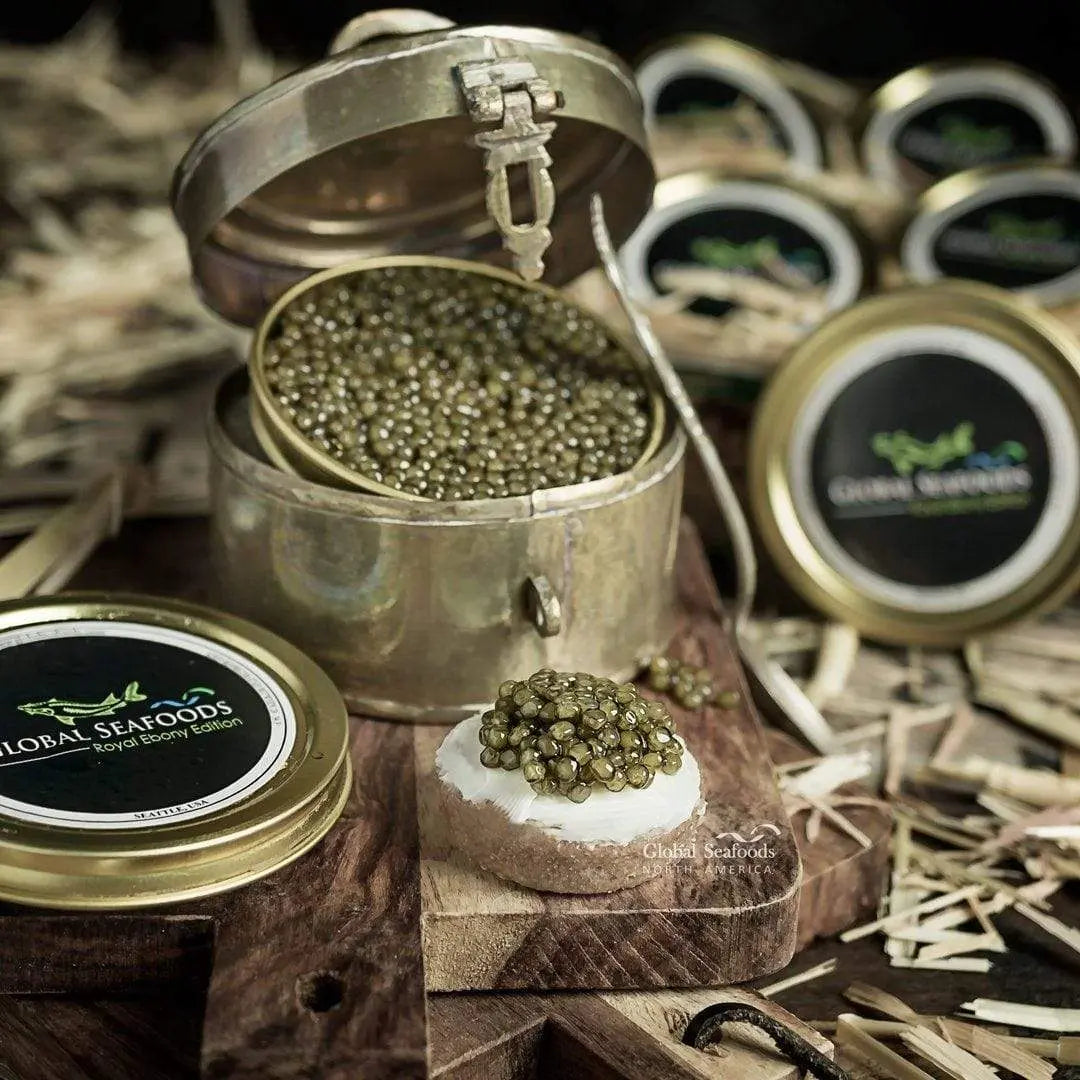
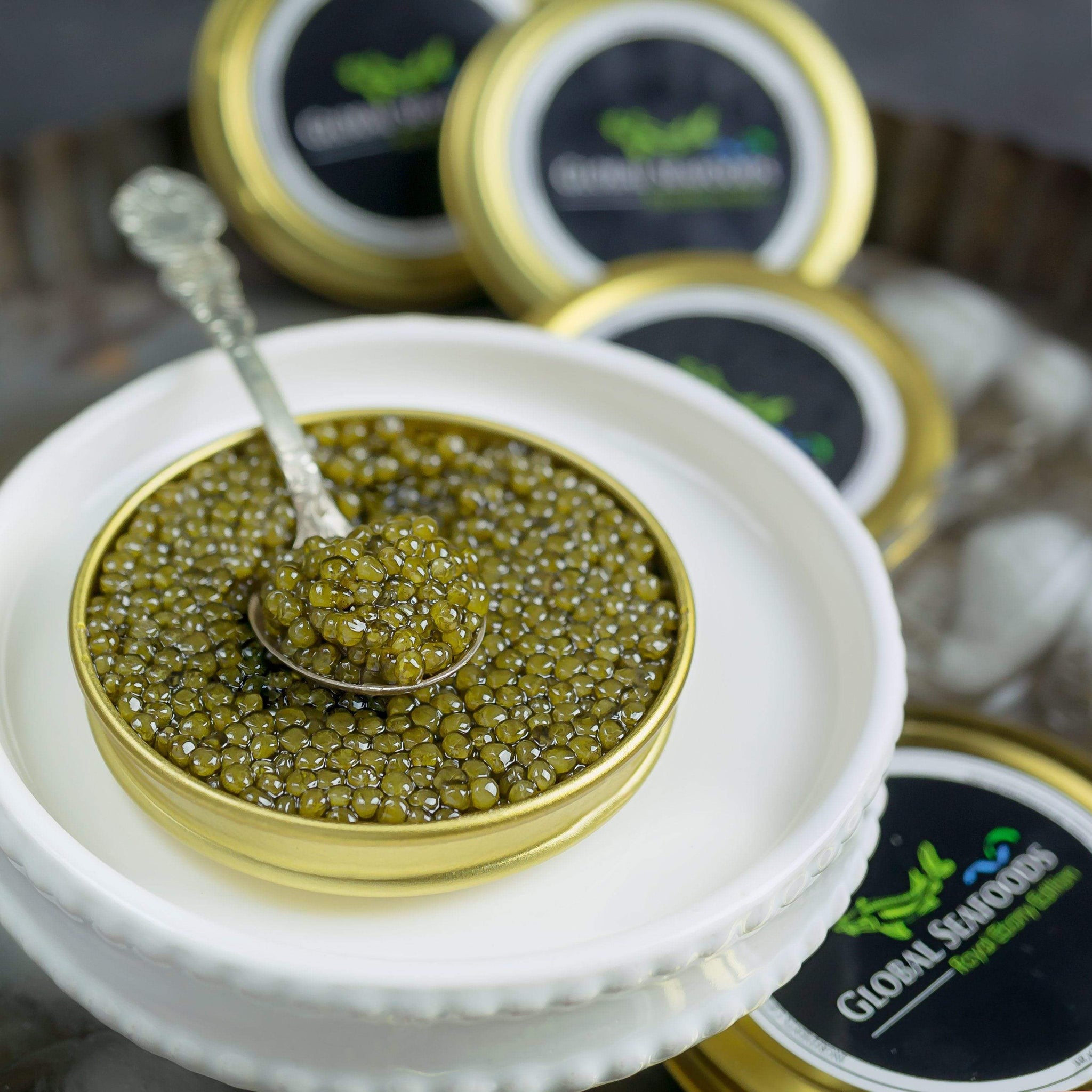
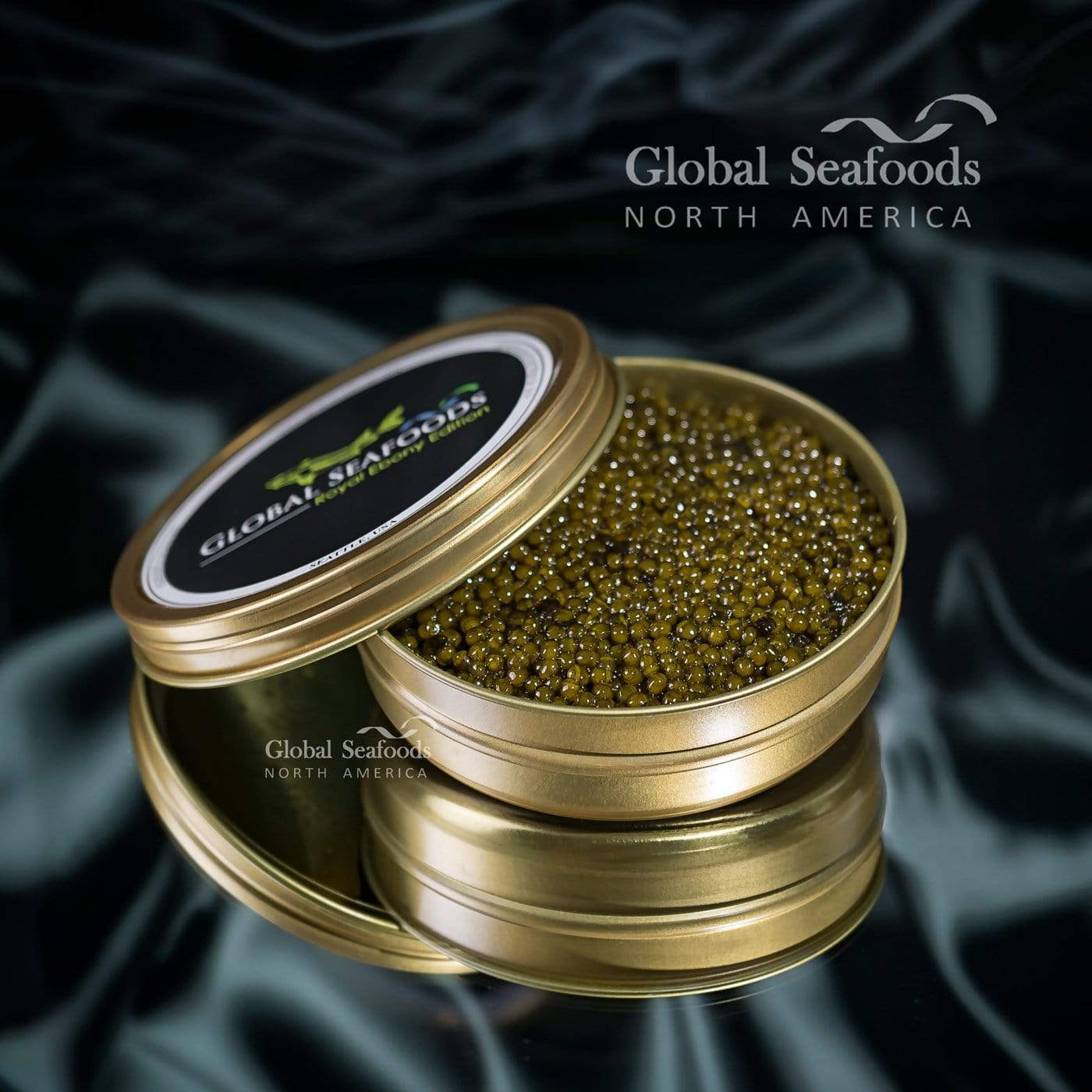
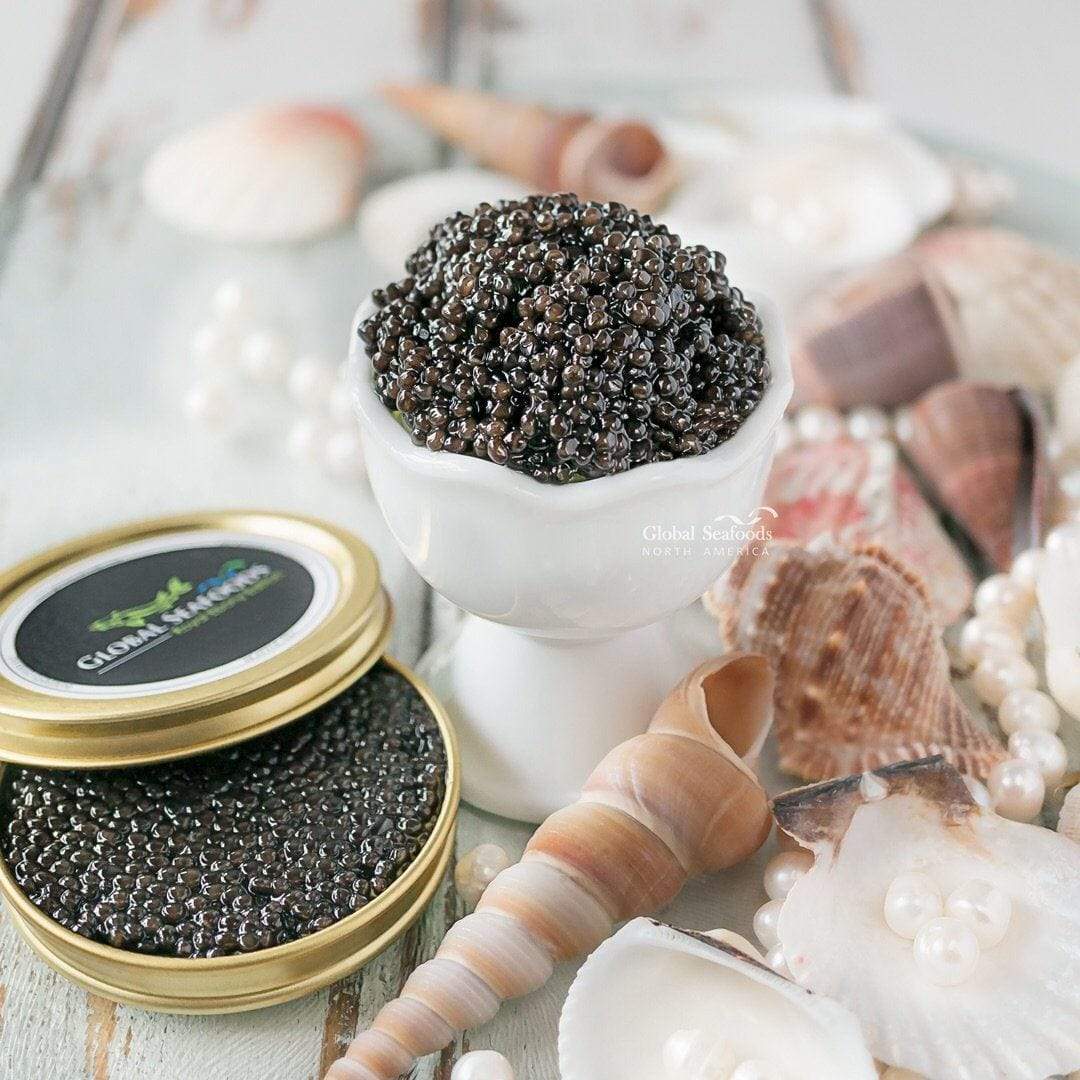
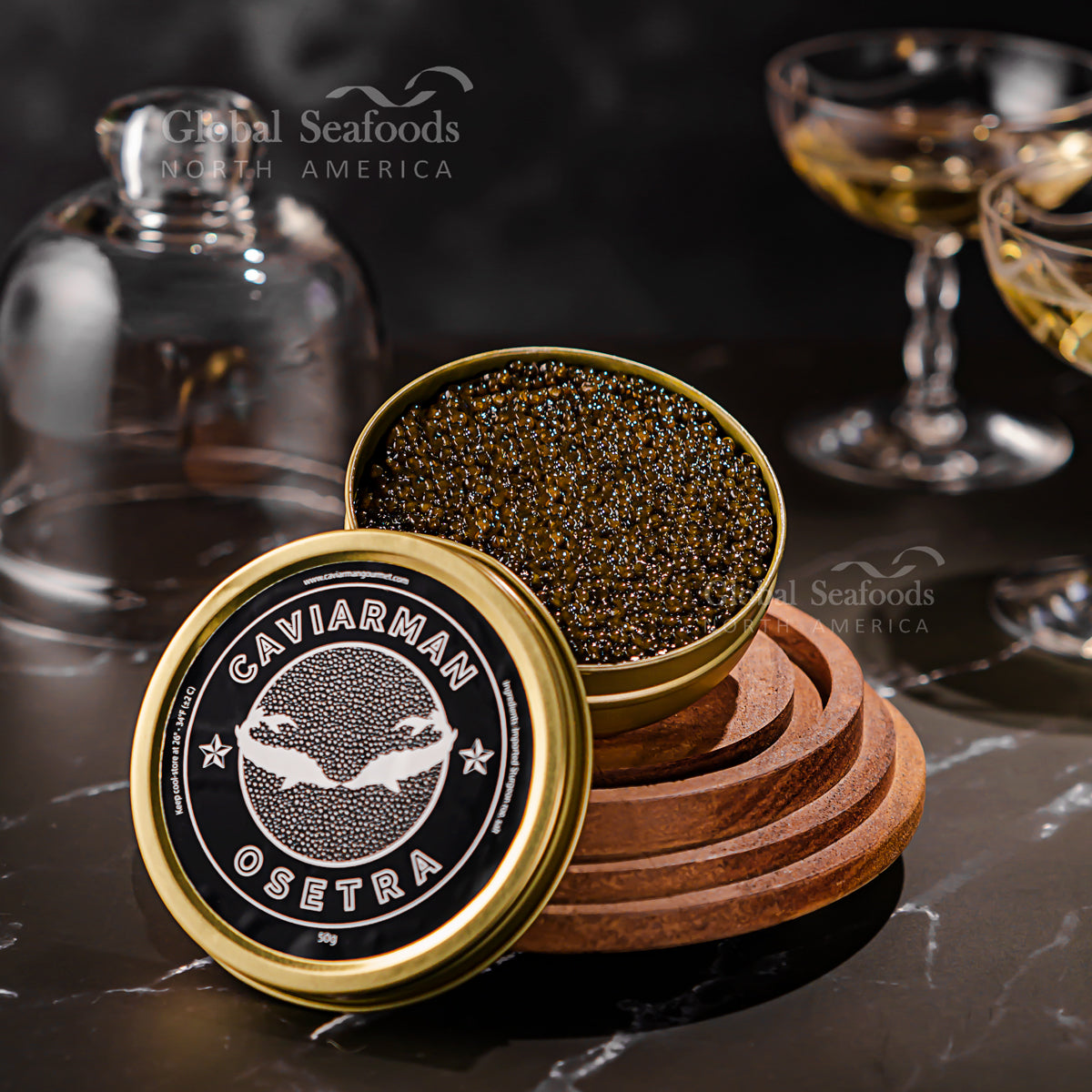
Osetra caviar comes from Acipenser gueldenstaedtii, the Russian sturgeon — a species native to the Caspian Sea basin, now farmed globally following the effective closure of international wild Caspian caviar trade in 2006. The flavor profile is what distinguishes Osetra from other sturgeon caviars: medium-to-large pearls, color range from deep brown to golden (golden or “Imperial” grades are rarer and command a premium), and a flavor arc that starts with clean brininess and develops into a sustained nutty, buttery finish. It’s the caviar that rewards attention — the complexity builds across the palate in a way that simpler caviars don’t.
Mark Zaslavsky, founder of Marky’s Caviar and one of the longest-tenured importers in the US market, has described Osetra as a hallmark of elegance in fine dining — its nuanced flavors and quality texture making it one of the most prized caviars available. That assessment tracks with my own experience sourcing it: Osetra is the caviar where the gap between a good tin and a great tin is most apparent to an informed taster.
When shopping for Osetra caviar, quality is the non-negotiable. For premium options, explore Global Seafoods’ Black Caviar collection or our Osetra Sturgeon Caviar.
1. Global Seafoods
Our Osetra is sourced from farms I’ve personally vetted for broodstock quality, harvest timing, malossol salt percentage, and cold-chain integrity. Every order ships with insulated packaging and gel packs rated for 48-hour transit, and I verify cold-chain logs with every incoming shipment. Full traceability — farm, country, harvest date, processor — is available on request for any tin we sell.
2. Petrossian
Founded in Paris in 1920 and the brand most associated with introducing caviar to Western fine dining, Petrossian is the benchmark for premium positioning in the category. Their Osetra selection — particularly the Tsar Imperial grade — is excellent, and their cold-chain handling and packaging are professional. The price premium reflects the brand as much as the product, but the quality is consistent and reliable. Good choice if provenance and presentation matter for a gift or a formal occasion.
3. Marky’s Caviar
One of the oldest caviar importers in the US, with deep supplier relationships and a wide selection across species and grades. Marky’s is particularly strong in the mid-to-premium Osetra range — consistent sourcing, good cold-chain, competitive pricing relative to the quality level. The breadth of selection (Osetra, Siberian, Kaluga, Beluga-alternative, domestic) makes them useful for customers who want to compare grades side by side.
4. Caviar Russe
Caviar Russe supplies Michelin-starred restaurants in New York and has a direct-to-consumer channel with the same sourcing standards. The quality bar is high — they’re particularly strong in Golden and Imperial Osetra grades where the color consistency and pearl size are exceptional. Packaging is pristine. Price reflects the restaurant-supply positioning.
5. The Caviar Co.
A San Francisco-based boutique supplier with a sustainability-first sourcing philosophy and a strong selection of domestic and imported Osetra. Their Classic Osetra is well-sourced and approachable in price; their Royal Osetra steps up in complexity. Good cold-chain, clear labeling on farm origin, and a customer service team that can speak knowledgeably about the product. The right choice for West Coast customers who want a regional supplier with values-aligned sourcing.
For more online caviar options, browse Global Seafoods’ curated selection of black caviar, including Siberian Sturgeon Caviar and California White Sturgeon Caviar.
In-store caviar purchases carry more risk than online from a dedicated supplier, because you have no visibility into the display case temperature history or how long the tin has been on the shelf. That said, a few retailers manage these risks well enough that in-store purchase is a reasonable option — particularly when you want the tin in hand the same day.
1. Whole Foods Market
Whole Foods carries caviar in most major metro locations, typically stocked in the seafood department under refrigeration. Selection varies by location — larger urban stores carry more variety. Sourcing standards are decent; Whole Foods has supplier requirements around sustainability that filter out the lowest-quality product. The practical limitation: you can’t verify how long the tin has been in the case. Ask the seafood department when the tin was received, not just the best-by date.
2. Dean & DeLuca
A historically prestigious gourmet specialty retailer with strong caviar selection and knowledgeable staff. Location footprint has contracted significantly in recent years — check availability before making a trip. When the tin is fresh and the store’s cold case is properly maintained, the in-store experience is genuinely excellent.
3. Specialty Fish Markets
The best in-store option, in my view, for markets that stock caviar directly from a known supplier relationship. A fishmonger who can tell you the farm, the harvest date, and the exact storage temperature of the case is giving you the same information I expect from my own suppliers. The selection is narrower, but the transparency is higher than at a general gourmet retailer.
4. Balducci’s Food Lover’s Market
Gourmet specialty market with locations in New York, Virginia, and Maryland. Curated luxury selection with knowledgeable floor staff. Similar purchasing considerations as Dean & DeLuca — confirm delivery date and storage temperature before purchasing a tin.
5. Fine Dining Restaurants and Specialty Delicatessens
Some Michelin-starred restaurants and specialty delicatessens sell retail caviar by the ounce or in tins alongside their dining program. This is often the highest-quality in-person option because restaurants sourcing caviar for service maintain the strictest cold-chain discipline of any retail channel — they can’t afford a bad tin at service. The price reflects the sourcing quality and the venue overhead.
For premium caviar products, explore Kaluga Caviar and Beluga Caviar available at Global Seafoods.
The four questions I ask every time I evaluate a new Osetra source:
1. Sustainable Sourcing — Can You Name the Farm?
CITES documentation is the minimum bar for international Osetra trade — it verifies the caviar was produced legally and that the farm is registered with the relevant national authority. But CITES compliance is a floor, not a quality indicator. The better question is: can the supplier name the specific farm, the country, and the broodstock line? The answer tells you whether they have a direct supplier relationship or are buying through intermediaries who may not have the same traceability.
2. Pearl Color, Size, and Consistency
High-quality Osetra has large, firm pearls with consistent color within the tin — deep brown to golden, depending on grade. A tin where the pearls vary significantly in size or color within the same batch is a sign of mixed-grade blending or inconsistent farm practices. Golden (Imperial) grade commands the highest price for color rarity, not because golden pearls taste better than dark brown — the flavor difference between grades within the same farm is subtler than the price difference suggests.
3. Taste and Texture — What to Look For
Top-grade Osetra: clean oceanic opening, nutty mid-palate, long buttery finish. The pearls should have a firm membrane that yields to gentle pressure rather than breaking on contact — the signature “pop” followed by the flavor release. Metallic aftertaste means the caviar was in contact with metal utensils or the tin had a compromised seal. Overly fishy or ammonia notes mean temperature compromise or age. Neither is acceptable in premium product.
4. Packaging and Cold-Chain
For online purchases: insulated packaging, gel packs or dry ice rated for at least 48 hours, overnight or two-day shipping only. The tin should arrive at 34°F or below. If it arrives warm or the gel packs are fully liquefied, that’s a cold-chain failure regardless of what the tin tastes like when chilled. For in-store purchases: ask what temperature the display case is maintained at (target 28–34°F) and when the tin arrived.
For quality assurance, purchase from trusted sellers like Global Seafoods’ Caviar Collection, which offers Sevruga Sturgeon Caviar and Wild Sturgeon Black Caviar alongside Osetra.
Can I buy Osetra caviar in small quantities?
Yes — and I’d recommend starting with a 1-ounce tin for a first purchase. One ounce is enough for 2–4 people to taste properly (a demitasse spoon per person as a standalone tasting), which gives you enough to evaluate the product before committing to a larger size. Most reputable online suppliers, including Global Seafoods, offer 1-ounce tins. Avoid any listing that doesn’t specify the farm and country of origin.
How should I store caviar at home after purchase?
Unopened: in the coldest part of your refrigerator, 28–34°F, ideally on a bed of ice in a covered container. Most household refrigerators don’t hold below 36°F reliably at the door — the back of the lowest shelf is 3–5°F colder and is the right location. Opened: consume within 24–48 hours. The flavor degrades faster than the safety threshold, so if it tastes less than ideal at 24 hours, that’s not a storage failure — it’s the product telling you something.
How long does Osetra caviar last after opening?
24–48 hours is the practical window for premium Osetra. The “2–3 days” figure that appears on most packaging is the outer safety limit, not the quality limit. The amino acids that produce Osetra’s sweetness and the fat compounds that produce the buttery finish both begin to degrade on air exposure. Buy the size you’ll finish in one sitting whenever possible — this is the strongest argument for 1-ounce tins for home use.
What’s the best way to serve Osetra caviar?
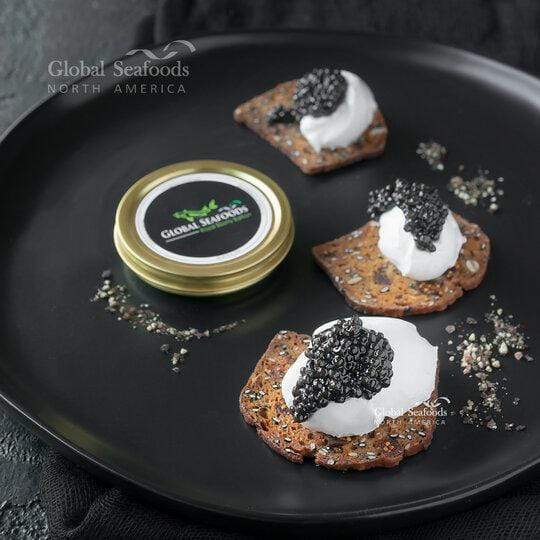
Tin on crushed ice, opened at the table. Mother-of-pearl spoons only — metal introduces a metallic off-note that’s immediately apparent on a product this delicate. Blinis, toast points, or cold boiled new potatoes with a small amount of crème fraîche as the base. Blanc de Blancs Champagne or chilled vodka as the pairing. The full serving guide is in our Osetra serving guide.
Is there a difference between farmed and wild Osetra caviar?
International trade in wild Caspian Osetra has been effectively closed since 2006 — essentially all Osetra in international commerce is farmed. The comparison is largely historical. What matters now is farm quality: broodstock generation, time to harvest (7–10 years for premium product), malossol salt percentage (3–3.5%), and cold-chain handling. A well-farmed tin from a reputable operation is indistinguishable from, and often superior to, the wild Caspian product that existed before the trade closure. See the full context in the farm-to-table production guide.