
Buy Premium Caviar Online | Discover the Best Black Caviar for Luxury Dining

Buy Premium Caviar Online: A Guide to Black Caviar Varieties and Fine Dining
Premium black caviar — the salt-cured roe of sturgeon — is one of the most celebrated luxury foods in the world. The variety you choose, how you serve it, and what you pair it with determines whether the experience is genuinely extraordinary or merely expensive. This guide covers the five most important sturgeon caviar varieties, their flavor profiles, the correct way to serve caviar at home, and the pairings that showcase each variety at its best.
🔗 Beluga Caviar | Ossetra Caviar | All Black Caviar
What Is Premium Caviar?
Caviar, in its strictest definition, refers exclusively to the salt-cured roe of sturgeon (Acipenseridae family). "Malossol" — the Russian word for "little salt" — describes the traditional preservation method: 3–5% salt by weight, which preserves the roe while allowing its natural flavor to dominate. Higher salt content (pressed caviar, or payusnaya) produces a more intense, concentrated product used primarily as a flavoring ingredient rather than eaten on its own.
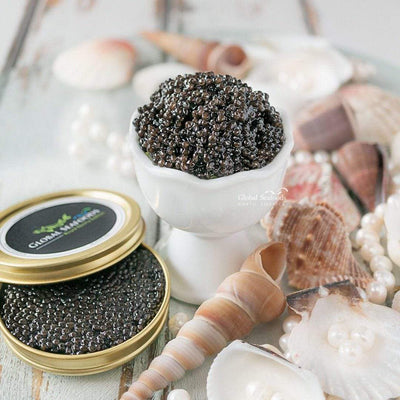
Quality indicators: large, intact, glossy eggs of uniform size and color; firm membrane that pops cleanly when bitten; clean, oceanic flavor with no bitterness or excessive fishiness; no broken or mushy eggs in the tin.
The Five Key Sturgeon Caviar Varieties
1. Beluga Caviar (Huso huso)
The most celebrated and expensive caviar in the world. Beluga sturgeon are the largest freshwater fish on earth — they can live 100+ years and weigh over 1,000 lbs; the roe is harvested only after the fish reaches sexual maturity (15–25 years). The eggs are the largest of any sturgeon caviar (3–4mm), with a thin, delicate membrane and a buttery, mild, slightly nutty flavor. True Beluga caviar from wild Caspian sturgeon is banned from import into the US (the species is critically endangered); "Beluga" caviar sold in the US is from farmed Huso huso or hybrid sturgeon.
Flavor: Buttery, mild, slightly nutty; the most delicate of all sturgeon caviars
Egg size: 3–4mm (largest)
Best pairing: Serve alone on a mother-of-pearl spoon; or on a plain blini with a tiny amount of creme fraiche; Blanc de Blancs Champagne
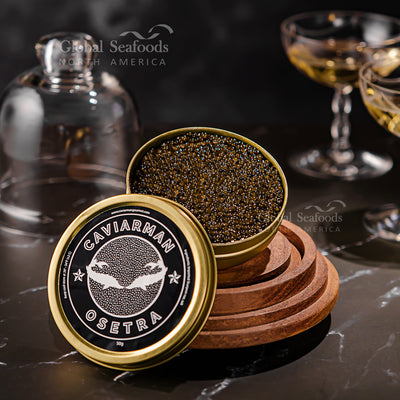
2. Ossetra Caviar (Acipenser gueldenstaedtii)
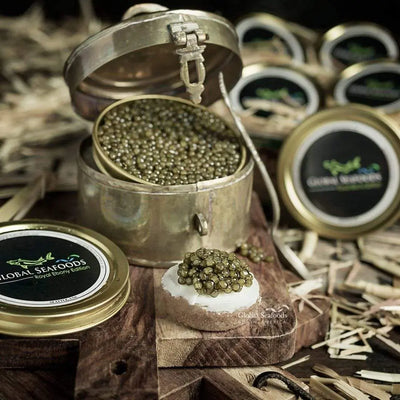
The most complex and nuanced of the major caviar varieties — preferred by many connoisseurs over Beluga for its more interesting flavor. Ossetra eggs are medium-sized (2.5–3mm), firm, and range in color from dark brown to golden; the golden Ossetra ("Imperial" or "Royal" grade) is the rarest and most prized. The flavor is distinctly nutty — often described as walnut or hazelnut — with a briny, oceanic finish and a complexity that develops on the palate.
Flavor: Nutty (walnut, hazelnut), briny, complex; the most interesting flavor profile of any sturgeon caviar
Egg size: 2.5–3mm (medium)
Best pairing: Seared scallops; lobster risotto; scrambled eggs with creme fraiche; Chablis or white Burgundy
3. Kaluga Caviar (Huso dauricus)
Kaluga sturgeon are native to the Amur River basin in Russia and China; farmed Kaluga is the most widely available "Beluga-style" caviar in the US market. The eggs are large (3–3.5mm), with a smooth, mild flavor often compared to Beluga — buttery and clean, with a slightly more pronounced brine than true Beluga. An excellent value alternative to Beluga for those who want large, mild eggs without the Beluga price premium.
Flavor: Buttery, mild, clean; slightly more briny than Beluga
Egg size: 3–3.5mm (large)
Best pairing: Raw oysters (a small spoonful on each oyster); sashimi; fresh pasta with butter; dry sake or Champagne
4. Sevruga Caviar (Acipenser stellatus)
The most intensely flavored of the major sturgeon caviars — smaller eggs (1.5–2mm) with a firmer membrane and a bold, assertive brine. Sevruga sturgeon mature faster than other sturgeon species (7–9 years), making Sevruga historically the most affordable of the Caspian caviars. The intense flavor makes it the best choice for cooking applications where the caviar needs to hold its own against other strong flavors.
Flavor: Intensely briny, earthy, assertive; the boldest of the major sturgeon caviars
Egg size: 1.5–2mm (smallest)
Best pairing: Smoked salmon; beef tartare; grilled lobster; vodka (the classic Russian pairing)
5. California White Sturgeon Caviar (Acipenser transmontanus)
White sturgeon are native to the Pacific Coast of North America; California white sturgeon caviar is farmed in California and is the most sustainably produced caviar available in the US market. The eggs are medium-large (2.5–3mm), with a mild, clean, slightly creamy flavor — less complex than Ossetra but more approachable for caviar newcomers. An excellent entry point for those new to sturgeon caviar.
Flavor: Mild, clean, slightly creamy; the most approachable sturgeon caviar
Egg size: 2.5–3mm (medium-large)
Best pairing: Scrambled eggs; breakfast preparations; sushi; versatile across most caviar applications
How to Serve Caviar Correctly
- Temperature: Serve caviar at 28–32°F — just below the freezing point of water but above the freezing point of the salt-cured roe. Place the tin on a bed of crushed ice; do not freeze the tin directly.
- Utensils: Always use mother-of-pearl, bone, glass, or plastic spoons — never metal. Metal reacts with caviar and imparts a metallic taste that masks the roe's natural flavor. This is non-negotiable.
- Tin handling: Open the tin immediately before serving; do not open in advance. Once opened, consume within 2–3 days; keep tightly covered and refrigerated between servings.
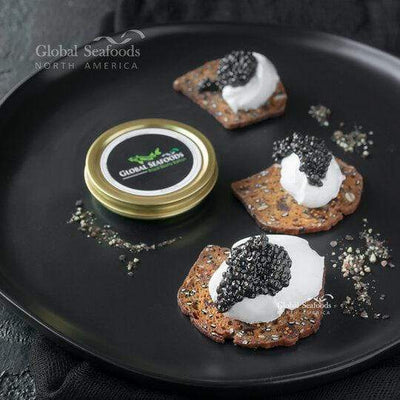
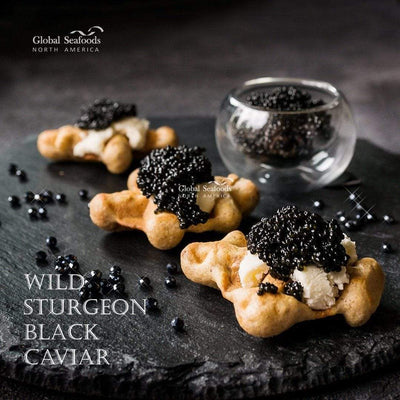
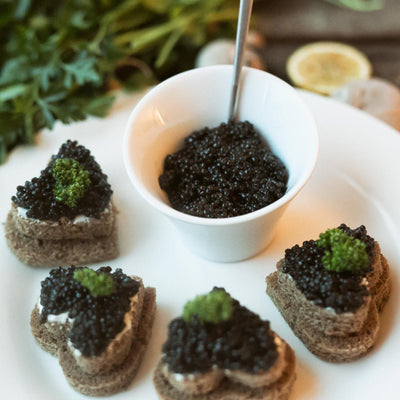
- Accompaniments: Keep them minimal — plain blinis or toast points; creme fraiche or unsalted butter; perhaps finely minced shallot and hard-boiled egg. The caviar should be the star; elaborate accompaniments mask its flavor.
- Quantity: A standard serving is 15–30g (0.5–1 oz) per person for a tasting; 30–50g per person for a main caviar course.
Shop Premium Black Caviar
- 🔗 Beluga Caviar
- 🔗 Ossetra Sturgeon Caviar
- 🔗 Kaluga Caviar
- 🔗 Sevruga Sturgeon Caviar
- 🔗 California White Sturgeon Caviar
- 🔗 Siberian Sturgeon Caviar
🎥 Watch caviar serving and pairing tutorials on the Global Seafoods YouTube Channel
FAQs: Buying and Serving Premium Caviar
What is the difference between Beluga, Ossetra, and Kaluga caviar, and which should I buy?
The three are from different sturgeon species with distinct flavor profiles: Beluga (Huso huso) — the largest eggs (3–4mm); buttery, mild, delicate; the most prestigious and expensive; true wild Beluga is banned from US import (critically endangered species); US "Beluga" is farmed. Ossetra (Acipenser gueldenstaedtii) — medium eggs (2.5–3mm); nutty, complex, briny; preferred by many connoisseurs for its more interesting flavor; golden Ossetra is the rarest grade. Kaluga (Huso dauricus) — large eggs (3–3.5mm); buttery, mild, slightly more briny than Beluga; the best Beluga alternative at a lower price point. Which to buy: for a first caviar experience, California White Sturgeon or Kaluga — approachable, mild, and significantly less expensive than Beluga or Ossetra. For a connoisseur experience, Ossetra — the most complex and interesting flavor. For the most prestigious presentation, Beluga or Kaluga (Beluga-style). For cooking applications where the caviar needs to hold its own against strong flavors, Sevruga — the most intensely flavored and historically the most affordable.
Why must I use a mother-of-pearl spoon for caviar, and what happens if I use metal?
Metal — including silver, stainless steel, and gold-plated utensils — reacts chemically with the salt and organic compounds in caviar, imparting a metallic taste that masks the roe's natural flavor. The reaction is immediate and noticeable; even a brief contact between caviar and a metal spoon will affect the flavor of the eggs that touched the metal. Mother-of-pearl is the traditional material because it is chemically inert — it does not react with the caviar and imparts no flavor. Bone, glass, and plastic are acceptable alternatives. This is not a matter of tradition or affectation — it is a genuine flavor consideration. A restaurant that serves caviar with metal spoons either does not know this or does not care; both are bad signs. If you don't have a mother-of-pearl spoon, use a clean plastic spoon rather than a metal one.
How long does an opened tin of caviar keep, and how should I store it?
An unopened tin of malossol caviar keeps 4–6 weeks refrigerated at 28–32°F (the coldest part of your refrigerator, typically the back of the bottom shelf). Once opened: consume within 2–3 days; keep tightly covered (press plastic wrap directly onto the surface of the caviar before replacing the lid to minimize air contact); store at 28–32°F. Do not freeze caviar — freezing ruptures the egg membranes and destroys the texture. Signs that caviar has turned: sour or ammonia smell (fresh caviar smells like the ocean); mushy or broken eggs; off-color or discolored eggs; bitter or excessively salty flavor. If any of these signs are present, discard. The 2–3 day window after opening is conservative but reliable — some caviars will keep 4–5 days if handled carefully, but quality degrades noticeably after day 3.
Related Products


Also in News

Ossetra Caviar Price Guide: Cost, Quality & How to Buy

Ossetra Caviar and Foie Gras: A Pairing Guide

Salmon Roe (Ikura) Guide: Types, Taste, Processing & How to Buy
Shop Now
Main
