
Pink Salmon Caviar Grade 1 – Luxurious Taste, Nutritional Benefits, & Sustainability

Pink Salmon Caviar Grade 1: What It Is, How It's Graded, and How to Serve It
Pink salmon caviar — the bright orange-red roe of the pink salmon (Oncorhynchus gorbuscha) — is the most widely produced salmon roe in the world and the most accessible entry point into the world of red caviar. Grade 1 is the highest quality designation, indicating uniform bead size, intact membranes, vibrant color, and clean flavor. This guide covers what Grade 1 means, how pink salmon roe compares to other salmon roe varieties, how to serve it, and what to look for when buying.
🔗 Pink Salmon Caviar | 🔗 Chum Salmon Caviar | 🔗 Full Red Caviar Collection
What Is Pink Salmon Caviar?
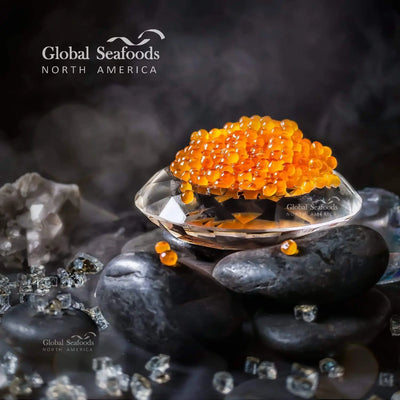
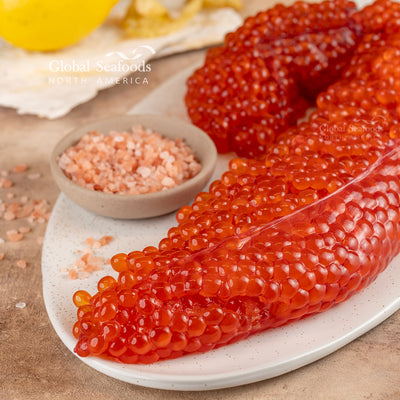
Pink salmon (Oncorhynchus gorbuscha) is the smallest and most abundant Pacific salmon species. It runs in enormous numbers every other year (odd years) in Alaska and the Pacific Northwest, making its roe the most plentiful and affordable of the Pacific salmon roes. The eggs are medium-sized (4–5mm), bright orange-red, with a mild, clean brininess and a satisfying pop. The flavor is less intense than sockeye or chum roe — which makes it an excellent introduction to salmon caviar for those new to the category.
Understanding the Grading System
Salmon roe is graded based on several quality factors:
- Grade 1 (Premium): Uniform bead size; intact, firm membranes that don't break easily; vibrant, consistent color (bright orange-red); clean, fresh ocean flavor with no off-notes; properly salted (malossol — "little salt" in Russian, typically 3–5% salt). This is the grade used for direct consumption as caviar.
- Grade 2: Some variation in bead size; slightly softer membranes; may have minor color variation; still good quality but not suitable for premium presentation. Often used in cooked applications or blended products.
- Grade 3 / Processing grade: Broken or soft eggs; used in processed products, spreads, or flavoring. Not sold as whole-egg caviar.
When buying pink salmon caviar, "Grade 1" or "malossol" on the label are the key quality indicators. The tin or jar should be vacuum-sealed and refrigerated — never shelf-stable at room temperature (heat processing destroys the texture and flavor).
Pink Salmon Roe vs. Other Salmon Roe
| Type | Egg Size | Color | Flavor | Price |
|---|---|---|---|---|
| Pink salmon (O. gorbuscha) | 4–5mm | Bright orange-red | Mild, clean, lightly briny | Most affordable |
| Chum salmon (O. keta) | 5–6mm (largest) | Deep orange-red | Mild, slightly richer than pink | Mid-range |
| Coho salmon (O. kisutch) | 4–5mm | Bright orange | Mild, slightly sweet | Mid-range |
| Sockeye salmon (O. nerka) | 3–4mm (smallest) | Deep red-orange | More intense, richer flavor | Higher |
| King/Chinook (O. tshawytscha) | 5–6mm | Deep orange-red | Rich, buttery, complex | Highest |
For first-time buyers: pink salmon caviar is the best starting point — mild flavor, affordable price, and widely available. For those who want a larger egg with a similar mild profile: chum salmon caviar. For more intense flavor: sockeye.
Nutrition
Per 1 oz (28g) serving of salmon roe:
- Calories: ~40 | Protein: ~6g | Fat: ~2g | Carbs: ~0.5g
- Omega-3 (EPA+DHA): ~1,000–1,200mg — one of the most concentrated food sources of omega-3 fatty acids
- Vitamin B12: ~236% DV | Selenium: ~52% DV | Vitamin D: ~37% DV
Salmon roe is exceptionally nutrient-dense for its calorie count. The omega-3 content per calorie is among the highest of any food. The vitamin B12 content is extraordinary — a single 1 oz serving provides more than twice the daily requirement.
How to Serve Pink Salmon Caviar
Storage and Temperature
- Store at 28–32°F (-2–0°C) — the coldest part of your refrigerator, not the freezer
- Unopened: use by the date on the tin (typically 4–6 weeks from purchase)
- Once opened: consume within 3–4 days; keep covered and refrigerated
- Serve chilled on a bed of crushed ice; never at room temperature
Spoons
Always use a non-metal spoon — mother-of-pearl, bone, or plastic. Metal (including silver) reacts with the roe and imparts a metallic taste that masks the delicate flavor. This applies to all caviar, including salmon roe.
Classic Pairings
- Blinis with crème fraîche: The classic Russian presentation; the slight tang of crème fraîche complements the brininess of the roe
- Toast points with butter: Simple and elegant; unsalted butter lets the roe's flavor shine
- Deviled eggs: A small spoonful of salmon roe on top of a deviled egg is one of the best canapé combinations
- Avocado toast: The richness of avocado pairs beautifully with the bright, briny roe
- Pasta: Toss with butter and pasta off the heat; add roe at the very end (heat destroys the texture)
- Sushi and hand rolls: Ikura (salmon roe) is a classic sushi topping
Drink Pairings
- Ice-cold vodka: The traditional Russian pairing; the neutral spirit cleanses the palate between bites
- Brut Champagne or Blanc de Blancs: The acidity and bubbles complement the brininess
- Dry sake: An excellent pairing for salmon roe specifically — the umami of sake echoes the roe's savory depth
Shop Red Caviar
- 🔗 Pink Salmon Caviar
- 🔗 Chum Salmon Caviar
- 🔗 Coho Salmon Caviar
- 🔗 Trout Red Caviar
- 🔗 Golden Pearls Brook Trout Caviar
- 🔗 Full Red Caviar Collection
🎥 Watch caviar serving tutorials on the Global Seafoods YouTube Channel
FAQs: Pink Salmon Caviar Grade 1
Is pink salmon caviar a good choice for beginners?
Yes — it's the best starting point for anyone new to salmon roe or caviar in general. Its flavor is mild and clean with a light brininess — less intense than sockeye or sturgeon caviar — making it approachable for those who aren't sure if they'll enjoy caviar. The egg size (4–5mm) is satisfying without being overwhelming, and the price is significantly lower than other salmon roes or sturgeon caviar. Start with pink salmon caviar on blinis with crème fraîche; if you enjoy it, explore chum salmon caviar (larger eggs, similar mild profile) or sockeye (more intense flavor) next.
What's the difference between Grade 1 and Grade 2 salmon caviar?
Grade 1 has uniform bead size, intact firm membranes, vibrant consistent color, and clean fresh flavor — it's the grade used for direct consumption as caviar. Grade 2 has some variation in bead size, slightly softer membranes, and minor color variation; still good quality but not suitable for premium presentation. Grade 2 is often used in cooked applications or blended products. When buying for serving as caviar (on blinis, as a garnish, etc.), always buy Grade 1. The price difference is usually modest and the quality difference is significant.
Can I use salmon roe in cooked dishes?
Yes, but with important caveats: heat destroys the delicate membrane and turns the eggs rubbery and dull-flavored. Never add salmon roe to a hot pan or hot liquid. Instead, add it at the very end of cooking, off the heat, or use it as a cold garnish on a warm dish. Classic applications: toss with warm (not hot) butter pasta off the heat; spoon over a warm blini just before serving; garnish a warm potato dish or scrambled eggs immediately before serving. The residual heat is enough to warm the roe without cooking it.
Related Products

Also in News

Snail Caviar: How White Escargot Caviar Is Farmed, Harvested and Made

The Dark Years of Pacific Salmon: A 20-Year Outlook for Alaska, Russia, and the Red Caviar Market

King Crab Legs Delivery: Is It Worth It? Exploring the Benefits and Best Options
Shop Now
Main
